





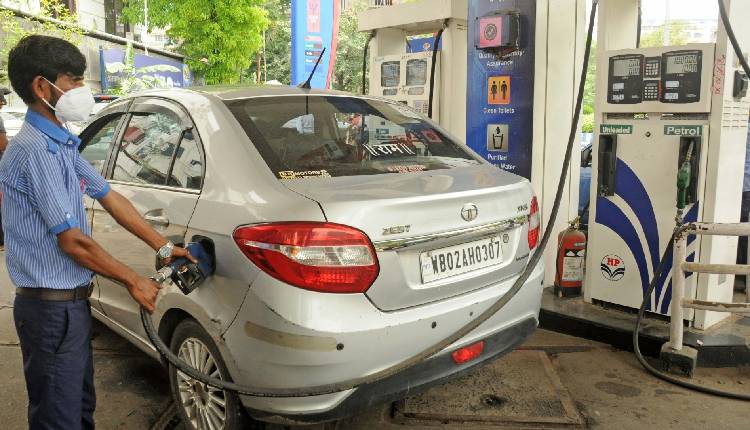
New Delhi: Amid rising crude prices and mounting pressure on oil retailers, the Centre’s Rs 10 per litre excise duty cut on petrol and diesel signals both near-term relief for consumers and a potential impact on one of its key revenue streams.
Under the revised rates, excise duty on petrol has been reduced to Rs 3 per litre, while diesel has effectively been exempted.
The decision comes against the backdrop of elevated global crude oil prices due to the ongoing West Asia conflict, which has increased cost pressures on oil marketing companies (OMCs).
The reduction is expected to help OMCs offset higher input costs and operate closer to break-even levels without immediately raising retail fuel prices, thereby cushioning consumers from a potential spike.
At the same time, the move brings renewed focus on fuel taxes, which form a significant component of government revenues.
Taxes on petrol and diesel — through central excise duty and state-level VAT — remain a major source of income for both the Centre and states. According to data from the Petroleum Planning and Analysis Cell (PPAC), the petroleum sector generated over Rs 7.5 trillion in tax revenue in 2023–24.
Of this, the Centre has earned around Rs 2.7–3 trillion annually in recent years through excise duties, while states have collected over Rs 3 trillion via VAT.
Fuel taxes gained prominence during the Covid-19 pandemic, when lower crude prices allowed governments to raise duties and bolster revenues. Collections have since moderated as taxes were cut to manage inflation.
Excise duty is a fixed levy imposed by the Union government on every litre of petrol and diesel. In addition to basic excise, the Centre also imposes cesses, such as road and infrastructure cess, which it retains fully. States, meanwhile, levy VAT or sales tax, which varies across regions.
In cities such as Delhi, central taxes account for roughly 43 per cent of petrol prices and about 37 per cent of diesel prices, with state taxes adding a significant share.
A major issue has been the increasing proportion of cess and surcharge in the Centre’s excise structure, which is not part of the divisible pool shared with states. As a result, a larger share of incremental revenue accrues to the Centre. This concern is frequently raised by states.
Fuel taxes remain an important pillar of public finances. They contribute around 18–19 per cent of the Centre’s gross tax revenue, while for states, petroleum taxes account for roughly 25–35 per cent of their own tax collections.
However, the fiscal cost of such cuts can be significant. Market estimates suggest that every Re 1 per litre reduction in excise duty results in an annual revenue loss of Rs 14,000–16,000 crore.
On this basis, a Rs 10 per litre cut could lead to a revenue loss of around Rs 1.5 trillion annually for the Centre.
Fuel taxes also have a direct bearing on household budgets, influencing transportation costs and the prices of goods. Higher taxes tend to add to inflationary pressures, while reductions can offer some relief.
Following the government’s decision, Finance Minister Nirmala Sitharaman said it would help protect consumers from rising prices.
Meanwhile, global crude oil prices remain elevated, with Brent crude futures crossing the $100 per barrel mark amid the ongoing geopolitical tensions.
(IANS)