





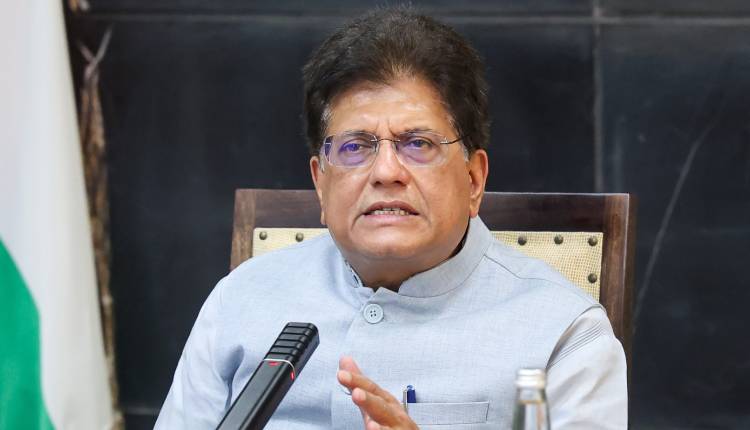
New Delhi: Commerce Minister Piyush Goyal announced on Friday that, for the first time ever, 40 metric tonnes (MT) of biscuits manufactured in Varanasi have been exported to Oman under the India-Oman CEPA (Comprehensive Economic Partnership Agreement).
An MoU has also been signed for the supply of nearly 700 MT of biscuits to Oman and other Gulf Cooperation Council (GCC) countries during the financial year 2026–27, the minister further stated in a post on X.
Preferential tariff benefits available under CEPA have allowed duty-free access for biscuits produced in India, making them more price-competitive in comparison to other key competitors in the Oman market, he pointed out.
“This is expected to translate into higher export volumes and repeat orders from importers in the region. Clearly a big boost to our food processing sector with increased production and job generation,” he added.
The India-Oman CEPA, which was signed on December 18, 2025, during Indian Prime Minister Narendra Modi’s visit to Muscat, came into effect on June 1.
Trade and commerce have been a key pillar of bilateral cooperation between India and Oman, with both sides recognising the potential for further growth and diversification in bilateral trade. During FY 2024–25, bilateral trade between the two countries stood at $10.61 billion, compared to $8.94 billion in FY 2023–24. Trade during the period April–October 2025 stood at $6.48 billion.
The CEPA between India and Oman brings together trade in goods and services, investment, professional mobility, and regulatory cooperation under a single, coherent framework aimed at deepening bilateral economic integration.
Rather than focusing on a single sector or tariff reduction, the CEPA is designed to support steady and long-term economic engagement. By facilitating trade, promoting investment, and strengthening cooperation in sectors of mutual interest, the agreement seeks to unlock new opportunities for labour-intensive sectors, services, and emerging areas of cooperation, according to an official statement.
At the same time, it maintains a balanced and calibrated approach to market access, while providing clearer rules, wider market access, and greater predictability for businesses and investors in both countries, without compromising domestic priorities and safeguards, the statement added.
(IANS)