





New Delhi: Left-affiliated students’ union leader Neha Bora’s recent reference to the 2024 youth protest in Bangladesh in context of the ongoing agitation in India is nothing beyond a sweeping statement born out of political compulsion and a communication to seek emotive responses.
Treating the two separate incidents as equivalent oversimplifies important political, institutional, and legal differences where the nature of the protests and the authorities’ responses differ significantly.
One of the most important distinctions lies in the scale and political consequences of the protests.
The 2024 protests in Bangladesh began as a student movement against the quota system in government jobs but rapidly evolved into a broader anti-government uprising.
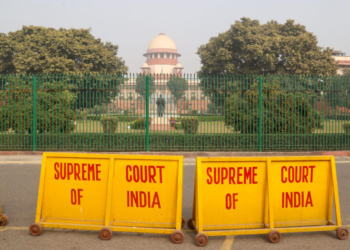
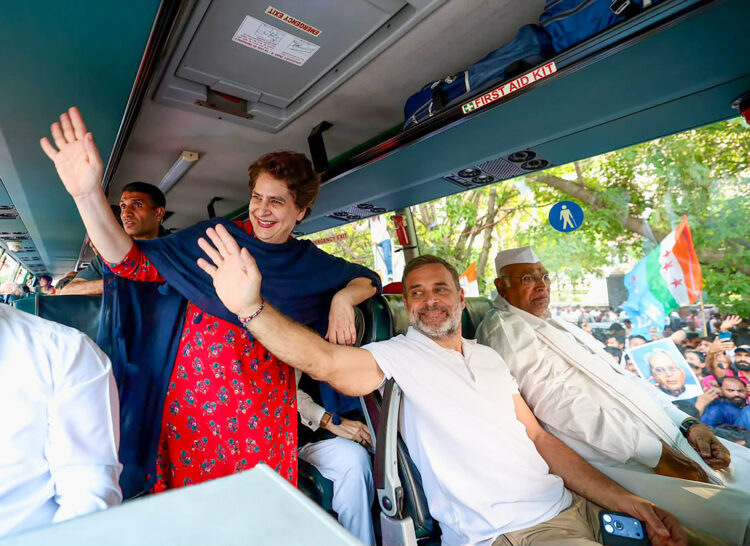
Though the aim may be similar for certain political activists, authorities have acted with restraint in case of peaceful rallies, as was evident when tens of thousands on Monday came on Delhi streets with Opposition leaders on their way to the Supreme Court to initiate a judicial process.
In India, the right to peaceful assembly is constitutionally protected, although it is subject to reasonable restrictions related to public order.
The action of security forces has largely been prohibitory and precautionary against possible escalation.
In Bangladesh, the 2024 widespread protests were marked with violence, arson, loot and was met with strong retaliatory exercise where domestic monitoring reported 819 deaths, while a later United Nations assessment estimated the number at 1,400.
There also were reports of communal frenzy and religious persecution resulting in several horrific deaths.
In India, recent movements such as protests after the Citizenship Amendment Act (CAA) was enacted by the Centre in December 2019, the 2020-2021 farmers’ movement against proposed agriculture laws, among others, or various state-level protests have placed pressure on Union, state, or Union Territory governments, but they have not resulted in the collapse of the system.
Institutional channels such as Legislatures, Judiciary, and independent commissions continue to function alongside public dissent.
The Judiciary has been hearing cases involving rights of protesters, police actions, and restrictions imposed by authorities; while public debates about conduct and retaliatory exercises take place, apart from courts, in Legislatures, and other platforms like the media.
Such processes are happening now as well.
A third distinction lies in the intensity of the force used by state authorities against demonstrators.
Officials have certainly been criticised by activists, courts, and human rights organisations for detentions, crowd-control measures, internet restrictions, or the use of force against specific protests.
Such measures generally occur within an environment where legal challenges, media scrutiny, and political opposition remain active and authorities are often required to justify restrictions under constitutional and statutory provisions.
Additionally, most Indian protests tend to focus on specific policies, laws, local grievances, or demands for accountability rather than a complete restructuring of the political order.
Even when governments concede demands, the constitutional system remains the primary mechanism through which change occurs.
In 2021, the farm bills had come for scrutiny in Supreme Court and even stayed in January, and formally repealed by the Union government the same year, ending their implementation.
Thus, despite recurring controversies over protest management, India continues to handle dissent within a constitutional framework characterised by functioning democratic institutions.
(IANS)