





New Delhi: The Jamaat-e-Islami Hind (JIH) on Saturday expressed serious concern over the verdict of the Madhya Pradesh High Court declaring the Kamal Maula Mosque (Bhojshala) a temple, saying the judgment raises significant questions regarding the “credibility” of the judicial system, protection of minority rights, religious freedom and the secular character of the country.
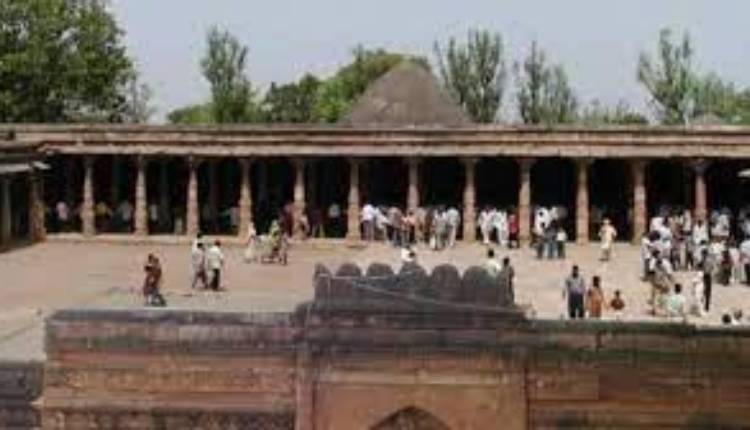
The Indore Bench of the Madhya Pradesh High Court has redefined the legal status of the Bhojshala complex in Dhar by ruling that the site is a temple and that the Hindu community possesses an inherent right to worship there, which was never lost to history. In a significant judgment delivered on Friday, the division bench of Justice Vijay Kumar Shukla and Justice Alok Awasthi set aside decades of administrative compromises surrounding the disputed site.
JIH president Syed Sadatullah Husaini issued a statement voicing apprehension over the verdict, calling for “fairness and objectivity” in judicial proceedings involving sensitive religious matters.
Expressing concern over the ruling, Husaini said the judgment “will have grave implications for the credibility of the judicial system, minority rights, religious freedom, communal harmony and the secular fabric of the country.”
He further stated that the ruling raises important constitutional concerns linked to the protection of religious rights guaranteed under Articles 25 and 26 of the Constitution.
He pointed out that for decades, the Bhojshala complex functioned under an arrangement that allowed both communities to exercise their respective religious practices.
“The removal of established worship rights of one community in favour of another not only disrupts a long-standing arrangement but also risks undermining the principle of equal respect for all faiths. Such developments must be approached with utmost caution, keeping in mind the delicate balance required in a plural and diverse society like India,” he said.
The JIH chief also expressed concern over suggestions of allotting alternative land to the Muslim community in place of the disputed site.
“Religious rights cannot be reduced to questions of mere physical space or relocation, as places of worship are deeply connected with historical continuity, identity, and collective memory. Any approach that appears to displace one community from a historically shared or contested site leads to a sense of alienation and injustice. We are deeply concerned about the reliance on contested historical and archaeological interpretations in adjudicating such sensitive matters. Such approaches must be carefully scrutinised to ensure that they do not disproportionately privilege one set of claims over another,” Husaini stated.
He further said that the matter should not be seen as an isolated dispute but as “part of a broader pattern” in which historical religious site disputes are being reopened, which, according to him, undermines the spirit of the Places of Worship (Special Provisions) Act, 1991.
“The 1991 Act must be upheld in letter and spirit to prevent the reopening of historical disputes. Any dilution of this principle could have far-reaching consequences for communal harmony and social stability. The matter must be addressed with a commitment to constitutional morality, fairness, and justice for all communities,” he said.
Husaini also remarked that the judiciary must maintain not only impartiality in action but also the public perception of impartiality.
“The judiciary must not only be impartial in its actions, but must also appear to be impartial. Unfortunately, recent developments are creating a perception to the contrary, which risks undermining the credibility, dignity, and public trust associated with this vital institution,” he said.
The JIH president further stated that the Muslim community would continue to pursue legal remedies, including the option of filing an appeal, to ensure that all concerns are properly heard and addressed within the constitutional framework.
“Safeguarding the rights and dignity of all citizens, especially minorities, is essential for preserving the democratic and secular ethos of the nation,” he added.
(IANS)