

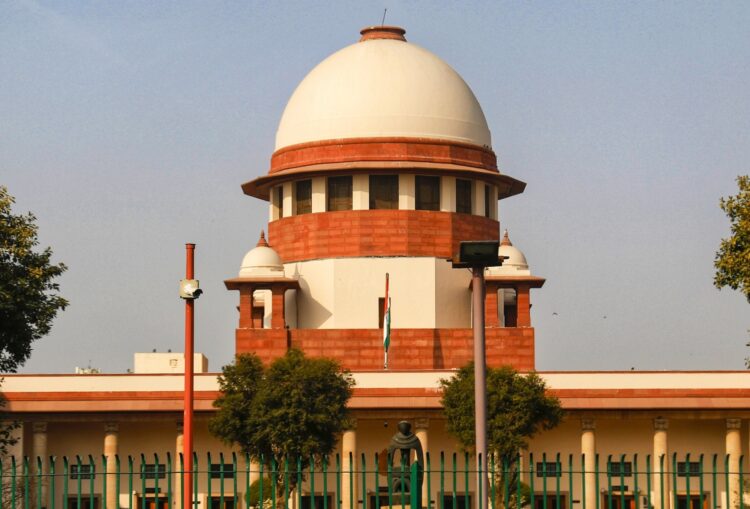
New Delhi: The Supreme Court has ruled that the National Commission for Scheduled Castes (NCSC) cannot issue binding directions or adjudicate service disputes, holding that its role under Article 338 of the Constitution is recommendatory and advisory, and not adjudicatory.
A bench of Justices Sanjay Karol and A.G. Masih set aside a Bombay High Court judgment which had upheld an NCSC direction requiring the Mumbai Port Authority to implement promotion-related directions and pay arrears to a Scheduled Caste employee within 30 days.
The top court said that while the constitutional body is empowered to investigate complaints relating to the deprivation of rights and safeguards of Scheduled Castes and make recommendations, it cannot pass enforceable directions in service matters.
“We are of the considered view that the Division Bench (Bombay High Court) fell in error in holding that the directions issued by NCSC… were within the scope of powers provided under the Constitution,” the Justice Karol-led Bench said.
It added that Article 338 confers limited powers upon the Commission. “It is therefore clear that while it has powers to requisition documents and receive evidence, it does not have the power to make an order in furtherance of that evidence. In other words, NCSC can record a factual finding and then ask the concerned Government, either the Centre or the State to act thereupon,” the judgment said.
Rejecting the Commission’s contention that the expression “safeguards” under Article 338(5)(b) empowered it to enforce its findings, the apex court said: “Such a submission is difficult to accept in view of the explicit language of the Article. It certainly does not confer adjudicatory power, at best recommendatory in nature.”
The dispute arose after the Mumbai Port Authority demoted an employee belonging to the Scheduled Caste category following a revision of seniority pursuant to a Bombay High Court judgment quashing the Centre’s 2002 Office Memorandum granting consequential seniority to SC/ST employees promoted through reservation.
Aggrieved by the demotion, the employee approached the NCSC, which directed the Mumbai Port Authority to strictly adhere to reservation guidelines, grant promotions in accordance with reservation rules, implement its directions and pay arrears within 30 days.
The Mumbai Port Authority challenged the order, contending that the Commission lacked constitutional authority to issue binding directions beyond the functions enumerated under Article 338(5).
While the Bombay High Court upheld the NCSC’s action, the Supreme Court disagreed. Allowing the appeal, the apex court examined the scope of Article 338 and held that the NCSC’s civil court powers under clause (8) are confined to facilitating investigations and inquiries by summoning witnesses, receiving evidence and requisitioning documents.
“The powers entrusted to NCSC are limited in nature. Clearly, NCSC and its other compatriots under Articles 338A and 338B are Constitutional Bodies with a socially beneficent purpose, but quite apparently, the Legislature has prescribed a role that is recommendatory and advisory, but certainly not adjudicatory. They are not meant to be bodies taking over adjudicatory functions,” the Justice Karol-led Bench said.
Referring to its earlier decisions, the Supreme Court reiterated that the Commission’s powers do not extend to granting injunctions or deciding disputes affecting legal rights.
Setting aside the Bombay High Court judgment, it declared that the NCSC’s direction requiring payment of arrears was “contrary to the provisions of the Constitution and as such non-est in law”.
(IANS)