





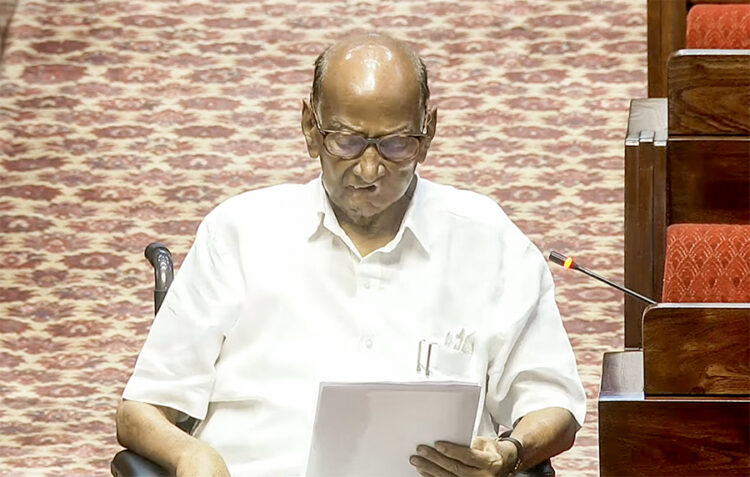
Pune: Nationalist Congress Party (SP) President, Sharad Pawar, on Thursday launched a scathing attack on the Central Government’s recent decision to ban sugar exports, terming the move “economically disastrous” for Maharashtra’s cooperative sector.
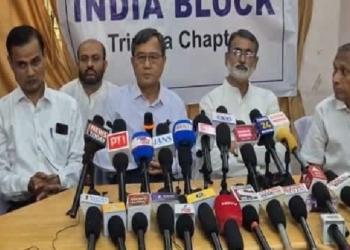
Speaking at a press conference in Pune, the veteran leader demanded an immediate reconsideration of the policy to prevent the financial collapse of sugar mills. He demanded immediate withdrawal to protect the 2026 sugar season.
Pawar highlighted that the export ban has arrived at a time when the state is grappling with excess sugar production. He argued that the ban restricts the cash flow required by factories to pay the recently hiked Fair and Remunerative Price (FRP) to farmers.
“The industry was finally seeing a window of liquidity through international markets. By shutting this door, the government is making it impossible for mills to survive and fulfill their legal obligations to the sugarcane growers,” Pawar stated. He also called for government intervention due to unseasonal rain damage.
Pawar also addressed Prime Minister Narendra Modi’s recent calls for domestic austerity amid West Asian instability. He cautioned that while fiscal discipline is necessary, the government must ensure that “common citizens are not burdened by policy failures at the top.”
He specifically noted that fuel and edible oil prices remain a major concern for the rural economy. Pawar has stated that Prime Minister Modi’s appeal must be taken seriously and leaders should avoid mere posturing. He emphasised that those reducing their motorcades should maintain consistency rather than doing it for show.
Pointing to the gravity of the current national situation, Pawar also demanded that the Prime Minister convene an all-party meeting. Furthermore, he questioned why the ruling party did not consider fuel conservation during the elections and why it took so long to arrive at such a decision.
Pawar remarked, “The Prime Minister’s appeal suggests that the situation is grave. It is being discussed everywhere; therefore, everyone should take note of it. The country has faced such situations before. Following the Prime Minister’s call, there are many ways to reduce administrative expenses, and work should be done in that direction.”
Referring to reports of ministers reducing their convoys or walking on foot following the PM’s appeal, Pawar advised that such actions should not be a show and must be sustained. He noted that savings from just one or two days would not yield results, adding that it remains to be seen how long the PM’s own party leaders adhere to this appeal.
“Why are 17 cars needed in a minister’s motorcade? Reducing them to 7 or 8 now is just a show. For the last four years, I have had only three cars in my convoy, and I have even requested to further reduce that number,” Pawar said.
Commenting on the Chief Minister Devendra Fadnavis arriving at the Mantralaya on a bike today, Pawar remarked that people would only take it seriously if the Chief Minister continues to commute by bike every day starting tomorrow.
Turning his attention to the political landscape, Pawar commented on the evolving dynamics between the two NCP factions following the recent Pune Municipal Corporation elections. He confirmed that discussions are underway to avoid a split in “like-minded” votes for the upcoming Zilla Parishad (ZP) elections. He hinted that while the parties remain distinct, local-level adjustments would be prioritised to take on the BJP in rural strongholds.
When questioned about the recent Baramati Assembly bye-election results, Pawar maintained a stoic stance, emphasising that “voter maturity” in Maharashtra has always been underestimated by those in power. He dismissed recent disparaging comments made by younger political rivals regarding the “downfall” of senior leadership as “signs of political immaturity.”
Speaking on the NEET paper leak, Pawar mentioned that similar incidents have occurred before. He stated that the paper leaked because necessary precautions were not taken, subsequently leaving the future of millions of students in the dark.
(IANS)