





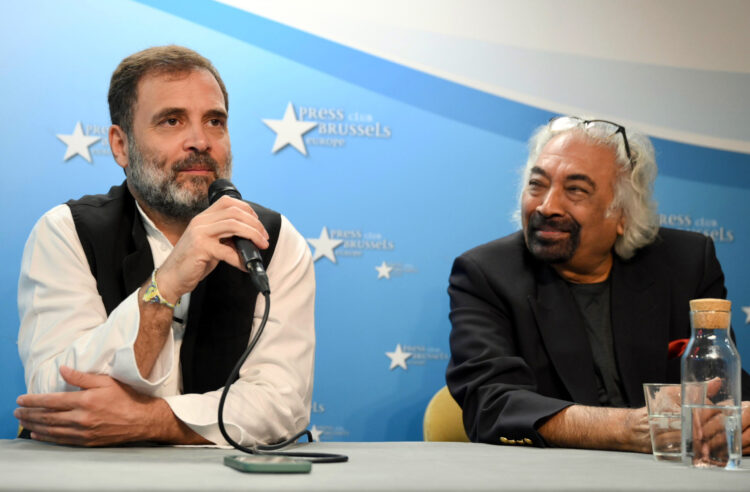
Washington: Indian Overseas Congress chief, Satyanarayan Pitroda, better known as Sam Pitroda, on Thursday expressed his confidence in the Cockroach Janta Party and their capability to push for change. Speaking to IANS he said that the small group of youngsters had the courage to speak up and take charge. He asserted, even if sometimes their language was not right, they opened up opportunities for others.
Here are some excerpts from the interview:
IANS: What is your opinion about the Cockroach Janata Party protest against the Union government?
Pitroda: Before we talk about the CJP, we need to understand what is going on in the nation. Cockroach Janta Party and the Students Movement are just a piece of a bigger puzzle. It’s not the only piece. To me there are multiple things going on at the same time, which is bringing a lot of things together.
First, it’s about an ultimate attack on Democracy. Different people will look at it differently, but when you begin to capture institutions, when you begin to undermine civil society, when you begin to control media and bring in an authoritarian mindset, when everything is decided by the Prime Minister’s Office, or the Prime Minister, or what they call the ‘double engine’ Sarkar, democracy gets attacked in many different ways.
People’s opinions don’t get expressed; people are afraid to speak up. People feel that they will not be heard. If you express an opposite view, the Enforcement Directorate will turn on you; a court case will be filed. All that is one piece of the puzzle.
The bigger piece is still speaking about elections. On one hand, it is about attacking democracy; on the other hand, many believe that the elections were not fair. You did not count the vote that I cast. Whether it is through my registration, my qualification, my counting, processing, EVM, voter list, boxes being moved, locked up, opened up on the street, dumped in the truck. All that has created mistrust. I don’t trust this anymore.
It may be right, it may be wrong. You may have one view; someone else might have another view. The to-and-fro of blame that goes on is a very classic example of democracy being attacked, because it becomes an attack on the individual and not a fair conversation on an issue. This is where the CJP comes in.
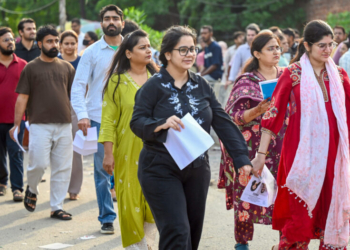
A small group of students who felt hurt after someone called them a Cockroach. They came together at the right moment because there were issues with the examination, paper leak, poor infrastructure, bad education, increasing tuition fees, coaching classes and unemployment. All that affects the next generation came together, which really galvanised young people. The end result was that they were fearless, they had courage, and they really could speak up.
Some people spoke loudly. Some spoke in bad language. Not that I approve of it, but you could see their anger. That opened up a whole lot of opportunities.
Those who were afraid to speak got courage. Civil society felt, hey, maybe something will happen now. Student Movement, Cockroach Janta Party movement is all about fearless Opposition. It was about courage. It was about awakening. In one of my articles, I called it the ‘Indian Monsoon’, very similar to the ‘Arabic Spring’. So credit goes to the young people. Who spoke up, took charge – some right, some wrong. But they galvanised society.
Third thing is the minorities, OBCs, Dalits, and tribals felt their voices were not heard, not given a share of the economy. They are being sidelined. Very few people are benefiting from the growth of the Indian economy; the people at the bottom of the economic pyramid are not seeing the growth. Their wages have not gone up. Inflation has increased; purchasing power has eroded.
It is all about equity, quality, and injustice. Attacks on minority made many people felt insecure and uncertain about their futures. The students’ protest galvanised them; now they could speak. Not just the students. They all felt that they had a voice too.
The fourth thing that is going on simultaneously is the performance of the government. A lot of things were promised. You go back to see the list of promises and see what has been met. The economy is a mess. Of course it is at 7 per cent, or whatever the number is, but who is benefiting from it? Do people see the benefit? Or only a handful of people benefit?
You see 20 people multiplying their wealth a hundred times, and the numbers look good, but that did not help the workers or the common man. In the process, we haven’t created jobs; wealth distribution is unequal. Education is in a mess. Our schools do not provide proper Mid-Day Meals. Buildings are broken, teachers don’t show up.
Our primary health care systems are not fixed.
So if you look at the track record of the last 15 years, maybe we have built good airports, maybe we have built good roads, but the poor guy says, ‘I have nothing to do with airports; I don’t take a flight; I have nothing to do with roads, because I don’t have a car.’
I think distribution of wealth has been totally wacked.
The fifth thing that is going on is technology – control of Media, social media, AI. Now we are a nation that has connected billions. Everybody has a cell phone, and what does a cell phone mean? Everybody has access to information. They are all watching videos, and the way to communicate has changed completely. In the process, misinformation has increased, and attacks have increased.
Campaigns are fought very differently with technology. Not just the election campaign but the campaign to promote your views. So people lie through their teeth, and they are not ashamed of lying. Everybody lies. You say one thing and do something else. In a sense, you don’t mean what you say, and you don’t say what you mean. And that has created confusion in people.
I think these five things are going on in parallel. First: Attack on democracy, mistrust in the voting/election system. Second: Student movement and courage, fearless conversation, awakening. Three: Minorities, OBC, Dalits, Tribals feeling that they need to be empowered; they need a piece of the cake, and they have been ignored.
Four: Performance. Just look at the performance track record. Kids are saying, ‘Where are my jobs? Where is my education?’ 100,000 children go out of India every year to foreign countries for education.
They spend, on average, $50,000 a year; it could be $100,000. That’s almost $50 billion a year going out for children’s education. Why can’t India provide a good quality education after all this? We have many IITs, we have many IIMs, and we need more liberal arts schools, and we need more philosophy, economics, art, culture. You know… psychology, anthropology.
Why don’t we have good art education also? And why should our children go out in these numbers now? It was okay maybe 50, 60 years ago. You know, I came to the US 62 years ago. Then the environment was very different. Today, on one hand, India is thriving, and technology is available. But on the other hand, we need to send 100,000 of our kids abroad for education.
So I think performance has a lot to do with it. We made all the promises; we never delivered on many of these things. Again, there are different views from different people. Some people blindly believe in one view and don’t even look at the reality. So that’s where we are.
IANS: Do you see any hope of regime change following massive protests against the government?
Pitroda: I think it is up to the people of India. I personally believe that, at some point, the courts will have to intervene. You need courage in the judiciary system to be able to see the reality. They are the guardians of democracy. They have to act if they think democracy is attacked, if they think elections are not free and fair. People have presented their view. One group of people.
Now it is for the courts to decide. What is right, what is wrong, and how to save the country. We are at a crossroads, believe me. This is the most difficult period in the modern history of India.
Because the group, we have, RSS, and, you know, the whole religion-based ideology is one way of going forward.
The group is saying the core of our future is religion. The core of our future is discrimination.
Another way forward is the one Mahatma Gandhi, Pandit Nehru, Sardar Patel, and our founding fathers decided on in 1947: Secularism, democracy, diversity, and inclusion as the core of our future.
However, the group is saying that is not the core of our future. And that’s the fight we are looking at now, the crossroads.
People of India will have to decide what kind of nation they want to build. And I think young people have shown they don’t care about what religion you practice. To them, rightfully so, everybody is equal. Everybody has the right. They don’t care about caste. And that’s the beauty of these young people.
Pitroda: No, I don’t say they should intervene. I said that’s one option. It is for them to decide. Who am I to tell them?
IANS: During the protest, Opposition parties sought to meet with the Chief Justice of India (CJI), but he declined to meet them, stating that he had already responded to their request in writing. How do you respond to this decision, and do you think the CJI should have met the Opposition leaders?
Pitroda: No, that’s fine. That’s his privilege. And I think from his viewpoint, he’s right that I don’t meet people who are filing court cases. That’s not done. And that’s perfectly OK. I respect his decision. And I respect people’s desire to go and meet him too. Both are fine… People said, ‘we want to meet you’, and he said, ‘No, give me in writing or file a court case.’ So that’s being done. His advice is being taken, and people are filing papers. So that’s perfectly all right. It’s a normal thing to do. No problem. I don’t consider that an insult to somebody. I don’t consider that a roadblock. I think it’s a process that he wants to follow, and I respect that.
IANS: Should CJP join the leadership of Rahul Gandhi?
Pitroda: It is for them to decide, but they have rightfully said that they are not a political party. I also personally believe they would do a much better job for the nation if they become more of a watchdog for anybody, for everybody. Saying, hey, our schools need to be fixed, our primary health centres need to be fixed, our teachers need to be upgraded.
And that pressure from young people saying, if you do these, my future would be better, irrespective of which party is in power. They have to really be more of a moral force or pressure group to get things done. And I think there is room for that also in democracy.
IANS: The Aam Aadmi Party is continuously attacking the Congress when the rest of the Opposition is united. What do you want to say on that?
Pitroda: That is their privilege. You know, they see something they want to talk about; they are free to talk. If they are speaking against the government, they are entitled to speak against anybody, including me. What’s the problem?
You’ve got to have a conversation with them. It’s okay to have different views. You’ve got to explain to them your view. And it’s OK to have different views as long as you are willing to speak across the table and sort it out. You don’t have to agree with me because you are not fighting me. You are fighting my idea.
I think one of the things we need to be very clear about is that we are not attacking a person. We are attacking that idea of a person at that point in time. And we all change. I have changed. I’ve learned; I modified my views. I’ve lived with contradictions in my life. That’s okay.
So when you criticize my idea, I know that you’re not criticizing me. Today I may have a bad idea. Tomorrow I might have a good idea. So it’s okay to criticize somebody.
IANS: There are reports that the Cockroach Janta Party is the offshoot of the Aam Aadmi Party. What do you want to say on that?
Pitroda: I don’t know. I am not knowledgeable in these things, and I have no idea. I take them for what they say they are. And as far as I understand, they’re a bunch of young guys, young people, very smart. I see them on TV on and off, and I feel proud of them. I feel good about them. Their ability to speak, their ability to articulate, their ability to navigate through this complex system, and their courage. They’re good. Okay. And they can make mistakes. It’s okay. But they’re good.
We should be proud of our young people. When I look at them, I see some hope that I wish more people like that would speak up, who fight for a cause. And sometimes the fight may be wrong. That’s okay too.
But the fact that they could get rid of fear and show courage was really important to me. You know Gandhi ji always talked about courage. That if you don’t have courage, you can’t get things done. You’ve got to stand up for what you believe in. You’ve got to fight. If you’re not willing to fight, if you’re not willing to be heard, nobody will hear you.
IANS: Dhruv Rathi is in India. What impact does he have in India?
Pitroda: I think he’s a bright young man. I think he has a really large following. And it is his right as an Indian citizen to be there and express his views. He’s also fighting a battle. So that’s perfectly all right. I respect him for that. I appreciate his courage. And I think we need more people like that. And he’s good.
IANS: Should people like Abhijit Dipke, Saurabh Das and Dhruv Rathi join Congress for the betterment of the country?
Pitroda: It is for them to decide; it is for Congress to decide, you know. But we need in society independent people like these young people who take on a cause and fight for a cause. Like I said earlier, irrespective of the party in power.
If they say, look, we want to fix the Mid-Day Meal program and we’ll fix it; it may take three years. That’s a huge contribution so that our children will not have bugs in their food. If they say, look, fix all our school buildings, make sure that all our bathrooms are clean and water is there and fans are fixed and schools are painted. It’s OK.
I mean, these are huge tasks. And if they keep their focus on some of these developmental things, mainly on education and health, I think it will go a long way.
IANS: There was a controversy about Sandeep Dikshit mocking PMs Modi and Meloni. What do you want to say on that?
Pitroda: Nothing. I don’t know. I have not seen it, so I have no idea.
IANS: What is your opinion about Manu Smriti? Should this be banned?
Pitroda: I’m not knowledgeable about it. I don’t pay attention to these religious things at all.
IANS: PM Modi has completed 25 years of governance. What do you want to see in his governance?
Pitroda: Well, first of all, I wish him good health. He’s at an age where we all get affected. So I wish him very good health. He has completed 25 years, which is an accomplishment in its own way. And you know, time will tell.
IANS: What are the qualities in PM Modi you find admirable?
Pitroda: I don’t comment on individuals. That’s not my job because that’s a very personal thing. I do not comment on people’s personality, because we are all different human beings. I respect what we are. It is OK for you to be different than I am because that’s the diversity we celebrate. So, for me to comment on somebody, some individual, is just not fair.
IANS: Can India achieve a ceasefire between Russia and Ukraine? Both countries have indicated their willingness for India’s mediation. Your view?
Pitroda: I don’t think India has that kind of power that we should have, today.
Our position in the world is not what we think we have. We call ourselves Vishwa Guru. That is bogus from my viewpoint. But it’s okay if that makes our people feel good. But the reality is very different. What role did we play in this war for the last five years? It has been going on for a while. Why all of a sudden, after five years we play a role? Where were we before?
What role did we play in Gaza?
So I think our foreign policy is very different today than it was before.
We are the largest country in the world, and we should have a seat at the table, not on the sidelines. We don’t have a seat at the table today.
I don’t think people are paying attention to what we have to say. We may think it differently.
The general impression given in India is that we are Vishwa Guru; everybody is waiting for our input and advice. No, that’s not true. Go see the newspapers in the world, and you will see what space India gets. There is no headline unless there is something like what is going on today. So we have to be realistic. But again, everybody has their own views. Some people think we are the most important people out there on foreign policy. I don’t think so. So, to your answer on Ukraine and Russia war- Where were we for five years? That would be my question.
IANS: Rahul Gandhi has supported Elon Musk recently on the spectrum issue. What do you want to say on that?
Pitroda: I don’t think Rahul Gandhi has supported. Rahul Gandhi is not saying that you should be given spectrum. Don’t misunderstand. Rahul Gandhi basically responded to his little note, which is okay, perfectly all right. Didn’t mean anything. You don’t have to read 50 things in there.
It doesn’t mean that if Rahul Gandhi came to power, he’ll give a licence to Elon Musk. That’s not what it means. But again, people read different things.
IANS: Can Elon Musk be more beneficial for India than Gautam Adani and Mukesh Ambani?
Pitroda: I don’t think it is an issue between Adani, Ambani and Elon Musk. It is an issue that our telecom policy will have to decide whether we need Elon Musk’s satellite service or there is a better way to provide the same services to people of India at a lower cost. And it’s a policy decision. It is not a people decision between X and Y.
IANS: Do you believe that Elon Musk and George Soros’ influence on politics and policymaking is changing countries or not?
Pitroda: I don’t think so. I think they have some influence. But they do their thing, and politicians do their thing, and people do their thing. Everybody has a job to do, and they all have a contribution to make. They try to change policy to benefit them but they don’t run a nation unless you are a country of two million people. That’s okay. Perhaps.
IANS: What is your opinion about George Soros?
Pitroda: I don’t know him. I’ve never met him. Okay. I’ve lived in America for so long. I’ve seen him once or twice at a public meeting where he was speaking in New York, but I didn’t say ‘hello’ to him. I didn’t go close to him. I have no idea.
IANS: Should India entertain George Soros?
Pitroda: For what?
IANS: It can be for any purpose.
Pitroda: It’s up to India. It’s up to people in power. What is it that you are asking for? If George Soros is going to bring in a $10 billion investment to do something good, maybe it’s one thing to look at. Possible. It all depends on a case-by-case, policy by policy basis, and it’s the privilege of the people in power.
IANS: Will Rahul Gandhi become the Prime Minister of India in 2029, considering the current political climate of the country?
Pitroda: It is for the people of India to decide.
IANS: When are you planning to visit India?
Pitroda: Don’t know. I don’t travel as much as I used to travel. You know, I’m 85. My wife also has a little bit of health issues. So we avoid travelling. And I get a lot more done on video. So why a complicated life?
And we don’t have anybody in India. I don’t have any relatives directly. All my brothers, sisters, and their children are in the US. We are about 100 people in the US. So the need to go home to meet relatives is not there.
(IANS)