


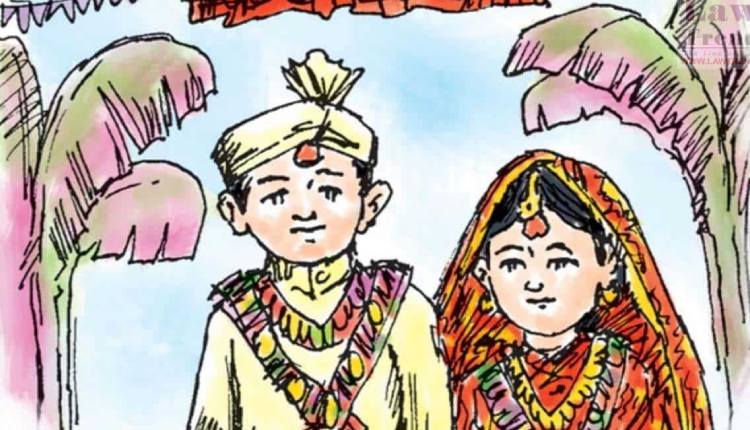
Bhubaneswar: Fresh data tabled in the Odisha Legislative Assembly has revealed that 12 districts in the state have child marriage rates higher than the national average, prompting concern over persistent social practices and gaps in preventive interventions.
Responding to a question in the House, Deputy Chief Minister Pravati Parida informed that while Odisha’s overall child marriage rate stands at 20.5 per cent—below the national average of 23.3 per cent—several districts continue to report significantly higher incidences.
Among the worst-affected districts, Nabarangpur tops the list with a rate of 39.4 per cent, followed by Nayagarh at 35.7 per cent and Koraput at 35.5 per cent. Rayagada has recorded 33.2 per cent, while Malkangiri stands at 32.4 per cent, reflecting a worrying concentration of early marriages in parts of southern and western Odisha.
Other districts that have exceeded the national average include Mayurbhanj (31.3 per cent), Keonjhar (29 per cent), Gajapati (28.1 per cent), Balasore (26.4 per cent), Boudh (25.3 per cent), and Angul (25 per cent).
Though the state’s aggregate figure remains below the national benchmark, the clustering of high child marriage rates in multiple districts has been described as a matter of serious concern, underscoring regional disparities in social development indicators.
The Deputy Chief Minister identified five key drivers behind the persistence of child marriage in Odisha: deep-rooted social customs and traditional beliefs, gender-based discrimination, poverty, social insecurity, and lack of education among adolescent girls. These factors, she indicated, continue to reinforce early marriage practices despite legal prohibitions and awareness campaigns.
The data was furnished in response to a query raised by BJP MLA Amar Kumar Nayak from Barachana, who sought detailed information on the prevalence of child marriage and the government’s corrective measures.
In its reply, the government stated that it is intensifying awareness campaigns, strengthening educational outreach, and implementing community-level interventions to curb the practice. Efforts are also being made to ensure greater coordination among departments to safeguard the rights of children and prevent early marriages across vulnerable regions.
The disclosures in the Assembly have once again brought focus on the need for targeted district-specific strategies to address social vulnerabilities and accelerate progress towards eliminating child marriage in the state.