





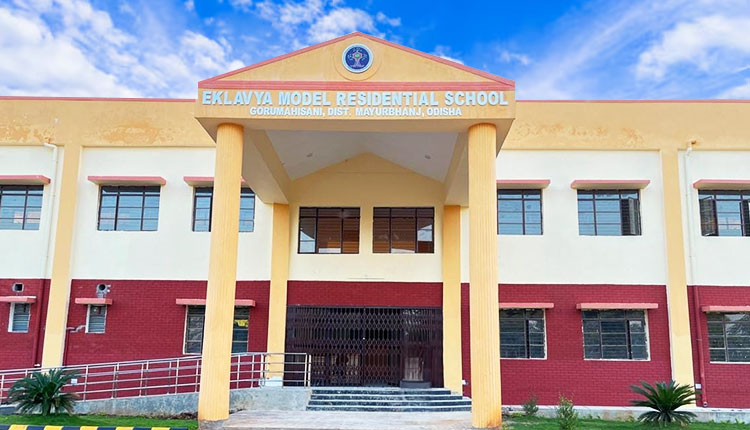
Bhubaneswar: Odisha currently has 47 functional Eklavya Model Residential Schools (EMRSs), while construction of 52 more is underway, Minister of State for Tribal Affairs Durgadas Uikey informed the Rajya Sabha on Wednesday.
In a written reply to a question by Rajya Sabha MP Sujeet Kumar, Uikey said the Ministry of Tribal Affairs has sanctioned a total of 114 EMRSs across the state to expand access to quality education for tribal students.
According to the minister, construction of 62 EMRS buildings has already been completed. Of these, 47 schools have become operational, while the remaining completed institutions are expected to commence functioning soon. The other 52 sanctioned schools are at various stages of construction.
District-wise data reveal that Mayurbhanj has received the highest number of sanctioned EMRSs, with 23 schools, followed by Sundaragada (16), Koraput (12), and Kandhamal and Kendujhar, with 10 schools each. Mayurbhanj also tops the list in terms of operational institutions, with 13 EMRSs already functioning.
Several districts, including Balangir, Balasore, Debagada, Kalahandi and Nuapada, have all their sanctioned EMRSs completed and operational. However, districts such as Dhenkanal are yet to have any functional EMRSs, although construction work is in progress.
Addressing concerns over staff shortages, Uikey informed the House that 9,111 teaching and non-teaching personnel have already been recruited for EMRSs across the country, including Odisha. Recruitment examinations have also been conducted for an additional 7,267 posts to strengthen the workforce in these residential schools.
To ensure that academic activities remain unaffected, the Ministry has advised state governments to temporarily fill vacant positions by engaging teachers and staff on deputation or on a contractual basis until regular appointments are made.
The minister further stated that the National Education Society for Tribal Students (NESTS), in coordination with State EMRS Societies, is conducting periodic reviews to assess students’ learning outcomes, academic performance, and the implementation of educational support programmes.
He added that remedial classes, bridge courses, academic mentoring, and targeted support for academically weaker students are being implemented to improve learning outcomes and ensure quality education in EMRSs across the country.