





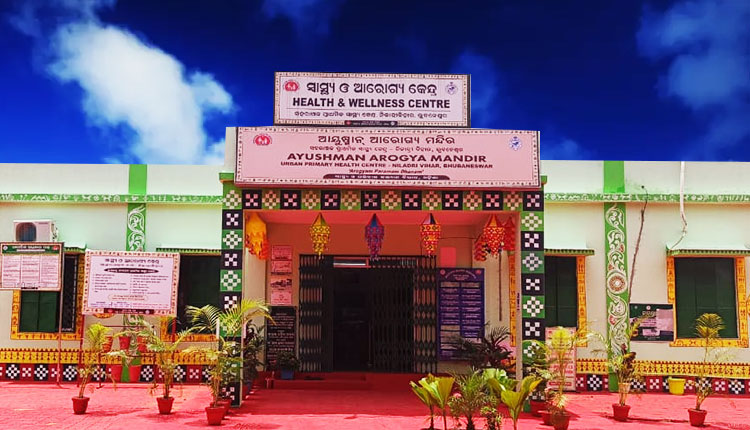
Bhubaneswar: Odisha has operationalised 7,379 Ayushman Arogya Mandirs (AAMs) against the target of 8,662 centres for 2024-26, Union Minister of State for Health and Family Welfare Prataprao Jadhav informed the Rajya Sabha on Tuesday.
In a written reply to a question by BJP MP Sujeet Kumar, Jadhav said the Ayushman Arogya Mandirs have strengthened primary healthcare delivery in the state by providing a wide range of preventive, promotive and curative health services, particularly in tribal and remote areas.
The minister said Mayurbhanj district has the highest number of operationalised AAMs in Odisha with 619 centres, followed by Ganjam with 530, Sundaragada with 433 and Kataka with 416 centres.
The AAM initiative is aimed at expanding access to comprehensive primary healthcare services closer to communities. These centres provide 12 key packages of healthcare services, including reproductive and child healthcare, communicable disease management, non-communicable disease screening and treatment, palliative care, elderly care, mental healthcare, neurological disorder management, substance use disorder management, oral healthcare, ENT services and basic emergency care.
Jadhav said the Odisha government has not reported any widespread shortage of doctors, paramedical staff or essential medicines at Ayushman Arogya Mandirs or other healthcare facilities that has affected healthcare service delivery.
He added that vacancies arising due to retirement, transfer, resignation or other administrative reasons are being filled regularly through recruitment and deployment processes to ensure continuity of healthcare services.
The minister further informed that Odisha has established a robust drug procurement and supply chain management system to maintain uninterrupted availability of essential medicines across public healthcare facilities. At present, the overall availability of essential medicines at healthcare centres is around 99%, ensuring that patients receive required medicines free of cost.
The Odisha government has also stated that the operationalisation of AAMs has improved Comprehensive Primary Health Care (CPHC) by bringing preventive, promotive, curative, rehabilitative and palliative healthcare services closer to people.
With more patients accessing treatment for primary healthcare conditions at AAMs, only those requiring specialised treatment are being referred to higher-level healthcare facilities, helping reduce the burden on secondary and tertiary care hospitals.