





Bhubaneswar: AIIMS Bhubaneswar is strengthening its focus on translating biomedical research into advanced diagnostics and evidence-based patient care, particularly in cancer, infectious diseases, public health, microbiome and mental health.
With state-of-the-art facilities such as the Infectious Research and Diagnostic Laboratory (IRDL), Advanced Mycology Diagnostic and Research Laboratory, Advanced Molecular Oncology Diagnostic Services (DIAMOnDS) and Brain Bank, the institute aims to make advanced diagnosis and treatment accessible to patients from Odisha and neighbouring states, reducing the need to travel to distant cities for specialised care.
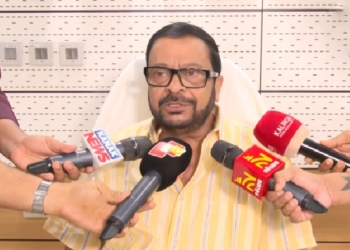
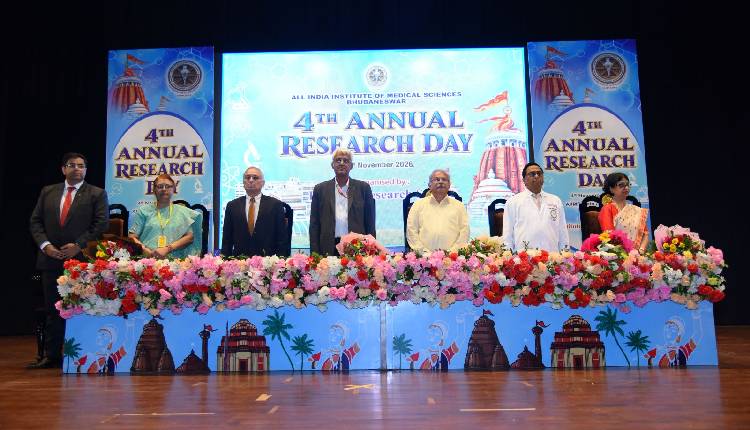
This was highlighted by AIIMS Bhubaneswar Executive Director Dr. Ashutosh Biswas during the institute’s 4th Annual Research Day, held on the theme “Innovate, Translate, Heal: Advancing Biomedical Frontiers.” The event reaffirmed the institute’s commitment to patient-centric research and healthcare innovation.
AIIMS Bhubaneswar secured ₹32.2 crore in extramural research grants through 187 projects during 2025–26. In 2026–27, it has already received over ₹10 crore through 29 projects. The institute is currently supported by 24 international, national and regional funding agencies, reflecting its growing research capabilities and collaborations.
The programme was attended by Prof. Shreepad Karmalkar, Director, IIT Bhubaneswar, as Chief Guest, while Dr. Arvind Sinha, Executive Director, AIIMS Kalyani, and Mr. Charudutta Panigrahi, Senior Technocrat, Chairman, Vikash Manthan and Advisor, AHPI, attended as Guests of Honour. Dean (Research) Dr. Baijayantimala Mishra, Dean Examination Dr. Manaswini Mangaraj, and Associate Dean (Research) Dr. Gaurav Chhabra were also present.
Emphasising the need for stronger institutional partnerships, Prof. Karmalkar called for interdisciplinary, multidisciplinary and transdisciplinary research, highlighting the importance of closer collaboration between IITs and AIIMS. Dr. Sinha stressed the need for India-specific health research data, noting that India’s unique population profile and healthcare challenges require evidence generated within the country. Mr. Panigrahi underscored the role of research, particularly medical research, in nation-building.
A major highlight was the research poster presentation, featuring 140 participants, alongside a panel discussion on “Breaking Barriers in Medical Research: Hurdles, Innovations and Opportunities.” Moderated by Dr. Biswas, the panel included Mr. Panigrahi; Prof. Debasis Dash, Director, Institute of Life Sciences (ILS), Bhubaneswar; Prof. Ramnath Misra, former Dean, SGPGIMS; and Prof. Arvind Sinha, Executive Director, AIIMS Kalyani. Discussions focused on strengthening India’s research ecosystem, fostering interdisciplinary partnerships and addressing emerging healthcare challenges.
The dignitaries also released the Annual Research Report 2025–26 and digitally launched AIIMS Bhubaneswar Research Talks. Awards recognising excellence in research and publication, best posters across participant categories, and global research achievements were also presented.