





Bhubaneswar: In a significant move towards improving urban mobility and ensuring safer, more efficient roads, the Housing & Urban Development Department, is set to move ahead with the proposed Bus Priority Lane pilot on two major traffic corridors in Bhubaneswar.
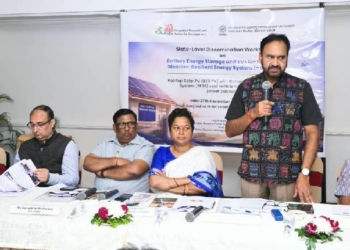
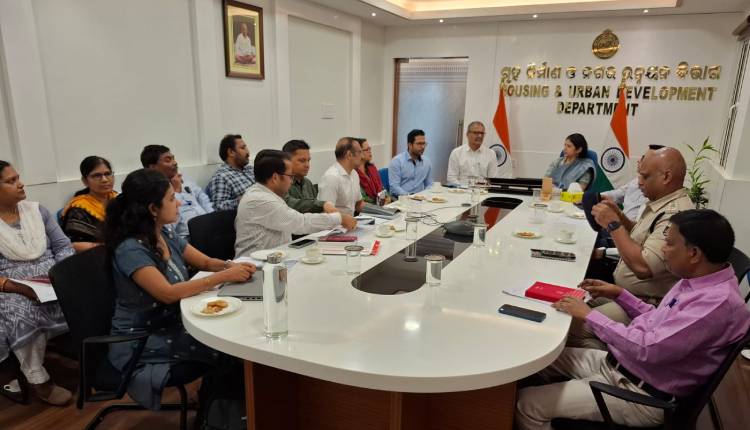
The initiative, aimed at reducing traffic congestion, improving public transport efficiency and encouraging greater use of buses, was discussed at a review meeting chaired by Usha Padhee, Additional Chief Secretary, Housing & Urban Development Department.
The meeting reviewed a comprehensive set of measures relating to traffic decongestion, pedestrianisation, lane discipline and dedicated priority lanes for Ama Buses. It also deliberated on the proposed engagement of transgender persons as Traffic Wardens, reflecting the State’s commitment to inclusive participation and dignified livelihood opportunities.
Making a detailed presentation, Md. Siddique Alam, Managing Director, Comprehensive Region Urban Transport (CRUT), outlined the proposed pilot corridors, infrastructure requirements, traffic management arrangements and implementation strategy. The initiative has been developed through consultations among CRUT, Bhubaneswar Municipal Corporation , Bhubaneswar Development Authority , Bhubaneswar Smart City Limited, Traffic Police, Works Department and other concerned agencies.
Two high-demand corridors have been identified for the pilot: Airport – Nandankanan, covering approximately 18 km, and Vani Vihar–Sishu Bhawan, spanning around 5 km. The Airport–Nandankanan corridor caters to approximately 9,000–10,000 daily passengers through six routes operated by 63 buses. The Vani Vihar–Sishu Bhawan corridor serves around 5,000–6,500 daily passengers through six routes with 64 buses. The proposed priority lanes are expected to reduce delays caused by mixed traffic and make bus journeys more predictable and reliable.
The field assessment has identified the need for 18 additional Bus Queue Shelters, including 10 along the Airport–Nandankanan corridor and eight along the Vani Vihar–Sishu Bhawan corridor. Relocation of existing shelters and improvement of bus bays at five identified bottleneck locations—KIIT Square, Patia Square, Damana Square, Niladri Vihar Square and Jaydev Vihar Square—will also be taken up to prevent obstruction to the movement of traffic.
The proposed priority lanes will primarily facilitate Ama Bus services, while also permitting ambulances, fire services and other authorised emergency and critical-response vehicles. The meeting discussed various operational aspects, including the appropriate positioning of priority lanes, traffic signal optimisation, parking rationalisation and effective management of auto-rickshaws and other para-transit vehicles.
Padhee advised the concerned agencies to move ahead with the initiative in a coordinated and time-bound manner. She emphasised that traffic decongestion cannot be achieved through isolated interventions and requires integrated planning, effective enforcement, disciplined road usage and improved public transport services.
She called for close coordination among CRUT, Traffic Police, BMC, BDA, Works Department and other stakeholders to ensure that the proposed measures are practical, citizen-friendly and effective on the ground.
It was decided to undertake a detailed technical and feasibility assessment covering lane configuration, traffic impact, cost-benefit analysis and standard operating procedures. The assessment is scheduled to be completed within one month from 1st December 2026.
The phased implementation plan includes necessary civil infrastructure improvements, relocation of bus shelters, parking management, traffic signal optimisation and technology-enabled enforcement. A 15-day dry run will be conducted before the full-scale launch to assess operational challenges and incorporate necessary improvements.
To ensure compliance and effective traffic management, the proposal also envisages strengthened enforcement through 24×7 CCTV monitoring, automated detection of traffic violations and e-challan mechanisms. Training of enforcement and operational personnel, along with public awareness campaigns on lane discipline, pedestrian safety and responsible road usage, will be integral to the initiative.
The meeting also discussed the proposed engagement of transgender persons as Traffic Wardens. The initiative aims to create dignified livelihood opportunities for members of the transgender community while enabling their meaningful participation in public service and urban traffic management. The modalities relating to their training, engagement and deployment will be worked out in consultation with the concerned authorities.
Among those present at the meeting held in 3rd floor Conference Hall, Kharabalabhawan were Transport Commissioner Amitav Thakur, BMC Commissioner Chanchal Rana, BDA Vice-Chairman Subham Saxena, Additional Commissioner of Police Dr. K. V. Singh, DCP (Traffic) Anup Kanungo, Manoj Kumar Mahananda of Central (R&B) Circle, Addl. Secretary-cum-General Manager, CRUT, Sahadev Samadhia, and other senior officials and representatives of the concerned departments.
Through these initiatives, Odisha seeks to move towards a more organised, inclusive and sustainable urban transport system in Bhubaneswar, where public transport receives priority, pedestrians enjoy safer streets and every road user benefits from smoother and more disciplined traffic movement.