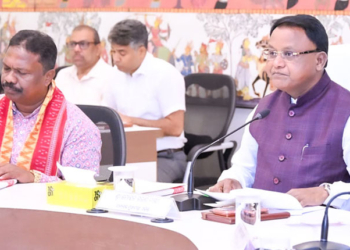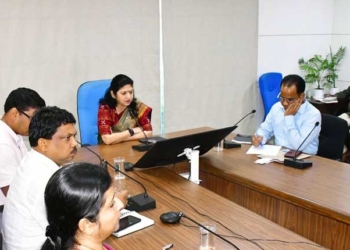



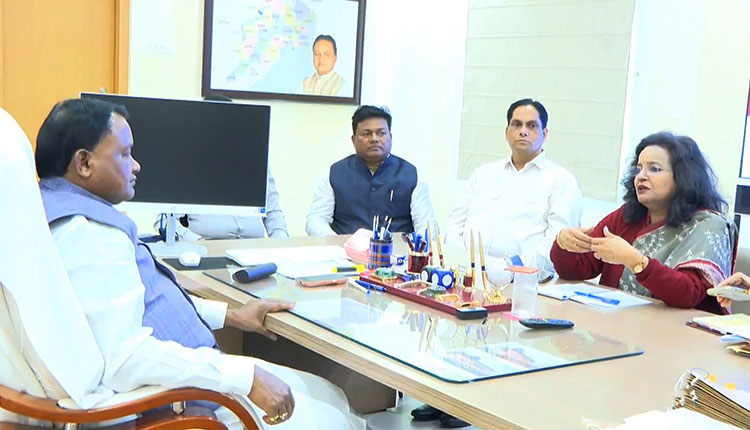
Bhubaneswar: Kicking off the new year with a strong message on governance, Chief Minister Mohan Charan Majhi on Thursday laid out a detailed 15-point action plan for the state’s newly appointed Chief Secretary, Anu Garg, aimed at accelerating administrative reforms and improving delivery mechanisms.
The directions are closely tied to the government’s long-term development blueprint, Odisha Vision 2036–2047, which envisions transforming the state into a $500-billion economy by 2036—coinciding with the centenary of Odisha’s formation—and placing it among India’s top five developed states by 2047 as part of the national Viksit Bharat goal.
Emphasising swift and accountable governance, the Chief Minister called for focused growth of knowledge-based industries and the services sector, faster industrial clearances, strict enforcement of a zero-tolerance policy on corruption, and a strengthened public grievance redressal system at every administrative level.
“The next two years are crucial for translating the Vision Document into tangible outcomes. The administration must work with intensity and purpose to ensure Odisha’s transformation,” Majhi said.
The Chief Minister also instructed that all vacant government posts be filled within the next two years, with capable officers posted in key positions. He directed senior officials to identify inefficient or corrupt personnel and initiate stringent action, including compulsory retirement, in accordance with Article 311 of the Constitution and applicable service rules. The BJP-led government, he noted, has already provided over 39,000 jobs during the past 18 months.
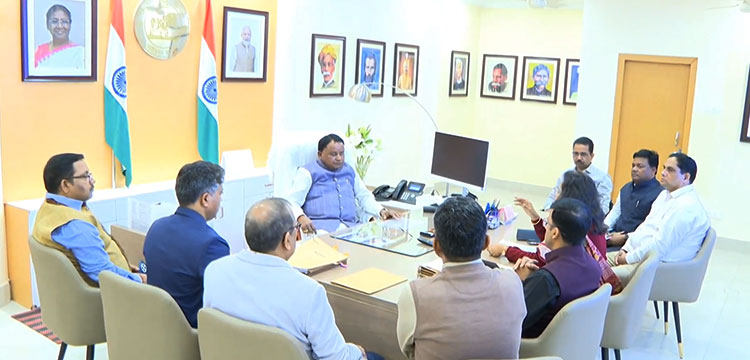
Stressing the importance of monitoring and accountability, Majhi asked for regular reviews of ongoing projects and called for strengthening the Nabakrushna Choudhury Centre for Development Studies in Bhubaneswar as a leading institution for policy research, evaluation, and impact assessment.
Underscoring linguistic pride, the Chief Minister reiterated that Odia must be used exclusively in all official communications—from the Secretariat to the block level—and warned of strict action against officials who fail to comply.
He also emphasised proactive engagement with citizens, directing officers to respond promptly to public grievances, including those raised through digital platforms and social media. Mandatory field visits were prescribed to assess ground realities, with reports from these inspections to be included in officers’ performance appraisals, according to a release from the Chief Minister’s Office.
The 15-point directive is being viewed as a decisive step to inject momentum, discipline, and accountability into Odisha’s administrative framework, reinforcing the government’s broader agenda of clean governance, employment generation, infrastructure development, and inclusive growth as the new year begins.