





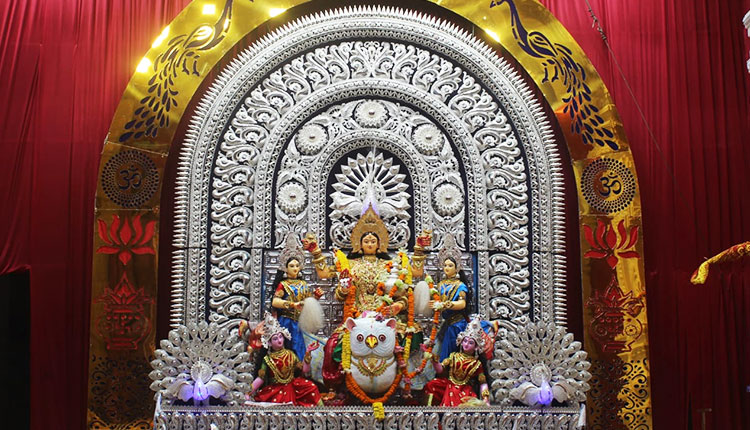
Dhenkanal: A tradition rooted in nearly a century of devotion, Dhenkanal’s Gajalaxmi Puja has evolved from a modest religious observance into one of Odisha’s most distinctive community festivals, illuminating the town with elaborate decorations, dazzling lights and a vibrant celebration of faith and togetherness.
Observed during the Hindu month of Ashwin, the festival centres on the worship of Goddess Gajalaxmi, a manifestation of Goddess Lakshmi associated with wealth, fortune, prosperity and auspiciousness. For generations of residents, the annual celebration has symbolised prayers for happiness, peace and abundance, while reinforcing the cultural bonds that unite the town.
According to local tradition and historical accounts, the festival dates back to 1923. What began on a modest scale gradually developed into a major public celebration, sustained by the devotion, collective effort and enduring faith of local residents. While details concerning its precise origins, including the identity of its founder and the location of the first mandap, require further historical verification, the festival’s longstanding place in Dhenkanal’s cultural life remains unmistakable.
The early celebrations were held at Kunja Sahu Chhak, near the present-day Ganesh Bazaar. Historical accounts associate the initial organisation of the puja with local figures, including Brajakishore Pattanaik, Natabar Debata and Gatikrushna Pattanaik.
In its formative years, the puja mandap was decorated with bamboo, foliage and petromax lanterns, reflecting the simplicity of the celebrations at the time. The tradition, however, faced interruptions for a few years. In 1943, efforts by Natabar Debata, Sanatan Sahu and other local residents helped revive the puja at the present-day Meena Bazaar, formerly known as Majhigada.
The revival marked an important phase in the festival’s growth. Over time, additional puja mandaps emerged across the town’s bazaars and major crossings, transforming the celebration into a wider community event.
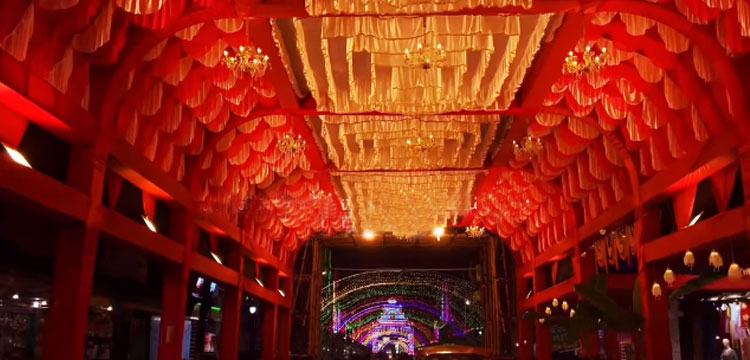
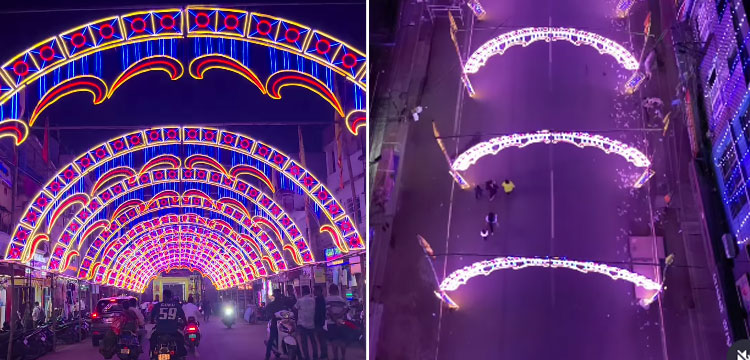
One of the defining features of Dhenkanal’s Gajalaxmi Puja is its extended duration. Unlike festivals confined to a single day, the celebrations generally begin around Kumar Purnima and continue for about 11 days. During this period, markets and neighbourhoods take on a festive appearance, with intricately decorated mandaps, imposing entrance gates, elaborate illumination and beautifully crafted idols of the goddess drawing residents and visitors alike.
The festival also provides a platform for cultural programmes, fairs and commercial activities. Small traders, artisans and local entrepreneurs benefit from the increased footfall, while the festive marketplace creates seasonal livelihood opportunities and adds momentum to the local economy.
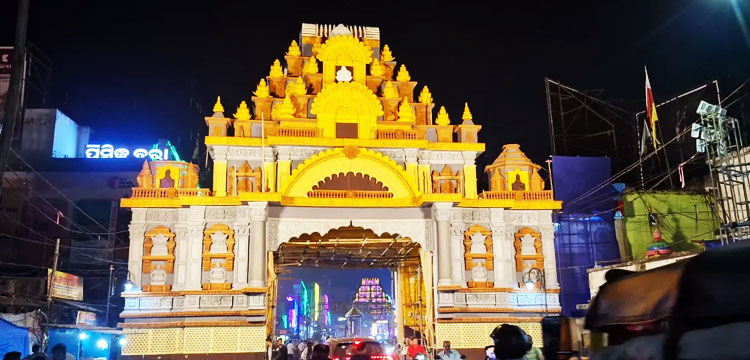
Beyond its religious significance, the puja has become an expression of Dhenkanal’s collective identity. Puja committees, traders, artists and residents work together to organise the celebrations, sustaining a tradition that has adapted to changing times without losing its central spirit of devotion and community participation.
As the town comes alive each year in a spectacle of lights and celebration, Dhenkanal’s Gajalaxmi Puja stands as a reminder of how a religious observance can grow into a shared cultural heritage. Nearly a century after its reported beginnings, the festival continues to bring people together, carrying forward a legacy of faith, tradition and brotherhood for future generations.