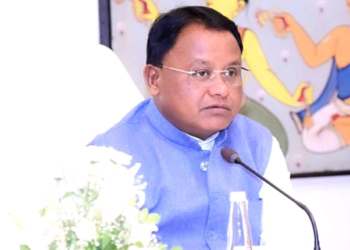






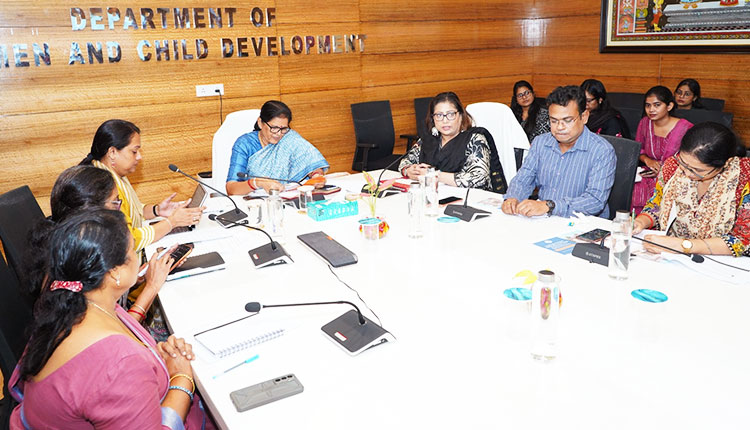
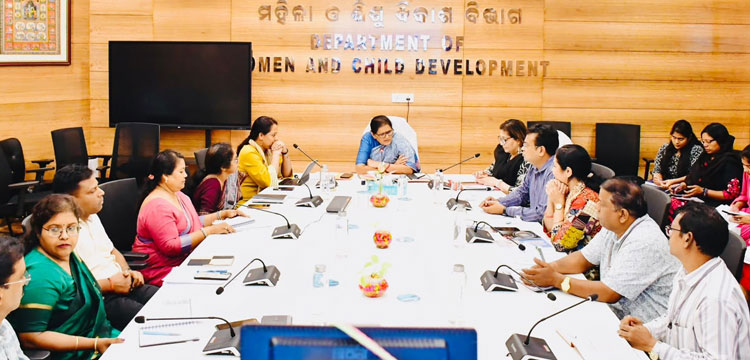
Bhubaneswar: Deputy Chief Minister Pravati Parida today chaired a review meeting in the Conference Hall of the Women & Child Development (W&CD)Department, Odisha, to outline the State’s goals for Women and Child Development. The State will soon organise a state-level summit focusing on the four key thematic areas to deliberate on priorities, strengthen interdepartmental coordination and accelerate implementation of the proposed goals.
The goals have been formulated following the Departmental Summit convened by the Ministry of Women and Child Development in New Delhi on 8–9 October 2026 in the presence of the Prime Minister Narendra Modi. The review focused on translating the key action points emerging from the national-level Summit into measurable outcomes through time-bound interventions and strengthened implementation mechanisms.
Parida emphasised the importance of effective interdepartmental coordination, robust monitoring and accountable implementation to ensure that the proposed interventions translate into tangible benefits for women and children. The State’s goals seek to strengthen existing systems, address implementation gaps and improve the quality, accessibility and effectiveness of public services.
Odisha in alignment with the Centre has identified four key thematic areas: nutrition and early childhood development, child protection under Mission Vatsalya, women’s safety, and women’s empowerment.
Under nutrition and early childhood development, the State aims to improve the quality of Take-Home Ration and hot cooked meals, strengthen nutrition monitoring through the Poshan Tracker, improve early identification and referral of children with severe acute malnutrition, and enhance Early Childhood Care and Education (ECCE) services. The goals also include making Anganwadi Centres more conducive to preschool learning, promoting locally sourced nutritious food, and strengthening parental engagement and children’s transition to formal schooling.
Under Mission Vatsalya and child protection, the focus is on strengthening a prevention-led, family-centred approach to child welfare. Key priorities include identifying vulnerable households, promoting family-based care over institutionalisation, strengthening rehabilitation and aftercare support for children leaving institutional care, and improving accountability through regular reviews and better integration of child-protection data.
For women’s safety, the State aims to strengthen One Stop Centres and Women Helpline 181, improve coordination among police, health, legal and rehabilitation services, and establish more effective survivor-support mechanisms. Preventing child marriage through community participation, village-level vulnerability mapping and targeted campaigns in 12 high-prevalence districts will be another priority. Measures to strengthen workplace safety under the POSH framework and SHe-Box will also be pursued.
Under women’s empowerment, the goals include expanding support infrastructure for working women through crèches and hostels, strengthening the Beti Bachao Beti Padhao programme, and improving convergence between the Pradhan Mantri Matru Vandana Yojana and Odisha’s Mamata scheme. The State will also operationalise a Women’s Economic Empowerment Framework across all 30 districts, using relevant data to track women’s participation in the workforce, earnings, entrepreneurship and economic agency, while setting district-level goals and strengthening monitoring mechanisms.
On this occasion, Mrinalini Darswal, Commissioner-cum-Secretary, Women and Child Development Department, Monisha Banerjee, Director, and other senior officials were present.