





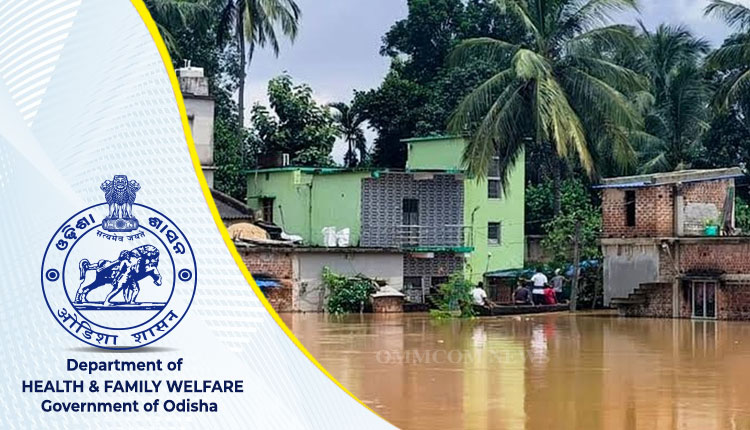
Bhubaneswar: In the wake of recent floods, the Odisha Health and Family Welfare Department has issued a detailed health advisory urging people in affected areas to take strict precautions against water-borne diseases, particularly diarrhoea, and the increased risk of snakebites.
To prevent diarrhoea, the department has advised residents to drink only water that has been boiled for half an hour and then cooled, or to treat one litre of water with a single halogen tablet and consume it after half an hour.
People have been asked to wash their hands thoroughly with soap before eating and after using the toilet, avoid open defecation by using toilets, and refrain from consuming food sold in unhygienic conditions outside.
For those suffering from diarrhoea, ORS solution should be administered repeatedly. The department has also cautioned against using tube wells or wells that were submerged or contaminated by floodwater until they are properly purified, recommending that residents consult the nearest water supply engineer for disinfection of such sources.
Highlighting the heightened risk of snakebites in flood-affected regions, the advisory has called for extreme caution while moving or working in floodwater. Those sleeping on the floor at home should use mosquito nets, and people going outside at night must remain extra careful and alert.
Keeping both the interior and exterior of houses clean has also been stressed. In snakebite cases, the department has strongly advised against any traditional or local treatment methods and urged immediate transfer of the patient to the nearest hospital.
Anti-snake venom injections are available free of cost at government hospitals, and officials have warned that even a slight delay in seeking medical help can prove fatal.
Moreover, anyone feeling unwell has been advised to consult an ASHA worker, health worker, or doctor without delay.
The Health and Family Welfare Department has appealed to people living in flood-hit areas to strictly follow these guidelines to prevent disease outbreaks and avoid loss of life during the post-flood period.