




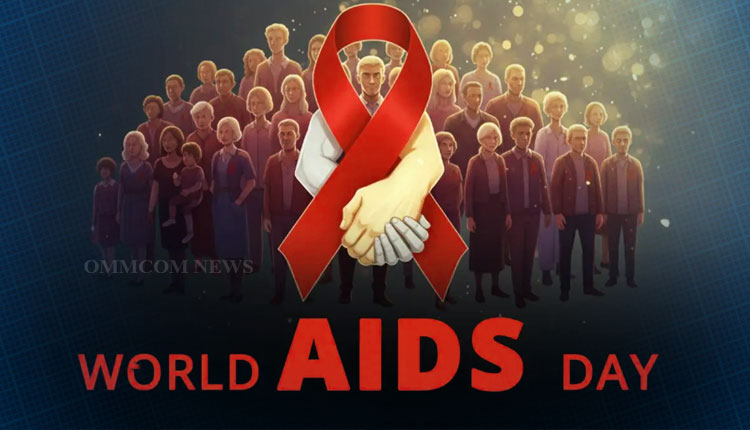
Bhubaneswar: World AIDS Day is observed annually on December 1, serving as a global moment to raise awareness about HIV/AIDS, its impact, and the ongoing efforts to combat the epidemic.
On this day, communities, organisations, and governments worldwide come together to promote awareness, share knowledge, and advocate for continued action towards prevention, treatment, and support to end the AIDS epidemic.
Theme
This year’s World AIDS Day theme, “Overcoming disruption, transforming the AIDS response,” highlights the need to address challenges and leverage opportunities to accelerate progress against HIV/AIDS. The theme acknowledges disruptions caused by various factors, including global health crises, conflicts, and inequalities, which have impacted HIV services and communities. It calls for transformative approaches to strengthen healthcare systems, promote equity, and ensure inclusive access to services. The theme urges stakeholders to build resilient and adaptable responses, prioritise community-led initiatives, and address social determinants to ultimately end the AIDS epidemic.

History
World AIDS Day was first observed in 1988 by the World Health Organisation (WHO) and has evolved into a global platform, bringing together governments, communities, and individuals to unite in the fight against HIV/AIDS. This annual event serves as a catalyst for awareness, advocacy, and action, driving efforts to prevent new infections, support those living with the disease, and push for accelerated progress towards a world free from the impact of HIV/AIDS. Over the years, it has remained a crucial moment for solidarity, education, and commitment to ending the epidemic.
India’s Fight Against HIV/AIDS
India is marking World AIDS Day 2025 with notable achievements in its fight against HIV/AIDS. The country’s HIV prevalence has declined from 0.33% in 2010 to 0.20% in 2024, significantly lower than the global average of 0.7%. New infections have also dropped by 49% since 2010, surpassing the global reduction rate of 40%.
According to PIB, there has been a decline from 0.33% in 2010 to 0.20% in 2024. At 0.20%, India’s prevalence is significantly lower than the global average of 0.7%, underscoring the country’s outperformance in maintaining a low-level epidemic.
“There has been a steeper decline from 1.25 lakh new infections in 2010 to 64,500 in 2024, a 49% reduction when benchmarked against the 2010 baseline in NACP terms. This surpasses the global reduction rate of 40% over the same period. In absolute numbers, India’s new infections represent only about 5% of the global total (1.3 million in 2024), highlighting efficient resource allocation by the Government and scale-up of antiretroviral therapy (ART) access”, read the PIB release.