
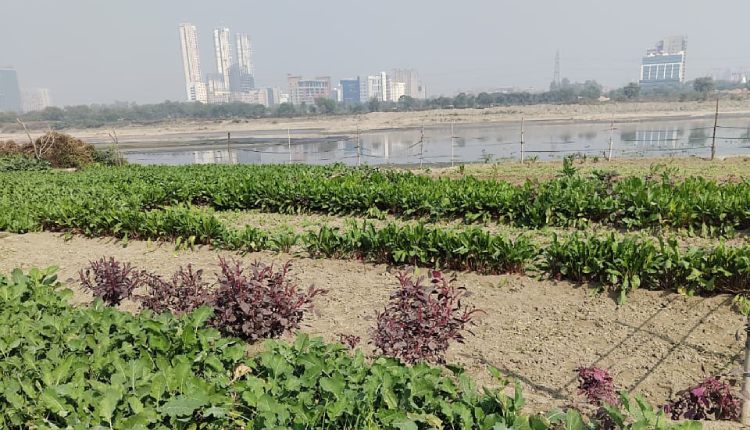
New Delhi: A comprehensive new study published in the journal “Energy Nexus” by Elsevier Publications and has uncovered severe heavy metal contamination in agricultural soils and vegetables cultivated along the stretch of the Yamuna River in New Delhi. The research highlights an urgent public health crisis management, revealing significant non-carcinogenic and carcinogenic risks for consumers of these locally grown crops due to the widespread practice of untreated wastewater irrigation. While Delhi accounts for only 1% of the Yamuna River’s catchment area, the city contributes approximately 70% to 80% of the river’s total pollution load. Farmers in peri-urban areas rely heavily on this polluted river water to irrigate their fields, inadvertently transferring hazardous metals, including molybdenum, aluminium, zinc, nickel, chromium, cadmium, and lead, directly into the urban soil and food supply. The study covered only a small stretch of the Yamuna- a 1379 KM long river which runs through seven states.
A research team lead by Dinabandhu Sahoo, a Senior Professor and Head, Department of Botany, tested a variety of commonly consumed daily vegetables and found alarming rates of toxic bioaccumulation, noting that plant roots absorb these metals at drastically different rates depending on the crop species. Key findings from the crop analysis include:
Nickel levels were 65 times in onions, 97 times in spinach whereas Chromium levels were 11 times in white radish, 12 times in spinach and 22 times in mustard.
Red Radish: Exhibited extreme levels of molybdenum (up to 340.06 mg/kg) and chromium (36.58 mg/kg).
Fenugreek: Contained dangerous levels of zinc, reaching 177.72 mg/kg.
Coriander: Showed significant accumulations of both nickel (19.91 mg/kg) and cadmium (1.59 mg/kg).
Mustard: Demonstrated notably high lead accumulation, reaching 5.86 mg/kg.
Health risk assessments conducted during the study indicate a severe threat to public health. The Hazard Index (HI), which evaluates combined non-cancer health risks, vastly exceeded safe limits, driven primarily by unprecedented dietary exposure to molybdenum across almost all tested vegetables. Furthermore, the study identified unacceptable cancer risks tied to the consumption of these vegetables, largely due to high levels of nickel and chromium. The Total Carcinogenic Risk (TCR) values were highest in red radish (0.17), coriander (0.16), and spinach and white radish (0.14 each). The Heavy Metal limits are several times higher than the prescribed Food and Agricultural Organization (FAO) prescribed limit, said Sahoo.To mitigate these immediate dietary threats, the researchers urge farmers in known contamination hotspots to shift toward cultivating low-accumulating crops.
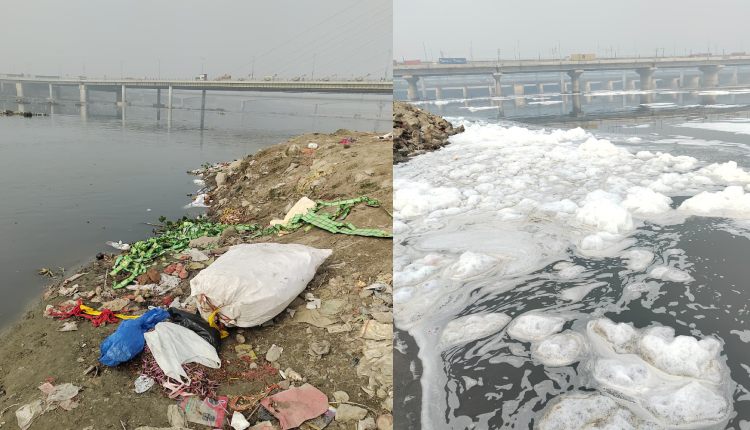
The study underscores that securing the region’s long-term agricultural sustainability and public health will require immediate, coordinated interventions. Continuous governmental monitoring of soil and crop quality and strict enforcement of pollution controls at the river source is need of the hour, said Sahoo.
The research was led by Dinabandhu Sahoo alongwith Dharmendra Kumar, Sanjukta Sahoo, Shivankar Agrawal, whose interdisciplinary collaboration brought together expertise in botany, environmental engineering, and microbiome research.
The research team is appreciated for its rigorous investigation of an important environmental and public health concern and for bringing together multidisciplinary perspectives to examine the impact of Yamuna pollution on agricultural soils, vegetables, and human health. Their work highlights the importance of evidence-based environmental monitoring, safer agricultural practices, and effective wastewater management to protect both farmers and consumers.