





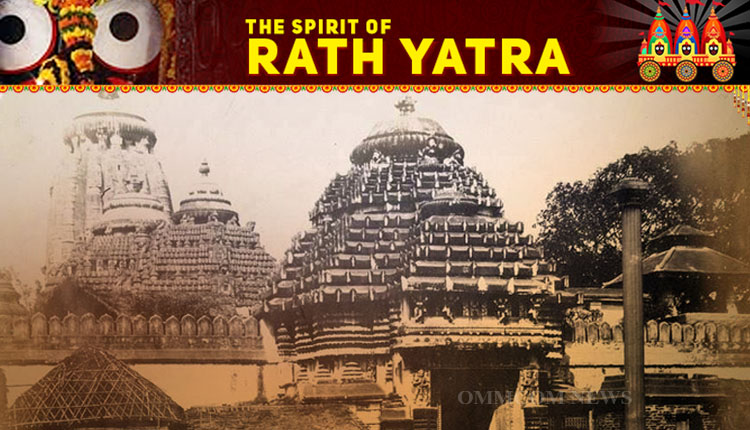
This year’s world-famous annual Rath Yatra of Lord Jagannath began on July 16, drawing lakhs of devotees to Puri. As the chariots rolled down the Grand Road, the age-old traditions of Srimandir came alive once again. Ommcom News, over the years, has been bringing to you stories of some lesser-known facets of Lord Jagannath and his abode, Srimandir.
It is common knowledge that the Gajapati Maharaja is the foremost servitor of Lord Jagannath and his siblings. But beyond the royal duty, there exists a vast network of sevayats who have kept the temple’s rituals alive for centuries. In the 13th century, King Anangabhima Dev III institutionalized the temple service by creating 120 categories of duties and appointing dedicated servitors for each. More services were added in later years, depending on the needs of the temple. For generations, these families carried forward the legacy, passing down rituals father to son. But time, and history, took its toll. Repeated invasions, particularly by Mughal rulers, disrupted the temple’s functioning. Later Gajapati kings were unable to sustain all the rituals. With the passage of centuries, many sevayat families had no male heirs to continue the tradition. And because there is no provision to recruit outsiders into the sevayat system, several of these services simply faded away. Today, some of the most important rituals of Srimandir exist only in records and memory. Ommcom News takes a look at some of the key services that have been discontinued over the decades, and the stories behind their slow disappearance.
Paika Seva
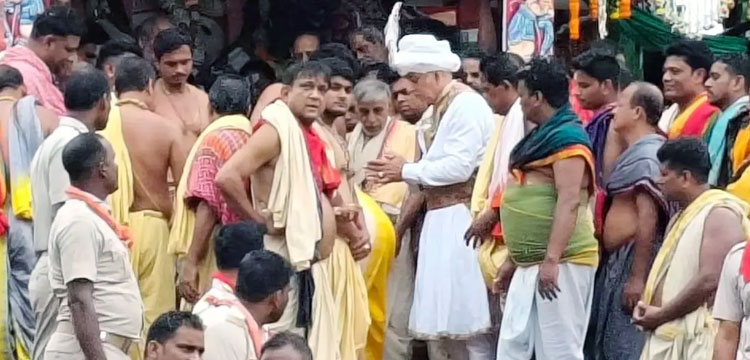
As per the Record of Rights of Srimandir, 36 servitors were officially registered for Paika Seva in 1954. This was a round-the-clock duty. On a rotational basis, servitors had to stay inside the temple premises at all times. Acting on instructions from the Dalai and Dalabehera, the Paika sevayats would go out to escort other specific servitors to the temple whenever their rituals were due. Their other key role came after the Madhyana Dhupa, the midday offering. The Paikas would then invite the Puja Panda servitors to offer prasad outside the Nrusingha and Lakshmi temples. At any given time, six Paika servitors were mandated to be present on the temple grounds. However, the service has been defunct for nearly 50 years now, another ritual that slipped away with changing times and dwindling successors.
Parichha Seva
The Rajagurus — the royal priests of the Gajapati Maharaja — once held the responsibility of Pariccha Seva in Srimandir. Their role was not tied to a single ritual, but to the overall discipline of the temple. As overseers, they ensured that every other sevayat performed their assigned duties on time and that the daily niti did not face any disruption. Over the years however, this key supervisory service faded out. Today, Pariccha Seva is no longer part of the living traditions of the 12th-century shrine.
Geeta Govinda Seva
One of the most poetic traditions of Srimandir was the Geeta Govinda Seva — the recitation of devotional verses celebrating the divine love of Radha and Krishna before Lord Jagannath and his siblings. Composed by 12th-century poet Sri Jayadev Goswami, the Geeta Govinda was once sung live by a designated Brahmin servitor during the Chandan Lagi procession. The slow, melodic verses would fill the temple corridors as the deities were anointed. But in 1954, the ritual was stopped. When the Brahmin sevayat family discontinued the service, Narayan Acharya from Baseli Sahi was requested by Jagannath Ballav Mutt and Raghav Das Mutt to carry it forward for some time. Even that arrangement did not last. With no permanent successor, the singing of Geeta Govinda inside the temple gradually fell silent — another tradition lost to time.
Suara Nijoga Nayak
The kitchen of Srimandir, once called the largest in the world, had its own chain of command. At the top of it was the Suara Nijoga Nayak. This sevayat was entrusted with managing all matters related to the Suaras — the temple cooks — and the entire Mahaprasad kitchen. Their duties included supervising the appointment of Katha Bhoga Suaras and overseeing the Daru Ghara, the storehouse where cooking utensils and firewood were kept. But that system changed after a court verdict in 1870. Following the ruling, the responsibilities once held by the Suara Nijoga Nayak were transferred to a committee. Today, the Suara Mahasuara Nijoga, under the guidance of that committee, looks after all kitchen-related affairs. With this, the exclusive role of the Suara Nijoga Nayak ceased to exist.
Paniki Pata seva
Some services in Srimandir vanished so quietly that even their memory now survives only in old records. One such was the Panikipata Seva. As per temple accounts, a sevayat from the Chasa community was engaged for this duty. His role was specific — during the Sola Puja at the Bimala Temple, he would prepare the offerings by cutting fish and vegetables. By the time the Record of Rights was prepared, the service had already been discontinued. With no successor to carry it forward, Panikipata Seva slipped into extinction.
Bhitara Gayani Devadasi
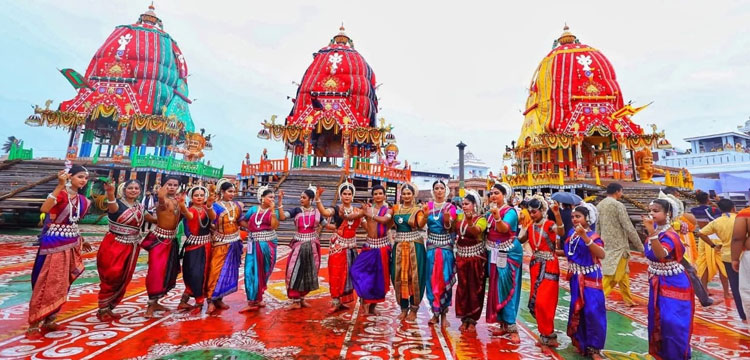
Among the nijogas of Srimandir, the Devadasi Seva stood apart — it was the only tradition where women held a central role. Between 1950 and 1955, nine Bhitara Gayani Devadasis served inside the temple. The name “Bhitara” meant they performed within the inner sanctum. Another group, the Bahara Gayani, sang outside the garbha gruha. Though often called “singers of the sanctum,” their domain was the outer rituals. During Badasinghara, the bedtime ritual of the deities, the Bhitara Gayani would dance while the Bahara Gayani used to sing devotional songs to soothe the Lord. Beyond daily niti, Devadasis had a special presence during key festivals — Rath Yatra, Nabakalebara, Chandan Yatra, Phagu Khela and Nanda Utsav. Today, that lineage has ended.
Kumbhara Bisoi Seva
Every day, Srimandir requires thousands of earthen pots for cooking Mahaprasad and for other rituals. For centuries, that responsibility lay with the Kumbhara Bisoi servitors. Potters from Kumbharapada were assigned this duty. In 1906, King Mukunda Dev formally handed over the charge of making earthen items to the Kumbhara Bisoi. But over time, delays in supply became frequent. On November 29, 1987, the Temple Managing Committee decided to discontinue the service after the Kumbhara Bisoi failed to provide clay pots to the temple on time. Since then, the temple sources its pottery elsewhere.
By Rashmi Rekha Das