





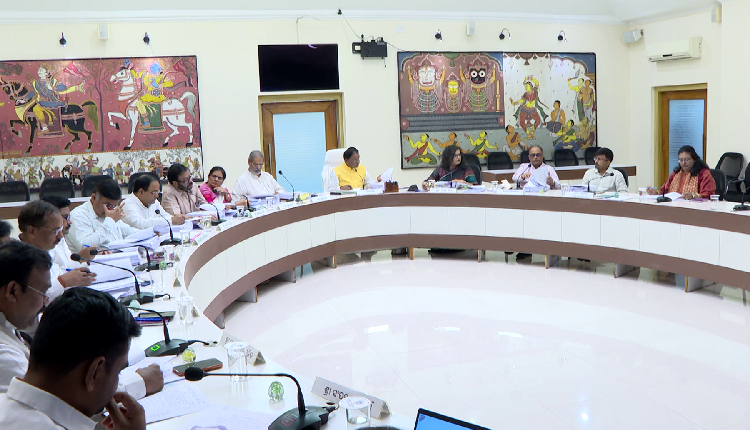
Bhubaneswar: In a major push towards trust-based governance and ease of doing business, the Odisha Cabinet, chaired by Chief Minister Mohan Charan Majhi, on Monday approved the Odisha Jan Vishwas Bill, 2026, the second phase of the State’s regulatory reform initiative.
The proposed legislation seeks to go beyond the decriminalisation measures introduced under the Odisha Jan Vishwas Act, 2025, by simplifying licensing and permission requirements, removing overlapping approvals, and extending the validity of several industrial licences and registrations.
The Bill proposes 62 amendments across 16 State Acts administered by 11 government departments. The proposed changes have been divided into two schedules, focusing on the decriminalisation of minor offences and the rationalisation of regulatory approvals.
Under Schedule I, 35 amendments across 11 Acts have been proposed to decriminalise and rationalise minor, technical, and procedural offences. The reforms include replacing imprisonment or disproportionate fines with monetary penalties, updating outdated penalties, and introducing simplified administrative and appellate mechanisms.
The second schedule proposes 27 amendments across five Acts, aimed at rationalising nine regulatory approvals. These include extending the validity of licences, reducing or eliminating renewal requirements, introducing intimation-based registration and NOC mechanisms, and removing duplicate permission requirements.
The proposed reforms also cover municipal and local-body regulations. The government plans to eliminate duplicate licensing requirements in cases where an equivalent clearance, such as a trade licence issued by Urban Local Bodies, is already available.
Several measures have also been proposed to simplify regulatory procedures for businesses and local activities. These include extending the validity of agricultural market licences, rationalising Gram Panchayat licensing requirements, and simplifying permissions related to name boards, public-street works, and specified temporary commercial activities.
According to the government, the proposed reforms are aimed at reducing the compliance burden on businesses and citizens while cutting down on litigation and procedural delays.
The government expects the Jan Vishwas Bill 2.0 to improve regulatory certainty, strengthen administrative efficiency, and enhance confidence among investors and citizens.
The move marks a broader phase of Odisha’s regulatory reform agenda, with the State government seeking to create a simpler and more predictable compliance framework while promoting ease of doing business.