





Bhubaneswar: Odisha Chief Secretary Anu Garg on Thursday reviewed the flood situation in Ganjam and Gajapati districts following heavy rainfall triggered by Cyclone ‘Arnab’, directing officials to intensify rescue and relief operations and consider airlifting people stranded in areas inaccessible to rescue teams.
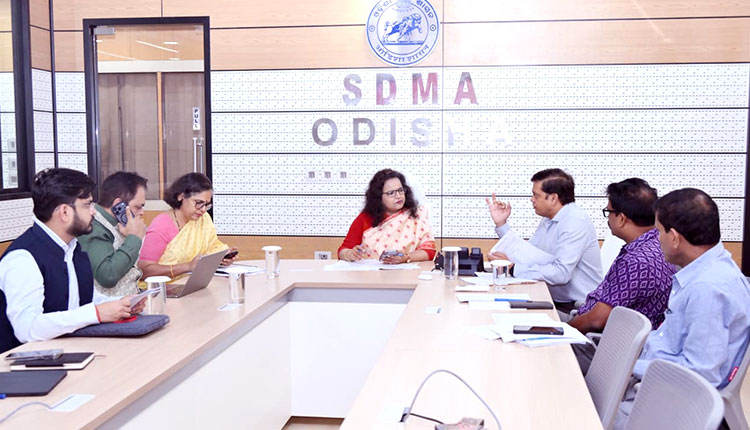
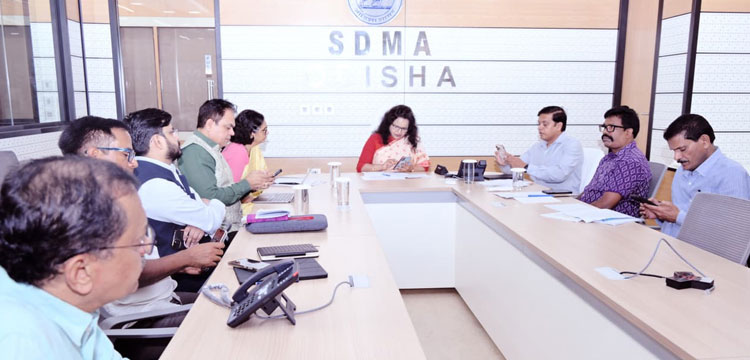
During a review meeting at the office of the Special Relief Commissioner (SRC), Garg discussed the situation with SRC Rajesh Prabhakar Patil and Ganjam Collector V. Keerthi Vasan, focusing on the impact of incessant rainfall, pre-cyclone preparedness and ongoing flood management measures. She later held consultations with Revenue and Disaster Management Minister Suresh Pujari on relief and rescue operations.
According to official figures, 42,500 people have been affected in Ganjam district and 20,000 in Gajapati. In Ganjam, 22 blocks, 208 gram panchayats and 299 villages have been severely affected, while in Gajapati, seven blocks, 110 gram panchayats and 711 villages have borne the brunt of the flooding.
So far, 11,882 people have been evacuated in Ganjam and 17,441 in Gajapati and accommodated in flood and cyclone relief centres. However, 2,328 people from 70 villages in Ganjam remain marooned.
Garg directed the district administrations to identify areas where strong water currents were preventing NDRF and ODRAF teams from reaching stranded people and submit lists of such locations. Aerial evacuation may be undertaken wherever urgently required, and the Chief Secretary has taken up the possible deployment of a special Indian Coast Guard helicopter with higher authorities.
Officials have also been advised to ensure cooked food, drinking water and other essential supplies in affected areas.
Rescue and emergency response teams have been deployed on a large scale. Ganjam has 27 ODRAF teams, three NDRF teams and 24 Fire Service teams, while Gajapati has 12 ODRAF teams, one NDRF team and 12 Fire Service teams. Additionally, 550 pregnant women in Ganjam and 420 in Gajapati have been shifted to safer locations.
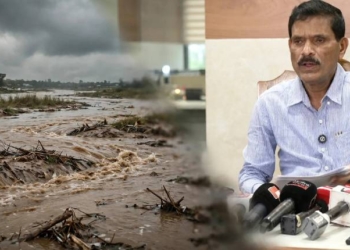
Meanwhile, torrential rainfall in the catchment areas of the Baghalati reservoir and the Bahuda river has triggered flooding in the Chikiti and Patrapur blocks of Ganjam, disrupting railway traffic near Ichchapuram in neighbouring Andhra Pradesh.
Water had been released from the Baghalati reservoir in advance in view of Cyclone Arnab and the India Meteorological Department’s forecast of very heavy rainfall. However, intense precipitation in the upper catchment from the evening of October 27 led to a sharp rise in inflow, which reached 550 cubic metres per second by 11 am on October 28. Water was subsequently released through four reservoir gates.
The situation worsened after Patrapur block recorded 546 mm of rainfall and Chikiti 289 mm between 11 am and 7 pm on October 28, causing a sharp rise in the Bahuda river and flooding downstream.
Railway authorities subsequently reported an abnormal rise in water levels at Bridge No. 1052 near Danguada, between Ichchapuram and Jatapur stations. Several trains have been stranded on both sides of the Odisha-Andhra Pradesh border.
The state administration is coordinating with the Ganjam and Srikakulam district administrations and East Coast Railway officials at Visakhapatnam and Bhubaneswar to manage the situation. Garg has also spoken to railway authorities and directed the Ganjam Collector to take necessary measures and ensure timely communication with stranded passengers.
Revenue and Disaster Management Minister Pujari is closely monitoring the post-cyclone flood situation. Senior officials, including the Principal Secretary of the Water Resources Department, attended the review meeting.
The state government has stressed continuous monitoring, coordinated rescue and relief operations and measures to safeguard lives and minimise the impact of the flooding.