





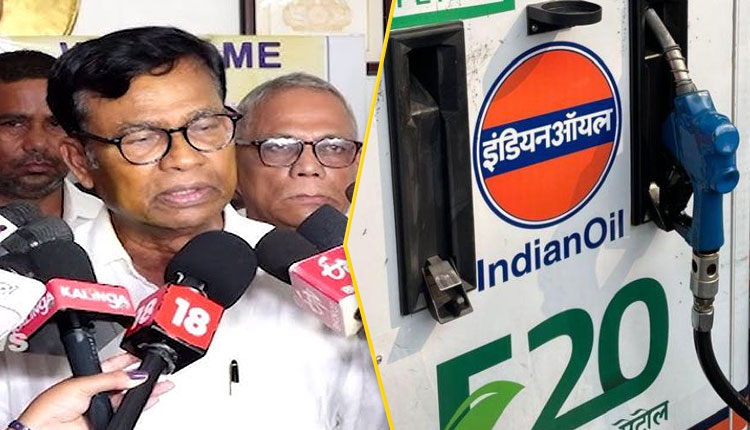
Bhubaneswar: The Odisha Pradesh Congress Committee (OPCC) will launch protests against the Centre’s E20 ethanol-blended fuel programme in the state, OPCC president Bhakta Charan Das said on Saturday, backing Leader of Opposition in the Lok Sabha Rahul Gandhi’s concerns over the issue.
Das alleged that the use of E20 fuel could damage vehicles and cause financial losses to consumers, particularly those who have taken loans to support their families.
“Rahul Gandhi has clearly raised the E20 issue and said it needs to be taken up in a big way, as it is damaging people’s cars and scooters and, quite literally, stealing money directly from their pockets,” Das told reporters.
Calling the E20 issue a serious concern, Das said the programme could affect vehicle owners, businesses and a large section of the population.
“The E20 issue is dangerous as it could affect people as well as their cars and scooters. The younger generation is taking loans to support their families, and they could also be affected on a large scale. The issue can affect businesses as well,” he said.
Das said the Congress would intensify its campaign against the E20 programme in Odisha following directions from the All India Congress Committee (AICC).
“This is going to cause great damage to the nation. Our leader Rahul Gandhi has raised the issue, and the party is also considering it seriously. Major protests will take place, and in Odisha too, we will protest against it. Following the instructions of the AICC, we will hold protests across the state,” Das said.
His remarks came a day after Rahul Gandhi said the Congress would soon take up the issue of the Centre’s E20 ethanol-blended fuel programme.
In a post on X on Friday, Gandhi shared a video and accused the government of “stealing directly out of people’s pockets”.
“This E20 issue is a very serious matter. Usually, we say, ‘Daal mein kuch kaala hai.’ But here, the whole daal is black,” Gandhi said.
The E20 programme refers to petrol blended with up to 20 per cent ethanol. The Congress has been raising concerns over its impact on consumers and vehicles, while the Centre has been promoting ethanol blending as part of its efforts to reduce dependence on imported crude oil and increase the use of domestically produced fuel.