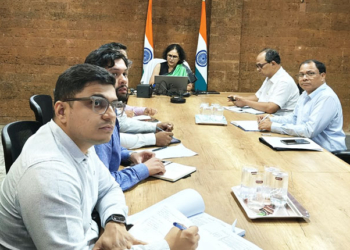






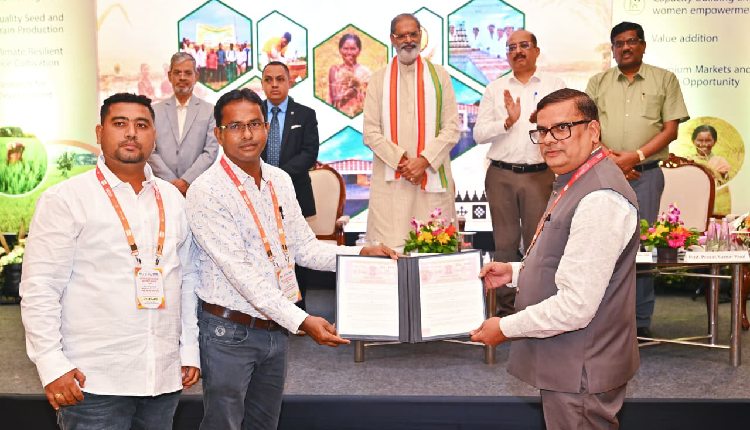
Bhubaneswar: Odisha aims to expand the cultivation of healthier and nutrient-dense rice varieties to 10,000 hectares from the existing 1,200 hectares over the next four to five years, Deputy Chief Minister Kanak Vardhan Singh Deo said on Saturday.
Speaking at the Odisha Healthier Rice Business Summit 2026 here, Singh Deo said the state was moving beyond conventional rice production towards a value-driven and farmer-centric rice economy.
“Odisha to play a key role in meeting future global food security needs,” he said, stressing the need to connect farmers and FPOs with research institutions, industry and markets to promote healthier rice, strengthen value addition and improve farm incomes.
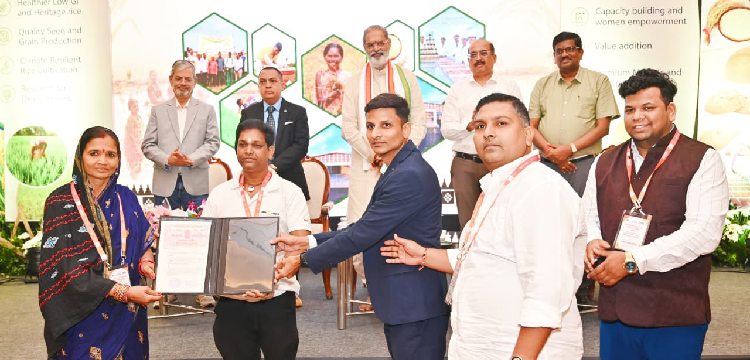
The summit, organised jointly by the Department of Agriculture & Farmers’ Empowerment and the Department of Mission Shakti in collaboration with the International Rice Research Institute (IRRI) and ORMAS, brought together farmers, FPOs, women-led producer groups, private processors and research institutions.
The state is promoting low-GI, ultra-low GI, high-protein and micronutrient-rich rice varieties, besides traditional aromatic varieties such as Kalajeera, with technical support from IRRI and Odisha University of Agriculture & Technology (OUAT).
A state-of-the-art Specialty Rice and Millet facility is also being developed to support advanced processing and value addition, officials said.
The summit also witnessed the signing of MoUs, Letters of Intent and purchase orders involving around 1,000 metric tonnes of healthier rice valued at about Rs 6 crore.
The business commitments involve industry buyers and FPOs, including KisaanSay, Bijaylaxmi Agro, Jaivik Sri FPC of Koraput and Loisingha W-FPC of Balangir.
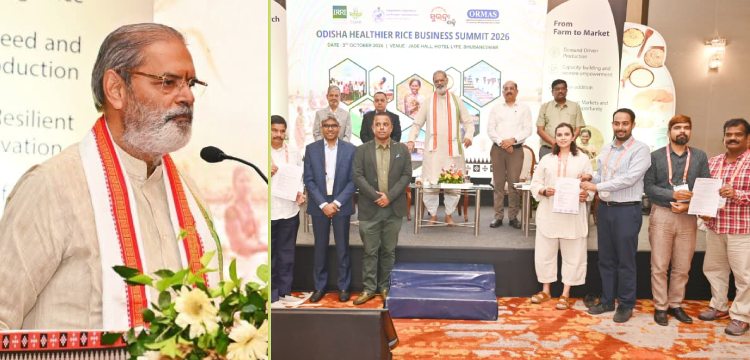
Commissioner-cum-Secretary of the Agriculture and Farmers’ Empowerment Department Sachin Ramchandra Jadhav, OUAT Vice-Chancellor Prof Prabhat Kumar Roul, Indian Rice Export Federation Director General Mohammad Sultan, and representatives of the Embassy of Madagascar and commercial importers participated in the summit.
Technical sessions focused on supply chain integration, traceability, quality assurance and market scalability, with stakeholders discussing ways to take healthier rice from the research stage to commercial markets.
The initiative seeks to combine nutrition-focused rice production with value addition and market linkages, with farmers positioned as the primary beneficiaries of the emerging value chain, officials said.