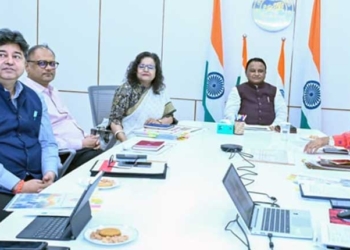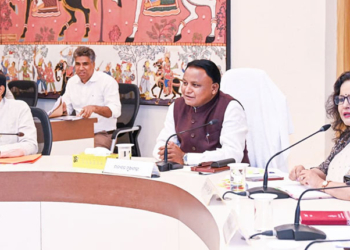




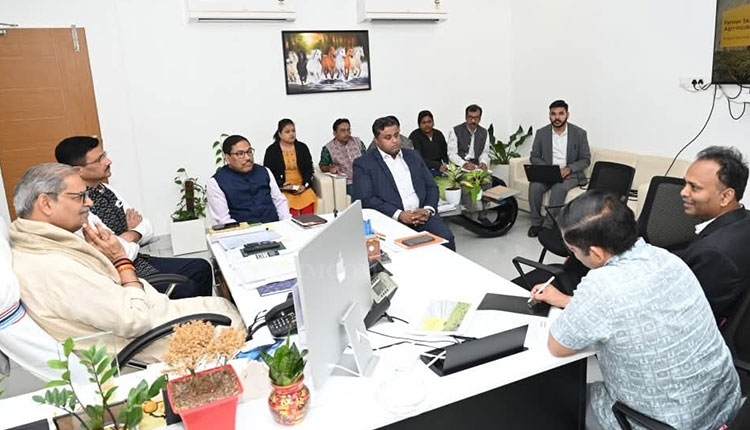
Bhubaneswar: In a significant step towards modernising Odisha’s primary sector, the state government has finalised the roadmap for the proposed Farmer Skill and Agri-Incubation Centre (FSAIC), an initiative aimed at transforming traditional agriculture into a technology-driven and entrepreneurial ecosystem.
The roadmap was discussed at a high-level meeting chaired by Deputy Chief Minister and Minister of Agriculture and Farmers’ Empowerment, Kanak Vardhan Singh Deo.
Emphasising the project’s broader vision, Singh Deo said the FSAIC would help bridge the gap between conventional farming practices and modern agri-entrepreneurship, positioning Odisha as a leader in futuristic agriculture. He noted that skill development would be the core objective of the initiative, with a focus on equipping farmers with modern techniques while ensuring access to finance and market linkages to secure long-term profitability and economic stability in rural areas.
The proposed centre is envisaged as a comprehensive hub for farmer upskilling and agri-startup incubation. It will support the development of new agricultural enterprises, provide hands-on training in modern, high-yield farming methods, demonstrate emerging agri-technologies, and offer value-added services to improve the marketability of raw farm produce.
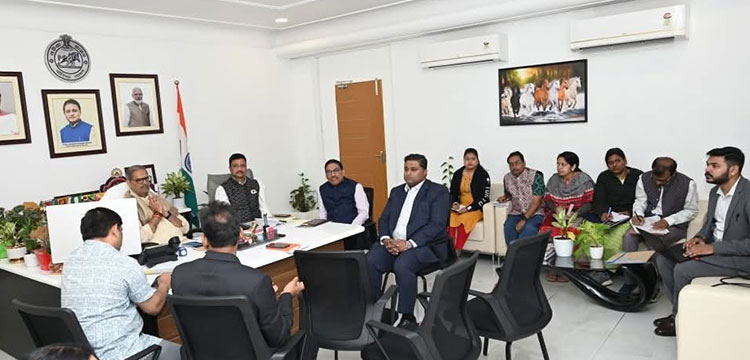
Additional Chief Secretary of the Agriculture Department, Dr Arabinda Kumar Padhee, said the FSAIC would incorporate advanced and sustainable agricultural systems. These include precision farming supported by IoT-driven data for efficient crop management, agrophotovoltaic models that allow dual use of land for solar energy generation and cultivation, advanced laboratory facilities such as tissue culture units and recirculatory aquaculture systems, as well as renewable energy-powered cold storage and primary processing infrastructure to strengthen farm logistics.
The government has already conducted detailed technical and financial feasibility studies at two proposed locations—HTI Nildunguri and the Deras Agriculture Farm. According to officials, the studies indicate that the project is financially viable with Viability Gap Funding support from the government for both capital expenditure and operations and maintenance.
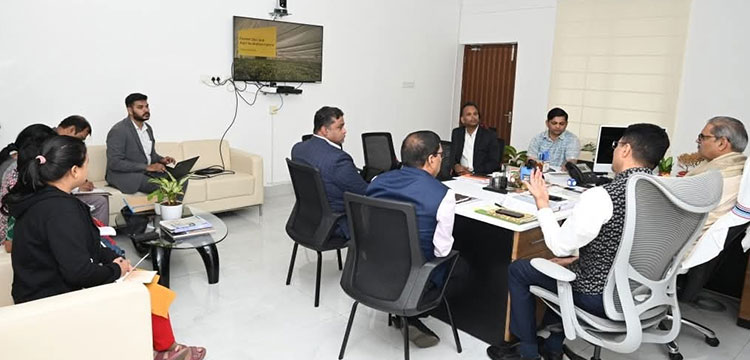
Global consulting firm Ernst & Young has been appointed as the transaction advisor to guide the project’s implementation and ensure adherence to international standards. The meeting was attended by Director of Horticulture Kalunge Gorakh Waman, representatives from Ernst & Young, and senior officials of the Department of Agriculture.