





Bhubaneswar: The Odisha government on Tuesday directed departments to strengthen the adoption of Indian Standards in public procurement, infrastructure and essential services, while calling for greater coordination with the Bureau of Indian Standards (BIS) to improve quality assurance and consumer protection in the state.
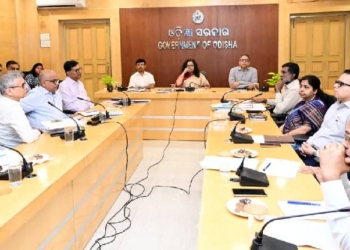
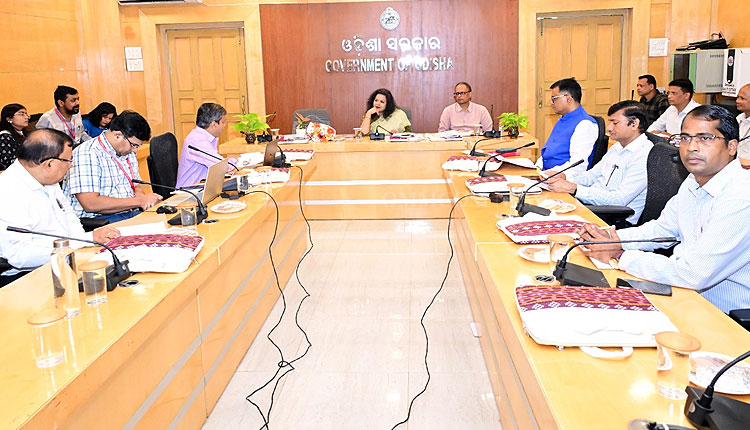
The direction was issued at the third meeting of the State Level Committee (SLC) on Standardization, chaired by Chief Secretary Anu Garg at Lok Seva Bhawan here.
The committee reviewed a range of measures aimed at strengthening standardisation, quality assurance and consumer protection in Odisha, including capacity-building programmes for officials of key departments and augmentation of testing infrastructure.
BIS Bhubaneswar Senior Director and Head A K Purohit made a presentation on key initiatives and areas of collaboration for strengthening standardisation and quality in the state. A Chatterjee from the BIS Laboratory, Kolkata, highlighted the BIS Laboratory Assistance Scheme for upgrading testing facilities in state government laboratories and common facility centres.
The committee directed that capacity-building programmes on Indian Standards be organised for officials of departments and agencies including PWD, PHE, WATCO, DISCOM, Agriculture, Health and Family Welfare, Labour and Employment, Urban Development, Water Resources and Women and Child Development, in consultation with BIS.
It also suggested special sessions on standardisation for PWD engineers and junior engineers, with similar programmes to be extended to the Rural Development and Panchayati Raj departments.
The committee further advised that standardisation and the quality ecosystem be incorporated into administrative training programmes, with the Food Supplies and Consumer Welfare Department asked to take up the matter with the concerned training academy.
Emphasising quality in public procurement, the committee advised departments to refer to applicable Indian Standards, access them through the BIS website and take immediate steps for their implementation. It also suggested exploring API-based integration of state government departmental portals with the BIS website for seamless access to standards and related information.
For consumer empowerment, the committee directed wider promotion of the BISCARE App, which allows consumers to verify HUID and ISI marks, access standards, identify testing laboratories and lodge complaints against sub-standard products and services. It also advised prominent display of information about the BIS Care App at jewellery shops.
To ensure reliable piped drinking water, the committee decided that WATCO and Rural Water Supply and Sanitation may implement BIS Standard IS 17482:2020 on Piped Drinking Water Management as a pilot project and undertake certification.
On lift safety, the committee stressed the need for appropriate rules and regulations in Odisha to ensure compliance with relevant Indian Standards.
The committee also supported the establishment of a state-of-the-art BIS Office and Laboratory Complex in Odisha. The laboratory establishment process is to be taken up on priority, with the office and laboratory planned as an integrated complex.
In view of Odisha’s major steel and aluminium industries, BIS was specifically directed to prioritise a modern laboratory for testing gold, silver, steel and aluminium.
The meeting also stressed the need to strengthen Standards Clubs in educational institutions and formally recognise BIS activities in such clubs and exposure visits.
The committee discussed the BIS Laboratory Assistance Scheme for augmentation and upgradation of testing facilities in state government laboratories and common facility centres. It also noted BIS support to MSMEs through an 80 per cent rebate in fees and complete relaxation of the requirement for an in-house testing facility.
Chief Secretary Garg said standardisation was fundamental to ensuring quality, safety, reliability and efficiency in products and services, besides providing a common benchmark, particularly for public procurement, infrastructure and essential services.
She stressed the need to create greater awareness among government officials, industry, service providers and consumers about Indian Standards and their practical application, along with stronger coordination between BIS and state government departments for their effective adoption.
Garg also called for strengthening information, education and communication (IEC) activities on standardisation to build a wider quality-conscious ecosystem in the state.
Emphasising the need for adequate BIS institutional and testing infrastructure in Odisha, she said modern testing facilities would support the state’s growing industrial, manufacturing and infrastructure sectors, facilitate faster testing, certification and quality assurance, and reduce dependence on laboratories outside the state.
The Chief Secretary directed that the SLC meet at least twice a year to review progress and deliberate on key issues relating to standardisation and quality in Odisha.
The meeting was attended by Development Commissioner-cum-Additional Chief Secretary Deoranjan Kumar Singh, Principal Secretary of the Food Supplies and Consumer Welfare Department, Principal Secretary of the Commerce and Transport Department, Commissioner-cum-Secretary of the Agriculture and Farmers’ Empowerment Department, senior officers of various state government departments and managing directors of various organisations.