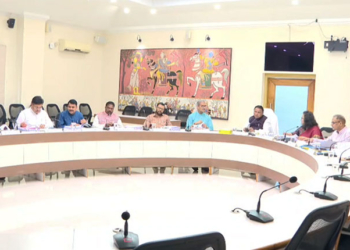



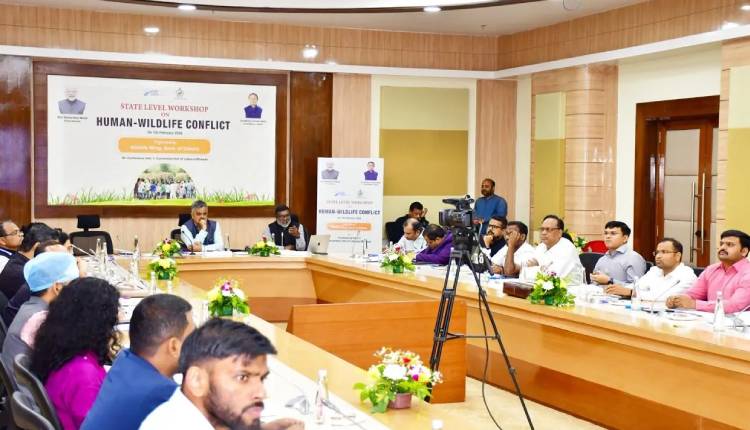
Bhubaneswar: In a major push to strengthen wildlife conservation and reduce incidents of human–animal confrontation, the Odisha Government on Saturday organised a high-level workshop on Human-Wildlife Conflict at the State Convention Centre in Lok Seva Bhawan.
Presiding over the session through video conferencing, Forest, Environment and Climate Change Minister Ganesh Ram Singhkhuntia proposed the introduction of a well-coordinated roster-based system for frontline volunteers, especially Gaj Sathis, popularly known as elephant friends, and electric shock responders. Stressing the need for constant vigilance, the Minister underlined that round-the-clock monitoring of wildlife movement is crucial for effectively addressing human-wildlife conflict.
To ensure that policy decisions reflect ground realities, Singhkhuntia interacted directly with grassroots-level volunteers engaged in conflict-prone areas. He also took note of concerns raised by MLAs from different districts who participated in the workshop, along with valuable inputs shared by representatives of non-governmental organisations working in the field of wildlife conservation.
Chief Wildlife Warden Prem Kumar Jha addressed the gathering and highlighted the importance of coordinated efforts between the Forest Department, local administration and community volunteers in mitigating conflict situations. This was followed by a detailed presentation by Additional Principal Chief Conservator of Forests (Wildlife), Dr. Manoj V. Nayyar, who outlined the current status of human-wildlife conflict in the state.
Dr. Nayyar informed that a comprehensive action plan is already in place in Odisha and is being periodically reviewed. As a result of sustained monitoring and timely interventions, there has been a significant improvement in managing human-elephant conflict across several regions of the state.
The workshop saw participation from safety squads and frontline forest staff, who jointly deliberated on evolving strategies to protect wildlife while ensuring the safety and livelihood of people living in vulnerable forest-fringe areas.