





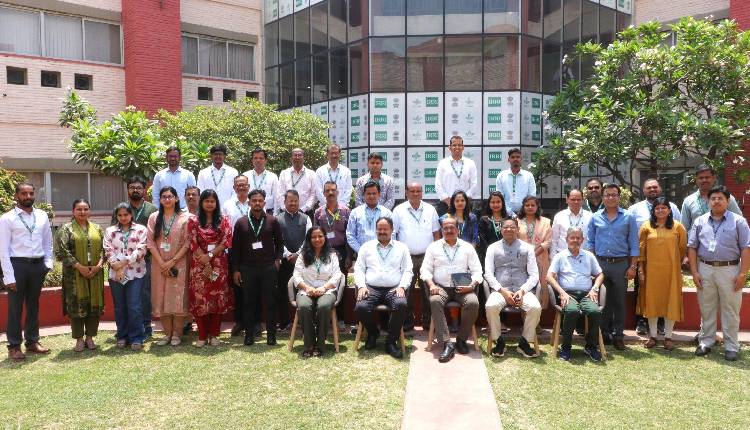
The visit aimed to further strengthen collaboration between IRRI and the Government of Odisha, with a focus on enhancing rice-based agri-food systems through geospatial and digital technologies, capacity building, and value addition strategies.
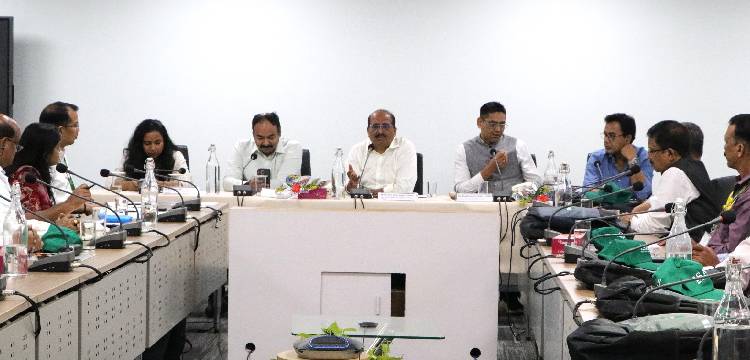
A key highlight of the visit was the inauguration of a two-day workshop by the Secretary under the Innovative Project Scheme titled “Optimising Agricultural Land Use and Rice Fallow in Odisha with Geospatial Technology and a Decision Support System.” The workshop, held from April 28–29, 2026, at ISARC and moderated by the Geospatial Intelligence Lab, brought together around 23 government officials from Odisha and highlighted the growing role of geospatial technologies in enabling data-driven agricultural interventions and planning.
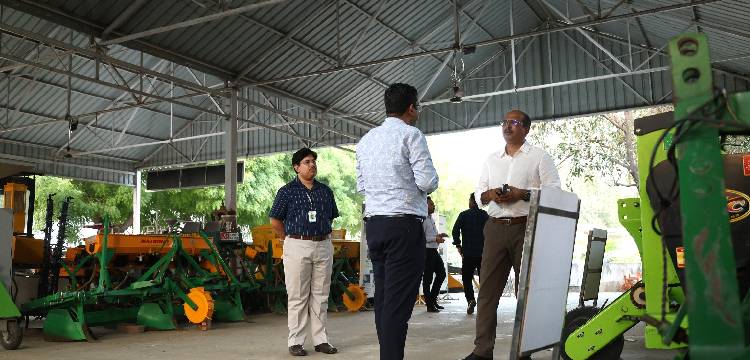
During the visit, the delegation was also briefed on IRRI’s work in India and ISARC’s key research and development initiatives in Odisha by Dr. Swati Nayak, IRRI Scientist-cum-India Country Manager (Interim). Senior officials from the Government of Odisha, including the Commissioner-cum-Secretary, Additional Secretary, and Joint Director, participated in the discussions. A detailed tour of ISARC’s state-of-the-art facilities showcased advancements in plant and soil science, remote-sensing-based decision support systems, speed breeding for rapid varietal development, mechanisation hubs, and regenerative agricultural practices.
The delegation also visited the Centre of Excellence in Rice Value Addition (CERVA) laboratories, where discussions centered on strengthening Odisha’s rice and millet value chains through innovative product development, processing, and value addition. This was followed by an in-depth review of the project “Promoting Self-Help Group-Led Entrepreneurship through Rice Value Addition,” which focuses on identifying the potential of traditional rice landraces and popular rice varieties in Odisha for the development of value-added food products targeting both domestic and export markets.
The project also aims to establish a Specialty Rice and Millet Factory-cum-Training Centre in Bhubaneswar, Odisha, equipped with state-of-the-art food processing infrastructure to promote entrepreneurship and capacity building. Emphasis was placed on promoting nutritionally enriched low-GI, ultra-low-GI, and high-protein rice varieties bred by IRRI, as well as rice- and millet-based food products derived from low glycemic index (low-GI) rice and rice bran, to improve nutrition and public health outcomes.
The review was led by Principal Investigator Dr. Nese Sreenivasulu, along with IRRI scientists and the project team. The visit concluded with a shared commitment to strengthening collaboration between the International Rice Research Institute (IRRI) and the Government of Odisha, with a focus on scaling geospatial and digital solutions, reinforcing rice value chains, and advancing climate-resilient agriculture across the state.