





Bhubaneswar: The Housing and Urban Development (H&UD) Department of the Government of Odisha has proposed a statewide framework for the protection, restoration and monitoring of natural drainage channels, water bodies and flood-retention areas to mitigate urban flooding, preserve natural drainage systems and safeguard public infrastructure.
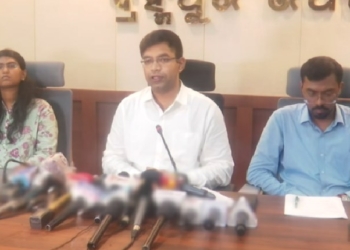
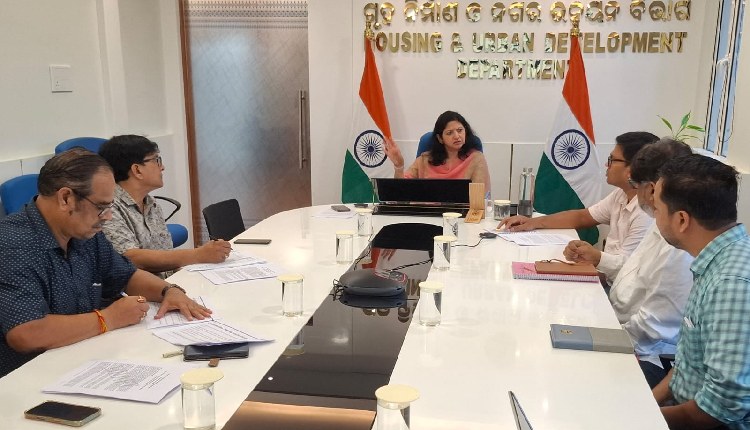
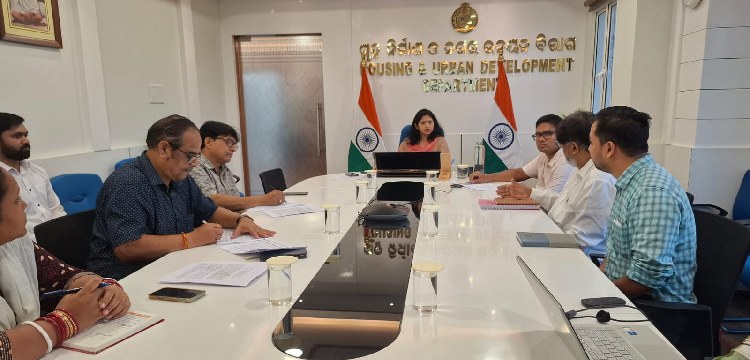
A meeting to discuss the proposed Standard Operating Procedure (SOP) was held on Tuesday under the chairpersonship of Usha Padhee, Additional Chief Secretary (ACS), H&UD Department, at the third-floor conference hall of Kharavel Bhawan in Bhubaneswar.
During the meeting, Padhee emphasised the need for a coordinated and scientific approach to protecting natural drainage systems and water bodies across Urban Local Bodies (ULBs). She directed the concerned authorities to systematically identify and map critical drainage channels, ponds, wetlands and other flood-retention areas, with particular attention to vulnerable locations prone to waterlogging and flooding.
She stressed that natural drainage pathways must be protected from encroachment, unauthorised filling, blockage, diversion and other alterations that could disrupt the natural flow of water. She also underscored the importance of effective coordination among the concerned departments and urban local authorities to ensure that drainage protection is integrated into urban planning and infrastructure development.
The proposed SOP is guided by the principle of “No Net Loss of Natural Drainage and Flood-Storage Capacity”, which aims to ensure that development activities do not compromise natural drainage connectivity or reduce the capacity of areas that retain excess rainwater.
The framework envisages the identification, surveying, geo-referencing and GIS-based mapping of critical drainage networks and water bodies across all ULBs in Odisha. These identified assets are proposed to be integrated into urban development plans, land-use plans and Comprehensive Storm Water Drainage Master Plans to strengthen planning, development-permission processes and flood-management measures.
The proposal also provides for the constitution of district-level committees and dedicated enforcement task forces, potentially under the chairpersonship of the respective Collectors, to coordinate the identification, protection, restoration and monitoring of natural drainage systems and water bodies.
Regular inspections, particularly before the monsoon, digital documentation of encroachments and restoration measures, and periodic monitoring are envisaged to improve accountability and facilitate timely intervention. The framework also seeks to strengthen interdepartmental coordination to address drainage-related issues and protect vulnerable areas.
Development proposals affecting protected drainage pathways and water bodies would be examined in accordance with applicable statutory provisions and technical requirements to ensure adequate drainage connectivity and preserve flood-storage capacity.
The proposed framework seeks to integrate the protection of natural drainage systems with urban planning, land-use regulation and infrastructure development. Its objective is to reduce avoidable flood risks, protect lives and property, and promote safer, more sustainable and climate-resilient urban areas across Odisha.
The SOP is currently a draft under consideration. The state government will consider its approval and the appropriate mechanism for its issuance and implementation. Any enforcement measures will be undertaken in accordance with applicable laws and regulations.
Among others, Arindam Dakua, Director of Municipal Administration (DMA); Bhagyadhar Mohanty, Chief Engineer-cum-Additional Secretary; the Engineer-in-Chief (Drainage) of the Water Resources Department; town planners; and other concerned officers attended the meeting.