


Cuttack: In a significant rollback, the Odisha government has withdrawn its controversial ‘No PUCC, No Petrol’ directive after the Orissa High Court questioned both its feasibility and legal validity. The state government has submitted an affidavit to the High Court clarifying that petrol pumps may only ask for a Pollution Under Control Certificate (PUCC) but cannot deny fuel to motorists for non-compliance.
The government also clarified that vehicle owners cannot be compelled to clear pending traffic challans as a precondition for obtaining a PUCC certificate. Based on the court’s directions, instructions have been issued to amend the Vahan portal, and the state has been directed to file a fresh affidavit detailing the proposed modifications.
During the hearing, the High Court examined two key issues arising from the government’s earlier directive instructing petrol pumps to deny fuel to motorists without a valid PUCC. The court observed that petrol pumps lack the necessary logistics and legal authority to verify certificates, leading to confusion and operational difficulties.
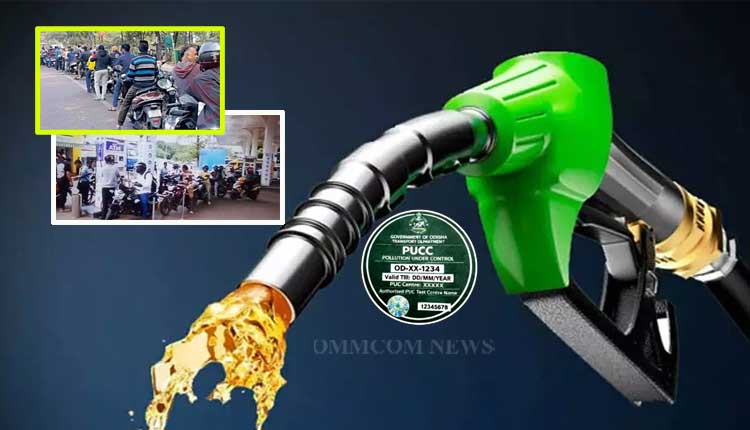
Following the initial announcement of the order, long queues were reported across Odisha as commuters rushed to obtain PUCC certificates. Public anxiety intensified after reports emerged that PUCC certificates would not be issued to vehicle owners with pending challans.
Petitioner’s counsel Ranjan Rout told the court that the state had relied on Section 167 to justify denying PUCC certificates to motorists with unpaid challans. However, the High Court rejected this argument, stating that there is no legal provision linking the issuance of PUCC certificates with the clearance of challans.
“The Honourable High Court directed the Transport Commissioner to issue a notification, resolve issues in the Vahan portal, and inform the court next week, clearly stating that PUCC certificates must be issued even if challans are pending,” Rout said.
Addressing the second grievance regarding restrictions on fuel sales, Rout said the Transport Department submitted an affidavit confirming that the earlier instructions had been withdrawn. Petroleum companies have now been permitted to sell fuel without restriction, and directions have been issued to conduct awareness programmes instead of coercive enforcement.
The High Court observed that such directives cannot be imposed arbitrarily. While the government cited the availability of digital verification through the Vahan portal, the court directed transport authorities to ensure that any enforcement strictly aligns with existing legal provisions and portal capabilities. The court has sought a detailed affidavit on the required amendments to the portal.