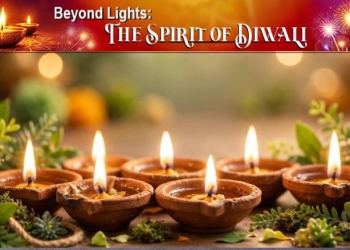






Diwali, derived from the Sanskrit words Deepa meaning light and Avali meaning row, literally translates to a row of lights. Diwali is the festival when India glows like a galaxy on earth, when every window, every doorway, every courtyard flickers with the soft gold of a thousand diyas, when joy itself seems to take the form of light and spill over streets and homes.
Celebrated on the pitch-dark night of Kartika Amavasya — the new moon day of the holy month of Kartik — Diwali marks the victory of light over darkness, of hope over despair. And while the rest of the country celebrates it as the return of Lord Ram to Ayodhya or the worship of Goddess Lakshmi, in Odisha, the festival carries a deeper, more emotional memory — a memory of ancient seafarers, of insect-filled winter nights, and most importantly, of ancestors who are invited home with light.
The story of Odisha’s Diwali goes back to 350 BC. When the Sadhabas — the merchant mariners of Kalinga — returned home from Bali, Java and Sumatra with ships full of wealth after months at sea, the entire coast welcomed them by lighting earthen diyas. Another folk belief says the lights were lit to ward off the swarm of insects that arrive with early winter.
When Odias Light The Sky To Guide Ancestors Home
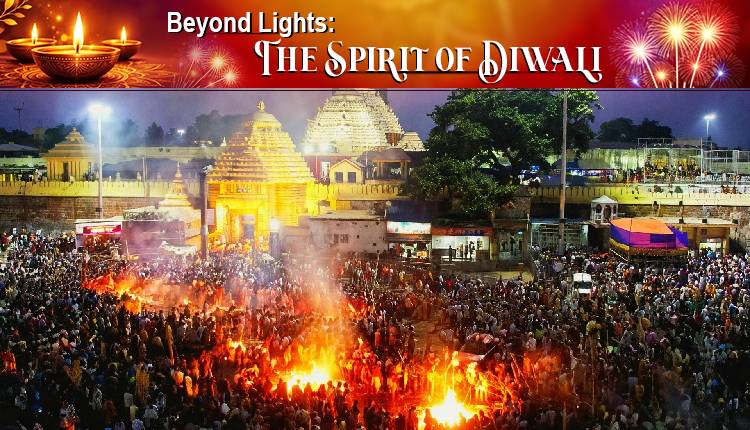
But what makes Odisha’s Diwali truly different is not the lights, the crackers or the Lakshmi Puja. It is the Bada Badua Daka. It is the one night when Odias call their forefathers home. On the morning of Diwali, courtyards are cleaned and rangolis in the shape of Boita — the ancient sailboats of the Sadhabas — are drawn. The link to Jagannath culture is unmistakable, for Jagannath is the soul of Odisha, and remembering ancestors is believed to be the path to his blessings.
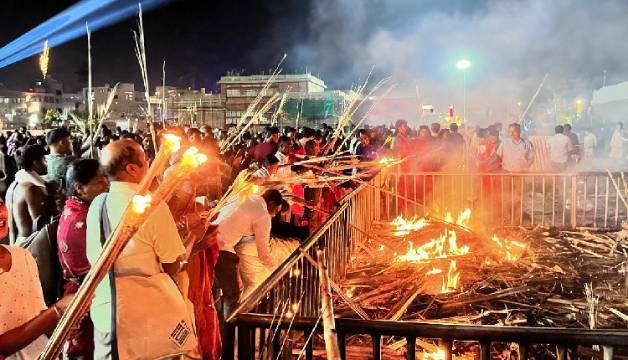
As dusk falls, families gather in front of their homes. An earthen pot with a diya inside is tied to a tall pole — the Akash Deepa — to light the way for the departed. Then comes the most soulful moment. All members hold a bunch of Kaunria Kathi — jute sticks — light them from the sacred diya, and raise them high towards the dark sky, chanting in unison: “Bada Badua ho, andhaara re aasa, aalua re jaa, Mahaprasad khai, Baisi Pahacha re gada gadua tha.” Oh our ancestors, come in this darkness, go in this light, eat Mahaprasad and attain salvation on the 22 steps of Puri. It is not just a ritual. It is an invitation, a prayer, a tearful goodbye — Odias believe their bada baduas descend to earth on this night, and the light from the Kaunria sticks shows them the way back to heaven.
Only after the ancestors are sent off does the celebration begin — with crackers bursting and homes glowing — but the heart of Odisha’s Diwali remains that flickering jute stick pointing to the sky.