





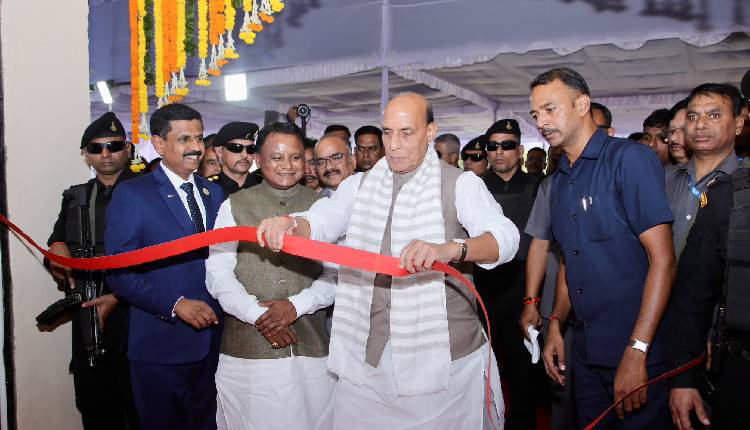
Bhubaneswar: Defence Minister Rajnath Singh on Tuesday said aero-engine self-reliance is key to India’s aerospace sovereignty.
He was speaking after the delivery of the 2,000th aero-engine from HAL’s Koraput Division and announcement of a second Shakti engine line at Sunabeda at a cost of Rs 218 crore. The new line will produce up to 100 engines per year by 2028-29 for indigenous helicopters Dhruv and Prachand.
Singh said the 2,000-engine milestone reflects six decades of expertise since 1964, adding that the division has also overhauled over 9,000 engines that power MiG-21, MiG-27, MiG-29 and Su-30MKI fleets.
Calling the engine the “heart” of an aircraft, he said focus is on indigenous high-thrust engines for AMCA, Rs 5,000 crore investment, raw material indigenisation with MIDHANI and India’s first high-thrust testing facility. He said HAL delivered 63 AL-31FP engines against a target of 60 under the 240-engine order for Su-30MKI placed in 2024, despite global supply disruptions, and is raising annual capacity from 30 to 50 engines with Rs 335 crore investment.
Accompanied by CM Mohan Charan Majhi, Singh interacted with HAL employees and said Odisha, with its coastline, ports and skilled manpower, will play a key role in defence manufacturing. An Aerospace and Defence Complex has been approved at Gajamara in Dhenkanal, he said.
He asked HAL to develop Koraput not just as an engine production facility but as a complete aerospace propulsion ecosystem by nurturing suppliers, mentoring. Singh interacted with engineers, technicians and employees of the Division.
Stressing Odisha’s role in defence and aerospace, Singh said the state has a long coastline, ports, mineral resources, industrial infrastructure and skilled manpower. The government has already approved an Aerospace and Defence Equipment Manufacturing Complex at Gajamara in Dhenkanal, he added.