



Cuttack: For the first time in the history of Banki block of Cuttack district, strawberries have successfully borne fruit, opening up new possibilities for high-value horticulture in Odisha’s coastal belt. What was long considered an unlikely crop for the low-lying, riverine region has now emerged as a symbol of innovation, confidence and farmer-led transformation.
The experimental cultivation was undertaken on around 2.5 acres of land in Pathapur and Gahiragadia villages with support from the Directorate of Horticulture under the Department of Agriculture and Farmers’ Empowerment. Three farmers participated in the pilot project, sourcing strawberry saplings from Himachal Pradesh and adopting scientific cultivation practices suited to the local conditions. The experiment has paid off, with healthy plants yielding quality fruit that has already found eager buyers.
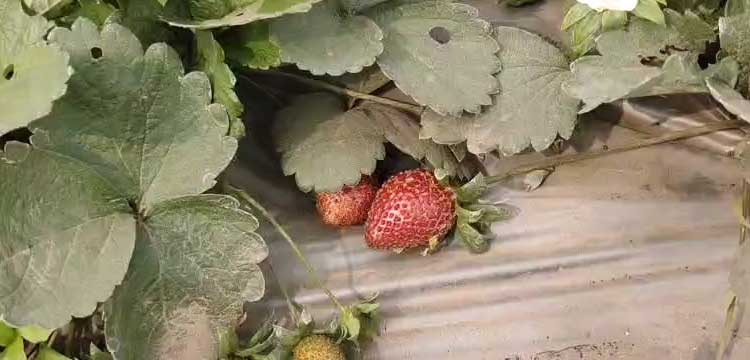
Strawberry cultivation is usually associated with Odisha’s hilly districts such as Kandhamal, Koraput, Malkangiri, Keonjhar and Mayurbhanj, where the terrain and climate are more favourable. Banki, located along the banks of the Mahanadi, presents a very different challenge. Much of the farmland here is low-lying and prone to water stagnation during the monsoon, making strawberry farming a risky proposition. Despite this, the farmers, guided by horticulture officials, decided to take the leap by using the tunnel cultivation method and carefully managing drainage and soil conditions.
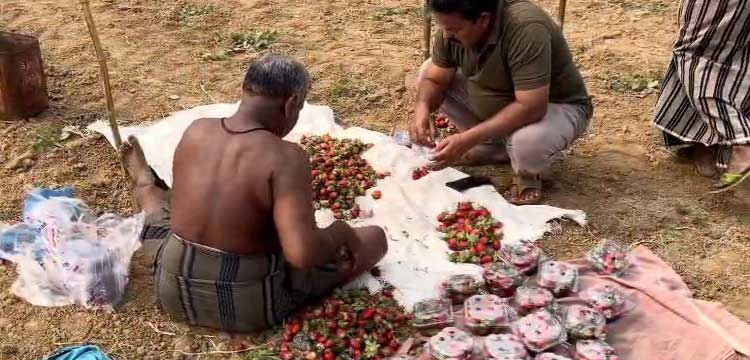
Santosh Nayak of Pathapur and Sarat Khatua of Gahiragadia cultivated strawberries on one acre each with government assistance. Land preparation began in October, saplings were planted in November, and by the first week of December the plants had started bearing fruit. The success has brought immense joy to the farmers, who admit they were initially sceptical about whether strawberries could adapt to the local soil and climate.
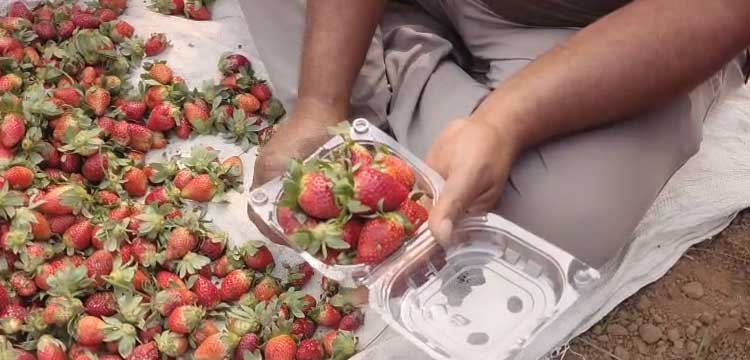
Sharing his experience, farmer Santosh Nayak said it was the Assistant Director of Horticulture, Soochana Swastik, who encouraged them to attempt strawberry cultivation. He recalled that they were reluctant at first, fearing that the climate might affect both yield and taste. However, assurances of technical guidance and marketing support gave them the confidence to proceed. Today, he says, the fruits are delicious and the response from the public has exceeded expectations, with many people visiting the fields directly to buy the produce.
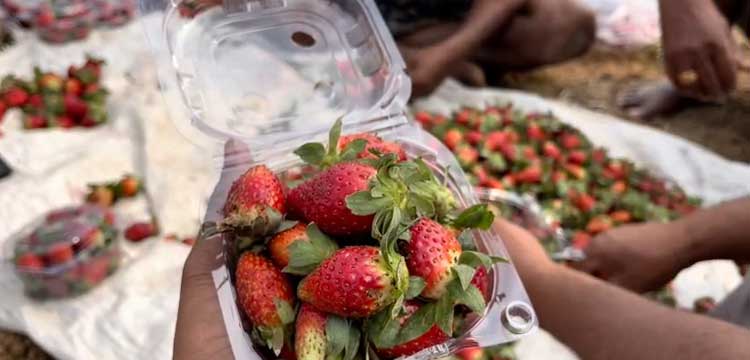
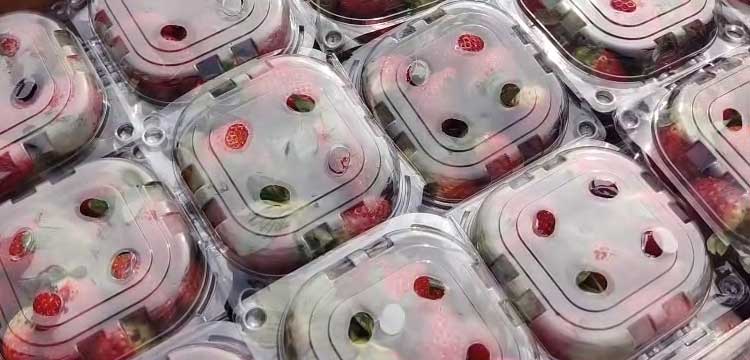
The strawberries are being sold in 250-gram packets priced at ₹100, and from one acre alone, around 100 such packets are being harvested daily. The strong demand has reaffirmed strawberries as a viable high-value seasonal crop capable of providing farmers with additional income.
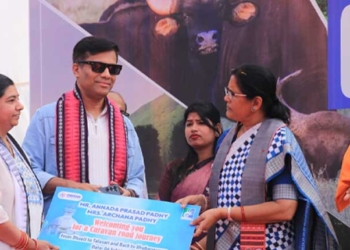
The achievement has also received recognition at the state level. On Republic Day, Santosh Nayak presented the locally grown strawberries to the Chief Minister, who appreciated the initiative and felicitated the farmers in the presence of district officials, further boosting their morale.
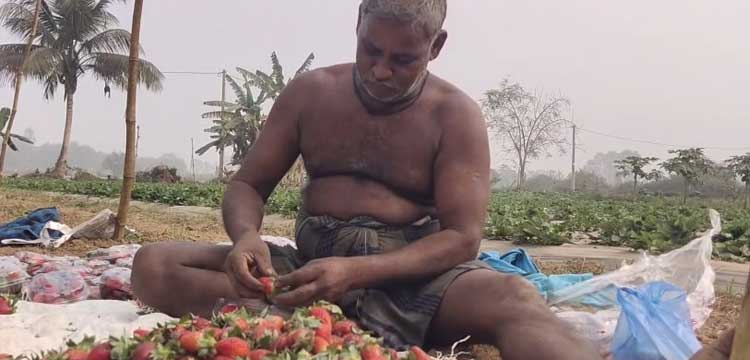
Local consumers have expressed surprise and pride at seeing strawberries grown in Banki. Manoj Dalei, a customer, said that strawberries were always considered exotic fruits cultivated elsewhere, and it was encouraging to see them grown locally with good taste and quality.
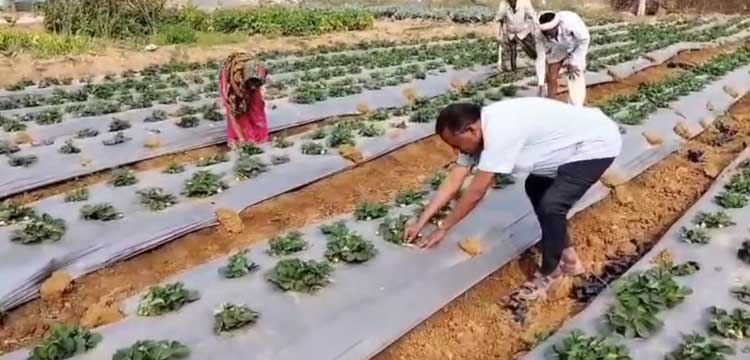
Encouraged by the success of the trial, the Horticulture Directorate has announced plans to expand strawberry cultivation in Banki block as well as other blocks of Cuttack district from next year. Officials noted that about 55,000 strawberry seedlings can be planted per hectare and assured that efforts would be made not only to scale up production but also to strengthen market linkages for farmers.
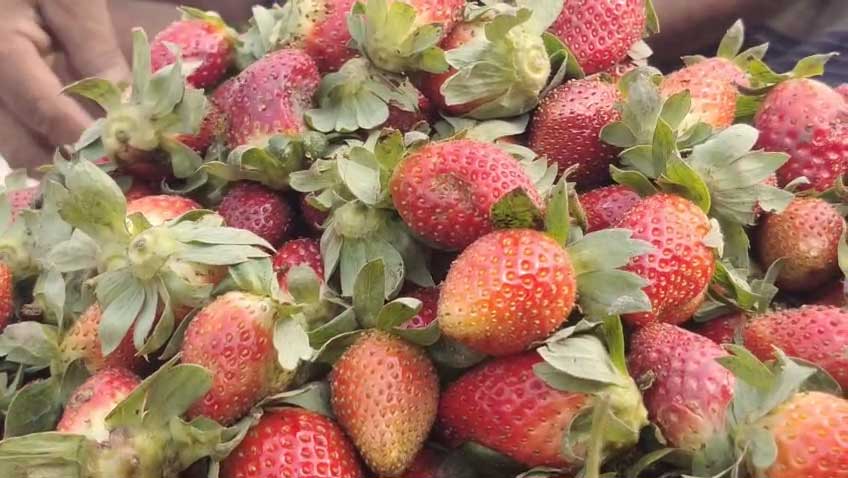
The success of strawberry cultivation in Banki stands as a compelling example of how scientific planning, institutional support and farmer willingness to experiment can overcome geographical limitations. From the banks of the Mahanadi to local markets, the bright red berries are now telling a story of confidence, courage and a sweeter future for farmers in coastal Odisha.