





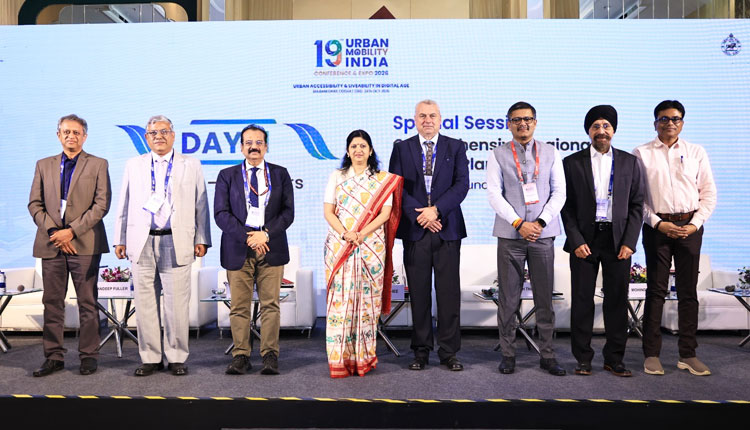
Bhubaneswar: Planning mobility beyond individual city boundaries is essential to building connected, accessible and sustainable urban regions. This was the key message of a special session on Comprehensive Regional Mobility Planning (CRMP), held on October 23 as part of the 19th Urban Mobility India (UMI) Conference & Exhibition 2026 in Bhubaneswar.
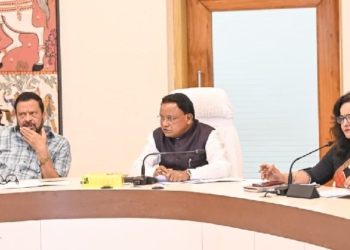
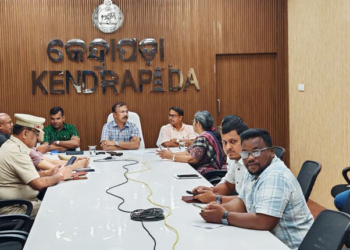
Chaired by Usha Padhee, Additional Chief Secretary of Housing & Urban Development Department of Odisha government, the session brought together senior government officials and transport-sector experts to deliberate on integrated mobility planning across cities and adjoining regions, with a focus on making everyday journeys more convenient, efficient and inclusive for citizens.
The session was attended by Jignesh Mehta, Urban Planning and Design Lead, ARUP; Sandeep Fuller, CEO (Project Services), SYSTRA India; Shalabh Goel, Managing Director, National Capital Region Transport Corporation (NCRTC); Amitabh Thakur, IPS, Transport Commissioner, Government of Odisha; Mohindar Singh, former Dean, Land Transport Authority (LTA) Academy, Singapore; and Sanjay Kumar Biswal, Director, Information & Public Relations Department, Government of Odisha.
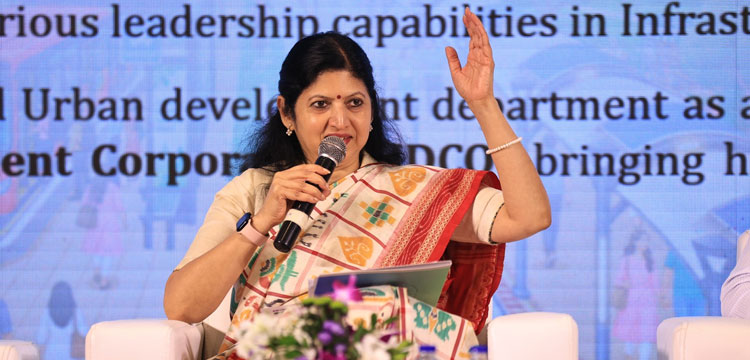
The discussions highlighted the need to view cities and their surrounding areas as interconnected regions where people live, work, study and access essential services. Comprehensive Regional Mobility Planning provides a framework for integrating transport networks, infrastructure development and land-use planning, while strengthening coordination among transport agencies, urban local bodies and other stakeholders.
Participants emphasised that an effective regional mobility system must go beyond individual transport projects to ensure seamless connectivity between different modes of transport. Integrated public transport, dependable last-mile connectivity, pedestrian-friendly infrastructure and non-motorised transport were identified as key elements of an accessible, efficient and inclusive urban transport network.
The deliberations also underscored the importance of aligning transport investments with land-use planning to optimise infrastructure, reduce travel barriers and support balanced regional development. Better coordination between cities and their adjoining areas can help improve connectivity, facilitate economic activity and ensure that expanding urban regions remain accessible and liveable.
For citizens, integrated regional mobility planning can mean smoother daily commutes, greater choice of transport, safer walking and cycling facilities, and improved access to employment, education, healthcare and other essential services. A citizen-centric approach can also help reduce dependence on private vehicles and encourage more sustainable travel choices.
Held as part of UMI 2026 in Odisha, the session reinforced the importance of coordinated regional planning in shaping a mobility ecosystem that connects communities, expands opportunities and supports sustainable urban growth.