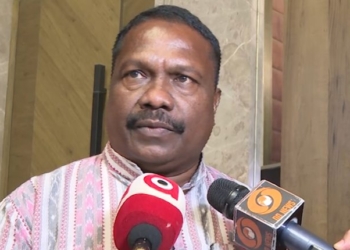






Bhubaneswar: Odisha Revenue and Disaster Management Minister Suresh Pujari on Thursday attributed the extensive flooding in Ganjam district to unprecedented rainfall during Cyclone Arnab, saying Patrapur block received a staggering 808.4 mm of rain in three days, the fourth-highest rainfall recorded in the history of the state.
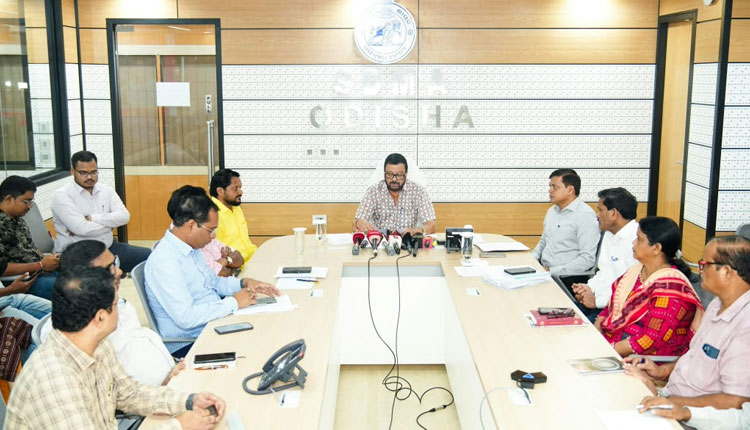
Addressing a press conference here on the systematic management of the Ganjam floods, Pujari said the district had never witnessed rainfall of such intensity, with Patrapur alone recording 546 mm on October 29, besides 89.4 mm on October 28 and 173 mm on October 30.
Ganjam district, on an average, received 337.6 mm of rainfall over the three-day period from October 28 to 30, with daily precipitation of 83.1 mm, 191 mm and 63.4 mm, respectively, he said.
The minister said other badly affected locations also experienced exceptionally heavy rainfall. Mohana in Gajapati received 525.2 mm over the three days, while Sankhemundi in Ganjam recorded 560 mm and G Udayagiri in Kandhamal received 543.2 mm.
On October 29 alone, Patrapur recorded 546 mm of rainfall, followed by G Udayagiri (462.4 mm), Sankhemundi (388 mm), Raikia (384.8 mm), Sorada (375 mm), Chikiti (309.2 mm) and Rangeilunda (261 mm).
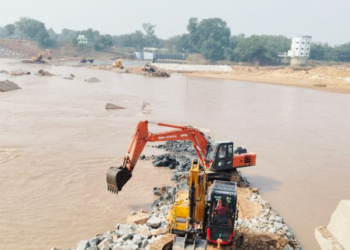
The intense precipitation triggered flash floods in the Rushikulya and Budhabalanga river systems within a short span, severely affecting Ganjam district, Pujari said.
He pointed out that the Rushikulya has several tributaries and four dams, including one with an automatic operating system. Sorada, however, does not have a gate system, which posed difficulties during the recent floods. The government has initiated steps to address the gap, he added.
Highlighting Odisha’s disaster management record, Pujari said the state had recorded 9,866 deaths during the 1990 Super Cyclone, 45 during Cyclone Phailin in 2013, 72 in the Titli floods in 2018 and 65 during Cyclone Fani in 2019.
In contrast, no direct flood-related deaths were reported in Ganjam during Cyclone Arnab, he said, clarifying that the fatalities recorded in the district were caused by landslides.
Describing landslides as an emerging challenge, the minister said the government was consulting scientific and technical institutions and domain experts to develop effective strategies for their management.
He said helicopters were deployed for rescue, evacuation and distribution of relief materials during the floods. Indian Navy helicopters also carried out evacuation operations under difficult conditions, shifting stranded people to safer locations.
Chief Minister Mohan Charan Majhi personally reviewed the situation several times through visits to the Special Relief Commissioner’s control room and meetings with officials, while eight state ministers were deployed in affected areas to assist people and coordinate relief operations, Pujari said.
The government also temporarily deputed experienced senior administrative officers, including former Collectors of the concerned districts, to strengthen coordination and support the local administration.
On relief measures, Pujari said the government’s package covered losses relating to agricultural land, houses, household belongings and businesses. Each affected family had been assured 50 kg of rice and financial assistance of Rs 2,500.
Calling compensation an entitlement of affected people, he said four IAS officers had been appointed as Additional Special Relief Commissioners in the affected districts with full powers to ensure that assistance reached beneficiaries without delay.
The minister also urged political parties to utilise the forthcoming Assembly session, scheduled to begin on November 18, for a comprehensive discussion on Odisha’s disaster management experience, from the 1990 Super Cyclone to the present.
“Criticism has an important place in a democratic system,” he said, calling for constructive deliberations on preparedness, response and long-term mitigation measures.
Pujari said the state government was simultaneously working towards developing flood-resistant and disaster-resilient infrastructure in vulnerable districts, including Jajpur, Bhadrak, Balasore, Kendrapara, Keonjhar, Mayurbhanj, Ganjam, Gajapati and Kandhamal.
Research, technical assessments and field surveys were being undertaken in collaboration with IITs and other specialised institutions to strengthen infrastructure against future disasters, he added.
Reaffirming the government’s commitment to public safety, Pujari said Odisha was not merely responding to successive cyclones and floods but also working towards strengthening its long-term disaster preparedness and resilience.