





By Prashant Hota, Chairman, Inclusion Foundation
The MMDR Amendment and the larger question of fiscal federalism in mineral-rich eastern India.
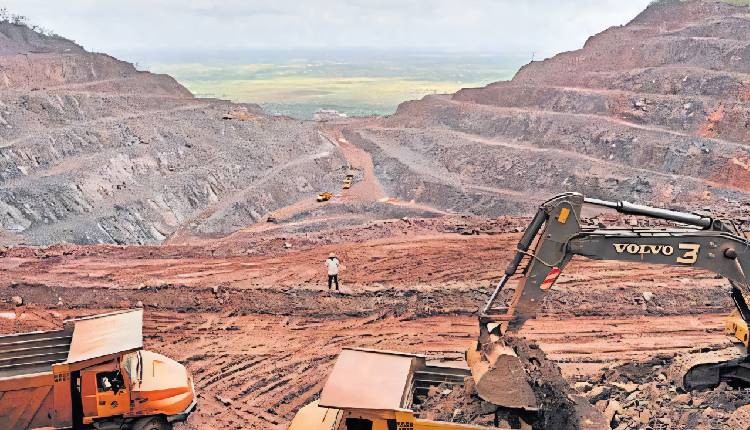
For decades, minerals from Odisha and eastern India have travelled across the country to build India’s steel plants, power stations, railways, ports and industries. The iron ore leaves. The coal leaves. The bauxite leaves. But the land remains—and so do the long-term costs of extraction.
That leads to a fundamental question: when finite mineral wealth is taken from a State’s soil, who should have the constitutional and fiscal power to ensure that a fair share of that wealth is converted into lasting prosperity for its people?
This is the larger issue raised by the Mines and Minerals (Development and Regulation) Amendment Act, 2026. It is not merely a dispute over mining levies. It is a question of fiscal federalism.
The Union Government’s concerns—investment certainty, predictable levies and the competitiveness of Indian industry—deserve serious consideration. But so does the concern of mineral-producing States: investment certainty cannot come at the cost of diminishing the fiscal capacity of the States that bear the enduring social, environmental and infrastructural consequences of extraction.
For Odisha, Jharkhand, Chhattisgarh and the mineral belt of eastern India, this is therefore about more than revenue. It is about whether finite natural wealth can be transformed into permanent public wealth—and about who, within India’s constitutional structure, gets to decide how that transformation takes place.
The Constitutional Question
India’s Constitution deliberately distributes legislative and taxation powers between the Union and the States. The 2024 judgment of the Supreme Court’s nine-judge Constitution Bench in Mineral Area Development Authority v. Steel Authority of India Ltd. recognised State legislative competence to tax mineral rights and held that royalty is not itself a tax.
The constitutional issue, therefore, is not simply who regulates mining. It is also who retains the fiscal authority to deal with its consequences.
This becomes particularly significant because the 2026 amendment introduces the concept of “mineral-bearing lands” and places restrictions on specified State levies relating to mineral rights and mineral-bearing lands, with State taxation subject to conditions or restrictions prescribed by the Central Government.
That deserves *careful constitutional examination.
Land is not synonymous with the mineral beneath it. The Constitution places land within the State legislative sphere, including taxation of lands and buildings under Entry 49 of the State List. Entry 50 separately concerns taxes on mineral rights, subject to limitations imposed by Parliament.*
The supplied Odisha Assembly brief therefore rightly calls for examination of the relationship between the amendment and Entries 49 and 50.
This is not a technical footnote. It goes to the heart of Indian federalism.
Odisha is not asking for a privilege
Odisha’s argument should not be that mineral-rich States deserve special treatment.
It should be that States must retain meaningful fiscal capacity to manage the consequences of their own natural-resource economy.
Mining requires land, roads, railways, water, electricity and public administration. It transforms villages and local economies, can involve displacement and rehabilitation, and creates environmental obligations that may survive long after a mine has closed.
And when the ore is gone, the State remains.
The village remains. The displaced family still needs livelihood security. Children still need schools. Roads still require maintenance. Water systems and landscapes still require protection.
The question, therefore, is not simply how much revenue a State collects from a mine in a particular financial year. It is whether the fiscal architecture allows that State to convert a finite underground asset into permanent public wealth above the ground.
The supplied Assembly brief captures this as “value capture”: not merely how much mineral is extracted, but how much durable value remains through revenue, employment, local enterprise, infrastructure, skills and human capital.
That should be the central test.
The Eastern Indian Paradox
There is a deep paradox in India’s mineral economy. The eastern belt contains some of the country’s richest mineral resources, yet many mineral-bearing districts continue to face difficult questions of human development, environmental restoration and economic diversification.
The minerals travel. The steel travels. The electricity travels. The economic value travels. But many of the social and ecological consequences remain geographically concentrated.
This is why Odisha’s debate is also a national debate. If the fiscal framework leaves States with inadequate capacity to invest in the communities from which minerals are extracted, India may achieve higher mineral production without achieving equivalent long-term development.
The objective should instead be to create a system in which mineral-producing States become stronger—not weaker—as their finite resources are exhausted.
The DMF And The Question Of Local Value
The financial consequences also need to be examined through the District Mineral Foundation mechanism. Mining-affected districts depend on these resources for measures intended to address the interests of communities and areas affected by mining.
Any significant change in the fiscal architecture of mineral extraction therefore deserves a transparent district-wise assessment: How much revenue is generated? How much reaches affected communities? What happens under different mineral-price and production scenarios? And what happens when the mineral itself is exhausted?
This calls for district-wise projections of the impact on DMF resources.
This matters because reduced public revenue is not an abstract accounting exercise in a mining district. It can affect roads, drinking water, health facilities, livelihood programmes, rehabilitation and other public investments. The people living closest to the mines should not discover the fiscal consequences only after the ore has left the district.
The Retrospective Question
Perhaps the most sensitive issue is the treatment of past unpaid or unrecovered State levies.
The 2026 legislation contains provisions concerning unpaid or unrecovered past levies. The Assembly brief calls for particular scrutiny of their interaction with existing judicial directions, pending litigation and accrued State claims.
This raises a fundamental rule-of-law question. The Supreme Court’s 2024 judgment recognised State taxing competence and dealt with the consequences of that constitutional position. If subsequent legislation changes the treatment of past liabilities, its constitutional basis and legal effect deserve transparent examination.
The question should not simply be Centre versus State. It should be: What does the Constitution permit? What does Parliament intend?
And what happens to rights and liabilities that arose under the earlier legal framework?
That is where parliamentary and judicial scrutiny matters.
Investment Versus Federalism: A False Choice?
Industry needs predictability. A mining investment involving billions of rupees cannot operate efficiently if governments can introduce unpredictable levies after investments have been made. The Union Government’s concern about certainty in the mining sector is therefore serious.
But there is no inherent contradiction between investment certainty and State fiscal autonomy.
A better federal framework could establish transparent principles, reasonable ceilings, consultation mechanisms and prospective rules while preserving meaningful State legislative space.
*The real question is not whether there should be rules; it is who makes those rules, under what constitutional authority, according to what principles, and with what safeguards?
*
That is a more constructive debate than treating national investment and State autonomy as competing interests.
Odisha’s Historical Contribution
There is also an emotional dimension that statistics cannot capture.
Odisha has contributed its mineral wealth to India’s industrial journey for generations. Its forests, mountains and mineral belts have fed India’s steel and power economy. Its districts have carried the burdens associated with land acquisition, transportation, environmental pressure, displacement and rehabilitation.
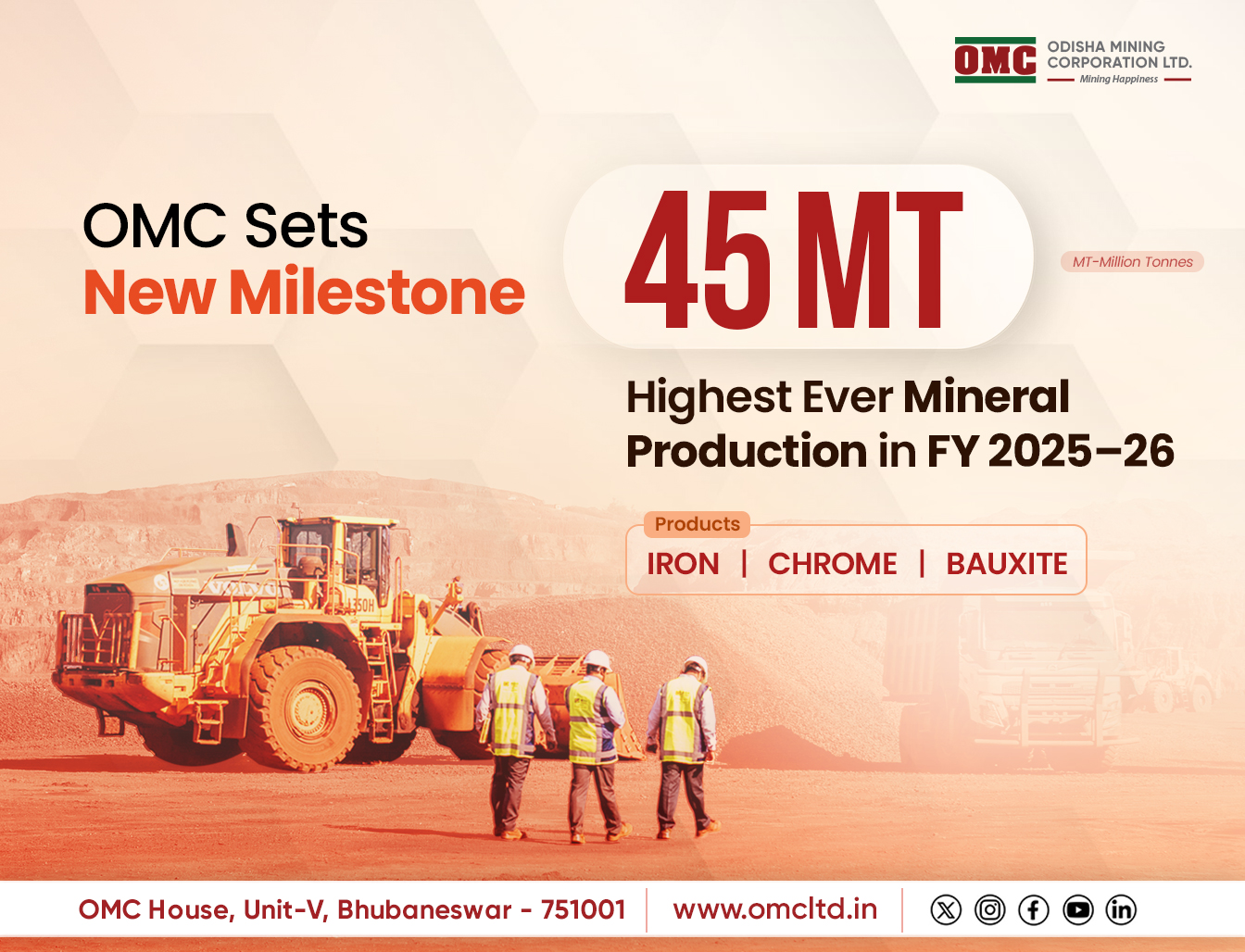
When 53 % of Iron ore from Odisha is transported out of Odisha for value addition, that indicates Odisha’s value addition reality and consequent expectation dump in revenue and employment .
The State’s contribution to India’s growth should not be measured only in tonnes of iron ore, coal or bauxite. It should also be measured in what India builds in return.
A truckload of iron ore has a finite life as a natural resource. A school built with public revenue can educate generations. A hospital can serve generations. A skilled young person can contribute for decades. A diversified local enterprise can survive after the mine closes.
That is what value conversion should mean: turning finite natural wealth into lasting human wealth.
A National Compact For Mineral India
The answer should not be a confrontation between Delhi and the States, nor a contest between government and industry.
India needs a new mineral compact in which the Union guarantees national mineral security and investment stability; States retain constitutionally protected fiscal space; mining companies have transparent and predictable obligations; mining-affected districts receive measurable long-term benefits; and citizens can see how natural-resource wealth is being converted into human and physical capital.
For Odisha and the eastern States, this is ultimately a question of inter-generational justice.
The mineral beneath a hill may belong to today’s economy. But once extracted, it cannot be recovered for tomorrow’s generation.
Therefore, the real accounting question is not merely:
How much mineral did India extract this year?
It is:
How much permanent prosperity did India create from the mineral it extracted?
That is why the 2026 MMDR framework deserves serious constitutional, economic and federal examination.
Odisha should seek a clause-by-clause assessment of its impact on State taxation, mineral revenue, DMF resources, outstanding dues and local development capacity. It should also independently measure local employment, procurement, MSME participation and the proportion of mineral wealth that remains within the State’s districts.
The Union’s concerns about investment certainty deserve an answer. But Odisha’s concerns about fiscal federalism deserve one too.
Let’s Think
India’s mineral wealth may lie beneath Odisha’s soil. The challenge is to ensure that the prosperity it creates does not leave the people above that soil behind. And no point for Odisha , to lose the tax on mineral bearing land for which Odisha has been fighting from front line and the Country ‘s highest judiciary system has endorsed its right to do so.
Odisha should not be left forever with the paradox of prosperity under the ground—powerful enough to attract investors—yet poverty above the ground, for which corporations seek social licence to operate through the make-believe of CSR.
(DISCLAIMER: This is an opinion piece, written by Prashant Hota,Chairman, Inclusion Foundation. The views expressed are author’s own and have nothing to do with Ommcom News charter or views. Ommcom News does not assume any responsibility or liability for the same.)