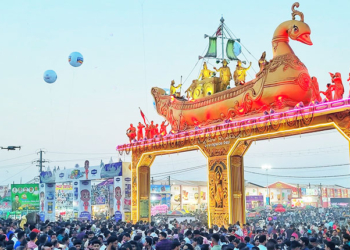

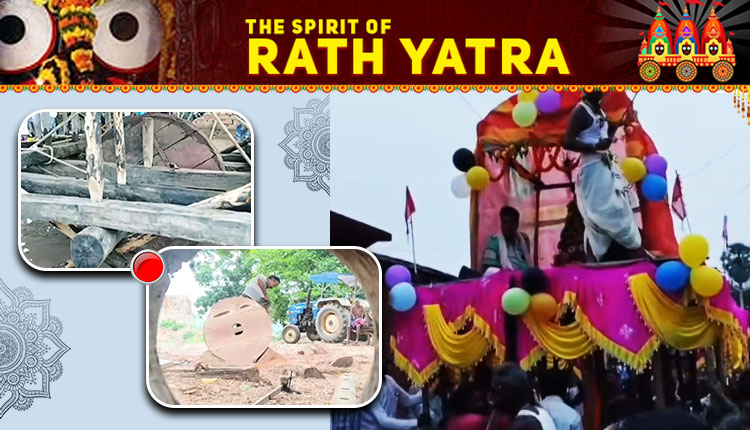
Khuripani (Bolangir): When the sound of conch shells fills the village air and devotional songs echo through the streets, Khuripani wears a different look. The small village under Khaprakhol block of Odisha’s Bolangir district turns into a centre of devotion for two days every year as Lord Jagannath arrives here during the Rath Yatra.
But what makes Khuripani’s celebration special is not a grand temple or a huge structure. The village does not have a permanent temple dedicated to Lord Jagannath. There are no tall temple towers or daily rituals inside a sanctum. Yet, for nearly 250 years, the villagers have kept alive a unique tradition where Mahaprabhu visits their village every year like a beloved guest.
For the people of Khuripani, faith is bigger than any temple. Their devotion has preserved a rare tradition that has passed from one generation to another.
The biggest attraction of Khuripani’s Rath Yatra is its unusual single-wheel chariot. Unlike the giant wooden chariots of Puri’s famous Rath Yatra, the Khuripani Rath is simple but unique in its design.
The chariot stands nearly 15 feet tall and moves on a single wooden wheel placed at the centre. This rare structure has become the identity of the village’s centuries-old festival.
According to villagers, the tradition was started around 250 years ago by Rajendra Sahoo, the Gauntia (traditional village headman) of Khuripani.
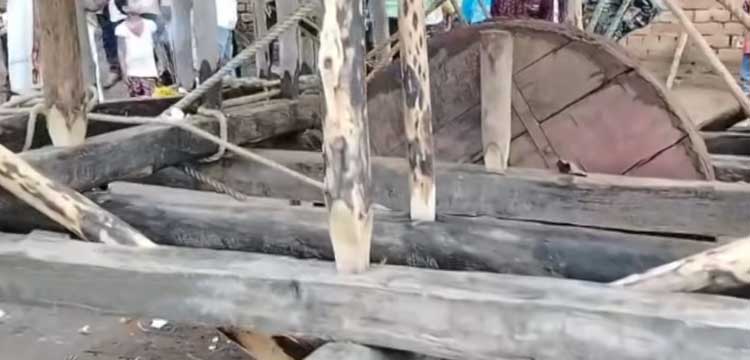
Ramesh Sahoo, a member of the Gauntia family, said the idea of making a single-wheel chariot came from Ghens village in Baragada district.
“My great-grandfather Rajendra Sahoo had seen a single-wheel chariot in Ghens village. Inspired by that design, he brought the idea to Khuripani. Later, the same type of chariot was prepared here and the tradition continued,” he said.
The first chariot was made under a banyan tree behind their house. Though the tradition later stopped in Ghens village, the people of Khuripani continued it with deep faith.
For villagers, the Rath Yatra is not just a religious festival. It is a symbol of their connection with their ancestors.
“Our elders followed this tradition, and now we are continuing it. The Gauntia introduced this practice after seeing the chariot in Ghens. Since then, the ritual has remained unchanged,” said a villager.
Every year, villagers come together to prepare for the arrival of Lord Jagannath. The festival brings families, neighbours and the entire village together.
The making of the single-wheel chariot is a special process. Local craftsmen prepare the chariot using traditional methods.
The carpenter who prepared this year’s chariot said making the wooden wheel requires great skill.
“I am making the wheel from jamun tree wood. The wheel is around one foot thick and nearly 3.5 feet wide. Three pieces of wood are joined together to prepare it,” he said.
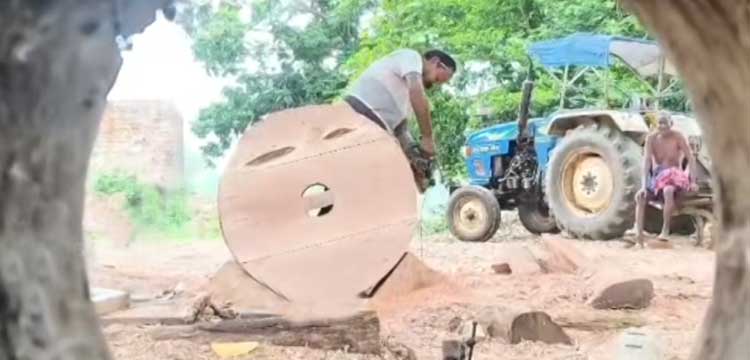
The handmade wooden wheel carries not just the weight of the chariot but also the emotions and faith of generations.
The Rath Yatra follows a special route connecting Khuripani with nearby villages. On the seventh day of the festival, Lord Jagannath arrives at Khuripani from Brahmanipali village.
Before bringing the Lord to Khuripani, villagers travel around three kilometres through forests and streams to Brahmanipali to receive the idol with prayers and devotion.
After reaching Khuripani, devotees pull the unique single-wheel chariot through the village roads amid chanting and celebrations.
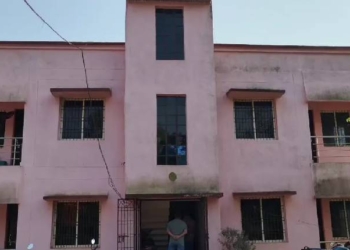
For two days, the Government Upper Primary School of Khuripani becomes a place of worship. In the absence of a permanent temple, the school turns into a temporary shrine where hundreds of devotees gather to offer prayers.
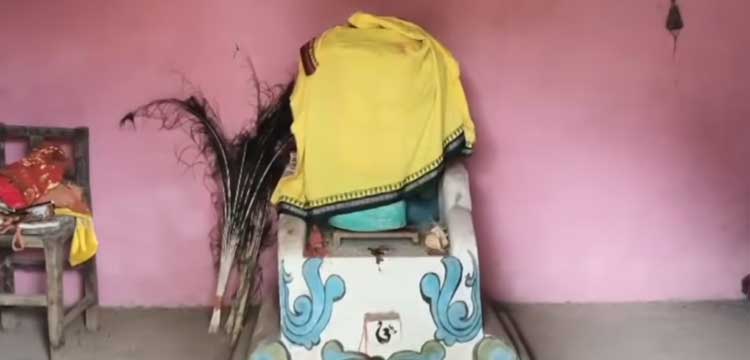
Earlier, idols of the Chaturdha Murti (Lord Jagannath and His siblings) were brought from Talpali village for the festival. Later, efforts were made to establish permanent deities in Khuripani, but those plans could not succeed. However, the tradition of Lord Jagannath’s annual visit continued.
On the ninth day, Lord Jagannath returns to Brahmanipali village, marking the end of the celebration.
For the villagers of Khuripani, Lord Jagannath’s annual visit is more than a festival. It is an emotion that connects generations.
Elderly villagers remember how their ancestors protected this tradition, while young people proudly continue the practice.
“The Lord comes to our village every year. We may not have a permanent temple, but He has always lived in our hearts,” villagers say.
As the single-wheel Rath moves through the village, ordinary roads turn into paths of devotion. Every home welcomes the Lord, and every villager becomes a part of a tradition that has survived for centuries.
The Khuripani Rath is not just a wooden chariot. It is a symbol of faith, heritage and the timeless bond between Lord Jagannath and His devotees.
In Khuripani, the Lord may not have a temple built of stone, but He has an everlasting home in the hearts of the people.