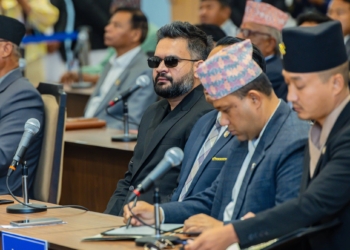



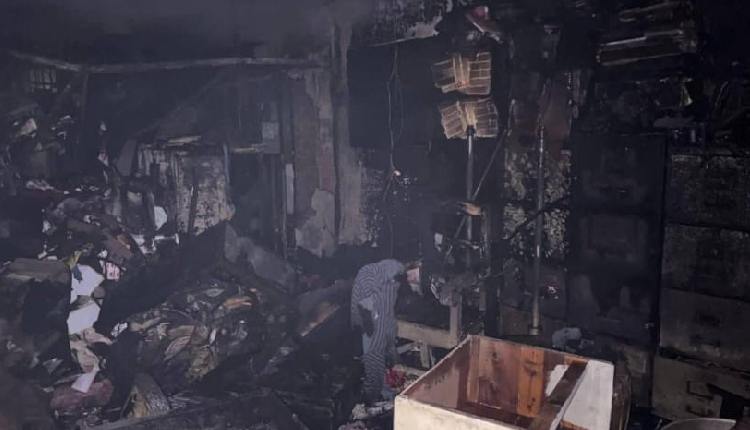
Dhaka: Members of Bangladesh Udichi Shilpigoshthi, a prominent cultural organisation, marched through the streets of Dhaka on Saturday to protest and condemn the arson attack on its central office in the Bangladeshi capital, local media reported.
The organisation said that the attack erased 55 years of cultural archives and struck at the very core of the nation’s progressive movement.
The unrest broke out following the death of Sharif Osman Hadi, spokesperson of the radical group Inqilab Mancha, during which several media offices, cultural institutions, and diplomatic missions were targeted across the South Asian nation.
Reports suggest that artists, cultural workers, journalists, and supporters participated in the march, carrying placards and chanting slogans terming the attack on Udichi as part of a wider threat to freedom of expression.
The protestors raised slogans calling the arson attack not an isolated incident but part of a broader assault on the ideals of the country’s 1971 Liberation War against Pakistan and its traditional cultural resistance.
Addressing the rally, Udichi’s General Secretary Amit Ranjan Dey, who led the procession, stated that the attack reflected a familiar and alarming pattern.
“Our office was vandalised, looted, and torched in the same manner as attacks on The Daily Star, Prothom Alo, and Chhayanaut. These are not random acts. They represent a deliberate threat to freedom of expression and democratic rights,” Bangladesh’s leading newspaper, The Daily Star, quoted Dey as saying.
Describing the destruction of Udichi’s archives as a cultural catastrophe, Dey said decades of documentation — songs, scripts, photographs, and records of resistance were wiped out overnight.
“This is not just an attack on a building. It is an attempt to erase memory,” he said.
The organisation reiterated in a statement during the rally that the arson was a direct assault on the progressive cultural movement, warning that continued inaction would further embolden extremist elements.
At the rally, Udichi called on the Bangladeshi authorities to immediately identify, arrest, and prosecute those responsible for the attack.
Leaders raised questions about the role of the Muhammad Yunus-led interim government, arguing that its failure to protect cultural and media institutions risks eroding the democratic foundations of Bangladesh.
The programme concluded with Udichi members renewing their pledge to remain on the streets until accountability is ensured.
“This procession is not the end; we will keep protesting until justice is served,” Dey said.
Amid the escalating violence across the country, Bangladesh remained on edge on Saturday with police personnel and members of Border Guard Bangladesh (BGB) deployed at key locations in Dhaka to maintain law and order during the funeral of Hadi.
(IANS)