





New Delhi: External Affairs Minister (EAM) S Jaishankar on Friday underlined the need for credible and reformed multilateralism in world which is “more interconnected, complex and multipolar”.
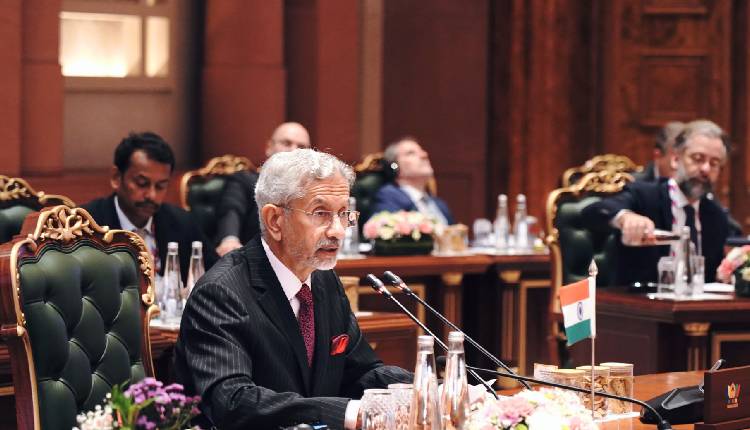
While chairing the BRICS Foreign Ministers’ Meeting session on ‘Reforms of Global Governance and Multilateral System’, EAM Jaishankar stressed that the United Nations’ effectiveness and credibility will remain constrained without expansion of permanent and non-permanent categories.
He highlighted the urgency of international financial architecture reforms, enabling Multilateral Development Banks (MDBs) to become more responsive, robust and equipped as well as increasing accessibility of development and climate finance.
EAM Jaishankar stressed the importance of a rules-based, fair, open and inclusive international trading system with World Trade Organisation (WTO) at its core, responding to challenges of non-market practices, concentration of supply chains and uncertain market access.
“The message from our times is clear – Cooperation is essential. Dialogue is necessary. Reform is overdue,” EAM Jaishankar stated.
The two-day meeting which concludes on Friday marks the first major ministerial-level engagement under India’s BRICS chairship and is expected to play a significant role in shaping the agenda for the BRICS Leaders’ Summit scheduled to be held later this year.
On Thursday, Prime Minister Narendra Modi said that, under India’s Chairmanship, BRICS will work together to strengthen multilateralism, promote sustainable development, enhance economic resilience and build a more inclusive world order.
PM Modi made the comment as Foreign Ministers and Heads of Delegation of BRICS countries called on him in the capital.
“Glad to interact with Foreign Ministers and Heads of Delegation of BRICS countries. BRICS has emerged as an important platform for advancing cooperation among emerging economies and giving voice to the aspirations of the Global South,” PM Modi posted on X.
“Under India’s Chairmanship this year, we will work together to strengthen multilateralism, promote sustainable development, enhance economic resilience and build a more inclusive world order,” he added.
(IANS)