
Asheville: Finance ministers and central bank governors from the world’s largest economies are gathering in the Blue Ridge Mountains of North Carolina for two days of talks focused on reviving global growth amid trade disputes, mounting debt and the economic fallout from the Iran conflict.
US Treasury Secretary Scott Bessent will host the G20 Finance Ministers and Central Bank Governors meeting in Asheville on Monday and Tuesday as the United States seeks to place economic growth at the centre of its year-long presidency of the grouping.
“Just as President Trump is reviving American economic growth and making it the centerpiece of this Administration’s agenda, we are taking the same approach and prioritizing growth as the host of this year’s G20 Finance Track,” Bessent said on Sunday.
“We look forward to convening policymakers and private sector leaders from around the globe to emphasize that stronger growth is not only possible, but necessary,” he said.
Bessent and Federal Reserve Chair Kevin Warsh arrived together in Asheville after flying from Joint Base Andrews, according to information shared by US officials.
Indian Finance Minister Nirmala Sitharaman arrived at Greenville-Spartanburg International Airport in neighbouring South Carolina on Sunday. She was received by India’s Ambassador to the United States, Vinay Mohan Kwatra.
Sitharaman will lead the Indian delegation at the G20 meeting and associated discussions over the next two days, India’s Ministry of Finance said.
The US presidency wants the meeting to focus on increasing global growth, reducing persistent economic and trade imbalances, addressing sovereign debt vulnerabilities and strengthening critical supply chains.
The discussions come against the backdrop of higher energy and commodity prices resulting from the Iran conflict and the disruption of commercial traffic through the Strait of Hormuz.
Washington is also expected to urge G20 members to support tougher economic measures against Iran. Differences over sanctions and continued commercial ties with Tehran could complicate efforts to reach a consensus.
Trade is likely to be another contentious subject. The Trump administration wants global economies to compete through productivity, innovation and investment instead of relying on subsidies, excess production and export-led industrial policies.
Although US officials have not directly named China while outlining this part of the agenda, Washington has repeatedly expressed concern about Chinese industrial overcapacity and its effect on international markets.
Debt challenges confronting developing economies and impediments to private investment will also be discussed. Business and technology executives have been invited to participate in parts of the programme and identify regulatory and policy barriers to investment.
Saudi Finance Minister Mohammed Al-Jadaan said the meeting would discuss developments in the global economy and continue joint efforts to confront challenges and support “growth, stability, and prosperity.”
In addition to Bessent, Warsh, Sitharaman and Al-Jadaan, Japanese Finance Minister Satsuki Katayama and Bank of Japan Governor Kazuo Ueda are among the publicly confirmed participants.
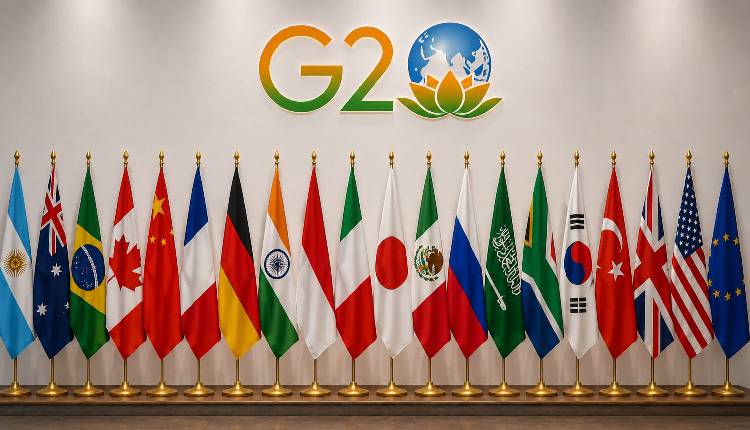
Representatives of the G20’s 19 member countries, the European Union and African Union are expected to attend, along with officials from international financial institutions. A complete name-by-name delegation list has not been released.
The Asheville meeting is expected to seek broad agreement on stronger growth, economic imbalances, debt and supply-chain resilience. However, differences over Iran, tariffs and China could result in a narrower communiqué or a chair’s summary rather than an expansive consensus document.
The Finance Track deliberations will help prepare the economic agenda for the G20 leaders’ summit, scheduled to be hosted by President Donald Trump in Miami in December.
(IANS)