





New Delhi: As the United States continues to hit Iran, and Tehran keeps up its retaliatory actions across the Persian Gulf on Washington’s installations, Pakistan finds itself poised precariously on an agonising geopolitical precipice.
Islamabad’s immediate priorities go beyond an effective bulwark against collateral damage. While prioritising energy imports and remittances, border security along the 900 km Iran frontier, sectarian tensions at home, and playing the potential mediator, Islamabad is getting closer to being a direct party in the war.
Such a situation upsets its stand as a neutral negotiator between Washington and Tehran. Pakistan’s Strategic Mutual Defense Agreement with Saudi Arabia has already resulted in the deployment of thousands of Pakistani troops and advanced fighter jets to the Kingdom.
That presence threatens to pull Islamabad directly into the crossfire as the Middle East is careening toward an all-out war. Historically, Pakistan has gone to great lengths to play the role of the regional tightrope walker, despite the political and economic volatility back home.
Sharing its western border with Iran, possessing the world’s second-largest Shi’ite population, and maintaining deep, foundational ties with Saudi Arabia, Pakistan’s survival depends on avoiding regional entanglements.
However, the realities of modern warfare and binding security alliances have fundamentally altered this calculus. Following the American and allied strikes targeting Iranian coastal defences, alleged missile sites, and other infrastructure, Tehran and its proxy networks have increasingly struck back on nearby US installations.
By targeting forward-deployed American assets and commercial shipping routes, Iran’s retaliatory arc has repeatedly encroached into Gulf territory, including Prince Sultan Air Base in Saudi Arabia. This brings into play the highly consequential Pakistan-Saudi Arabia mutual defence pact.
Signed against a backdrop of escalating regional uncertainty, the treaty dictates that any aggression against either nation will be considered aggression against both. The pact is akin to the one among NATO signatories.
Crucially, senior Pakistani defence officials have previously signalled that this overarching security arrangement extends to providing a nuclear umbrella for Saudi Arabia. To honour these mutual defence commitments, say reports, Pakistan has already deployed over 8,000 troops, a full squadron of JF-17 fighter jets, and Chinese-made air defence systems to the Kingdom.
With Tehran intensifying projectile attacks, such as with ballistic missiles or drones, targeting Saudi Arabia with chances of hitting installations where Pakistani personnel are stationed, the excuse for Islamabad to stay off intervention anymore is over.
The dilemma for Pakistan’s civilian and military leadership is nothing short of existential. If Islamabad honours its treaty obligations and retaliates against Iranian targets, it will effectively enter the war on the side of the Washington-led axis. Such a scenario would immediately militarise Pakistan’s western border, inflaming cross-border sectarian tensions and potentially empowering Baloch insurgent groups.
Conversely, if Pakistan fails to respond to attacks on its deployed forces, the credibility of its defence guarantees with Gulf partners collapses, and it risks losing the vital financial lifeline Riyadh provides to its ailing economy.
Furthermore, joining the axis and actively fighting Iran holds dire consequences for Pakistan’s domestic stability. Pakistan cannot afford to alienate its western neighbour while simultaneously continuing its battle against the Taliban regime of Afghanistan, especially at the Durand Line, and maintaining a volatile nuclear deterrent posture against India.
Islamabad’s direct involvement would inevitably draw Tehran’s retaliation, which would not merely be confined to the Gulf. It can spill across the highly porous Pakistani border, destabilising it further.
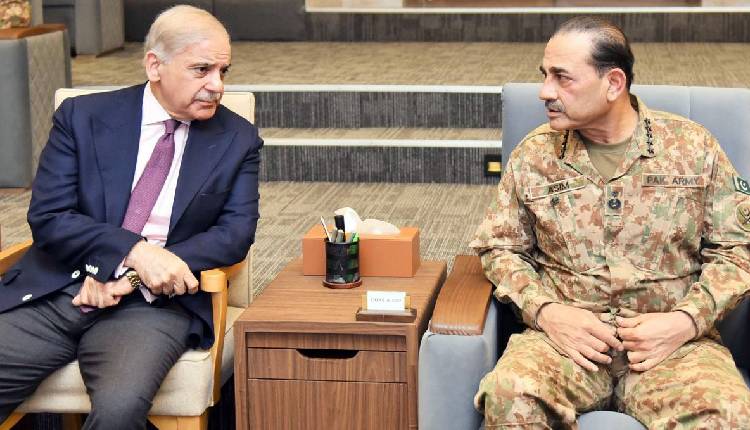
Pakistan’s civilian and military leaders are acutely aware of this precarious position. Islamabad has frequently assigned delegations to engage in frantic shuttle diplomacy with Tehran in an effort at convincing it that Saudi Arabia’s soil will not be used as a launchpad against Iran. Yet, as seen in the recent flare-ups where Iranian-backed factions struck Saudi territory in retaliation for US blockades and bombardments, diplomatic assurances are becoming increasingly fragile.
Ultimately, the escalating US-Iran conflict has transformed Pakistan’s defence treaty from a theoretical deterrent into a dangerous tripwire. As long as American forces continue military operations against Iran and Tehran retaliates across sovereign Gulf borders, Pakistan’s military will remain in the crosshairs.
Thus, to prevent being drawn into a devastating regional war, Pakistan is urgently leveraging its historical ties with both Riyadh and Tehran to push for a sustainable ceasefire. The cost of tripping on this delicate diplomatic balancing act will take the war beyond the Middle East border; it will inevitably engulf Pakistan.
(IANS)