





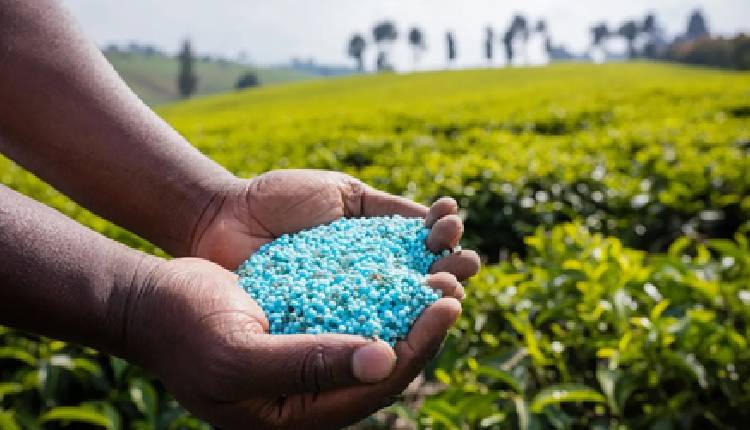
Washington: India’s massive fertiliser purchases and subsidy-driven farm policies were cited repeatedly during a heated US Senate hearing this week as American lawmakers and farmers warned that global supply disruptions and soaring input costs were pushing US agriculture deeper into crisis.
At the hearing of the Senate Agriculture Committee, witnesses said global fertiliser markets had become increasingly volatile due to geopolitical tensions, export restrictions and supply bottlenecks linked to the Strait of Hormuz.
Several senators and industry leaders pointed directly to India’s growing role in the global fertiliser trade, describing the country as one of the biggest buyers shaping international prices.
Corey Rosenbusch, President and CEO of The Fertilizer Institute, told lawmakers that India, the world’s second-largest fertiliser consumer after China, had recently issued a major urea tender for 2.5 million metric tons at nearly $1,000 per metric ton.
“India recently did another urea tender for 2.5 million metric tons of urea at nearly $1,000 per metric ton,” Rosenbusch said.
He said the Indian government heavily subsidised fertiliser purchases to shield farmers from rising global prices, a policy that was influencing worldwide demand and supply patterns.
“In India, the world’s second largest consumer of fertiliser behind China, their federal government procures their fertiliser; they then heavily subsidise it to keep prices low for their farmers,” he told the committee.
The hearing came as US farmers complained of surging fertiliser costs, shrinking margins and growing bankruptcies across rural America. Lawmakers from both parties described the situation as a national security issue tied to food supply and geopolitical instability.
Committee Chairman Sen. John Boozman called the crisis “a generational event” for American agriculture.
South Dakota farmer Trent Kubik told senators fertiliser costs had nearly doubled in recent years, forcing farmers to reduce fertiliser use and alter planting decisions.
“In 2025, we did not apply any phosphate on our farm because it just did not make economic sense for us,” Kubik said.
Kentucky farmer Eddie Melton said many producers were operating with little or no working capital while facing sharp increases in fertiliser prices.
“Since February, we have seen a 33 per cent rise in anhydrous prices, a 55 per cent rise in urea prices, and a 25 per cent increase in liquid nitrogen,” Melton said.
Witnesses also pointed to disruptions around the Strait of Hormuz, one of the world’s most critical shipping routes for energy and fertiliser ingredients. Rosenbusch told lawmakers that nearly 34 per cent of globally traded urea and half of the world’s sulphur exports moved through the region.
The hearing, among other things, highlighted concerns over China’s export restrictions on fertiliser products, with witnesses warning that tightening global supplies were worsening price pressures for farmers worldwide.
Several senators backed bipartisan legislation aimed at improving fertiliser market transparency and increasing domestic US production capacity.
India is among the world’s largest importers of fertilisers and remains highly dependent on global supply chains for urea, potash and phosphates.
Any prolonged disruption in Gulf shipping routes or spikes in international fertiliser prices could increase New Delhi’s subsidy burden and impact agricultural input costs ahead of key crop seasons.
(IANS)