





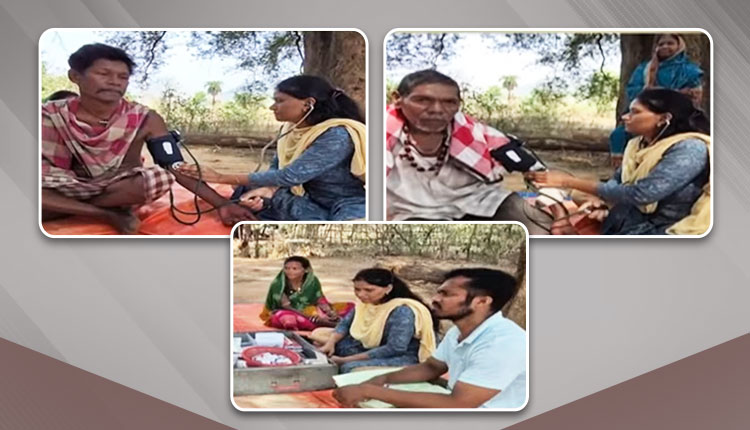
Bhubaneswar: In the dense, once Maoist-dominated forests along the Ganjam-Kandhamal border, medical teams are fearlessly venturing into inaccessible tribal villages to provide essential healthcare, often conducting check-ups under trees or amid roots in remote areas.
A striking scene unfolded recently in Ranba panchayat, a region long considered perilous even during daylight due to its history as a Maoist stronghold. Here, health workers—including female ANMs, pharmacists, and attendants—set up impromptu camps, examining patients, distributing free medicines, and treating locals from tribal communities.
Entire families gather around, welcoming the teams like relatives, as services reach villages that previously had no access to modern healthcare. This transformation is largely credited to the Arogya Mandir (Ayushman Arogya Mandir) initiative, aligned with the national Ayushman Bharat scheme. Under the program—aimed at establishing health facilities in every panchayat—the Odisha government has intensified outreach in tribal and aspirational districts, including Kandhamal.
Mobile teams now visit panchayats like Ranba and Indragarh weekly, traversing mountains and dense forests on foot to ensure no one is left behind.Despite the risks in areas still seeing sporadic Maoist activity, the workers show unwavering dedication. “Their only addiction is service,” sources describe, highlighting the noble commitment to bridging healthcare gaps in these underserved valleys.
Tribal residents, long deprived of basic medical aid, now receive regular screenings, treatments, and free drugs—marking a significant step toward equitable health access in Odisha’s remote hinterlands.