
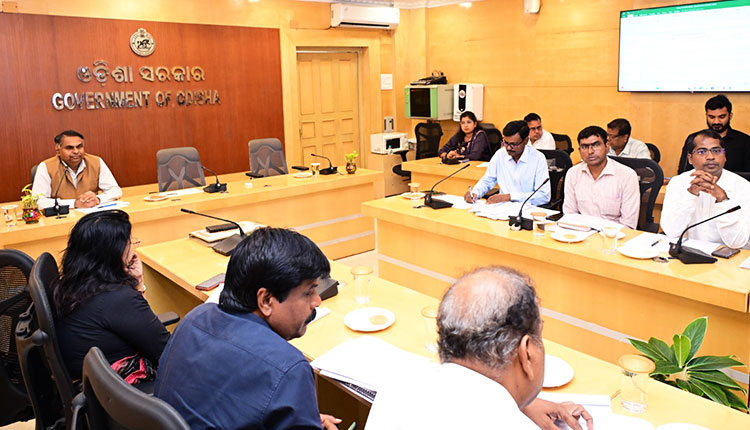
Bhubaneswar: The Panchayati Raj and Drinking Water Department reviewed the progress of rural drinking water supply projects across Odisha, with a focus on expediting pending works and ensuring summer preparedness.
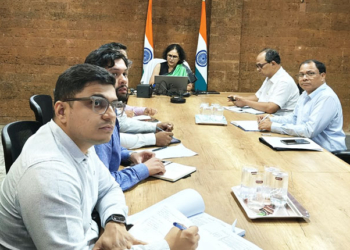
The review meeting, held at Lok Seva Bhawan on Tuesday, was conducted under the direction of Chief Secretary Anu Garg and chaired by Commissioner-cum-Secretary Girish S.N.. Officials assessed the status and functionality of ongoing mega piped water supply projects as well as other rural water schemes.
Reiterating the state government’s goal of providing safe drinking water through piped connections to every rural household, the Secretary directed officials to accelerate completion of ongoing projects. Progress since the last review meeting in March was also evaluated.
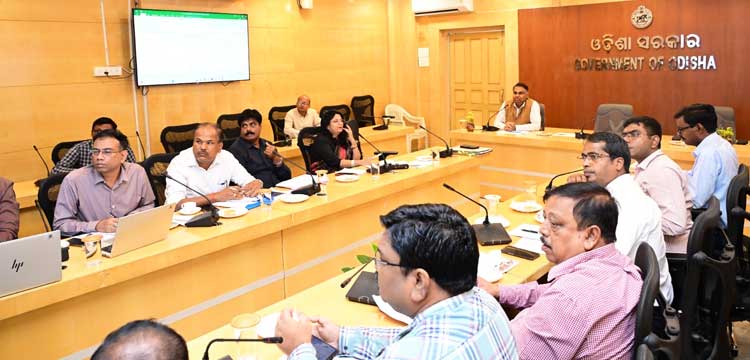
According to official data, out of 207 mega piped water supply projects planned in the state, 30 have been completed, while 55 projects have crossed 90 per cent completion. The government has set a target to complete all mega projects by March 2027, aiming to cover 32,233 villages.
Significant progress has also been reported in other categories. Of the 19,017 single-village drinking water projects, 18,411 have been completed. Similarly, 6,146 out of 8,599 solar-powered piped water supply projects are operational, with the remaining targeted for completion by June 2026. In addition, 28,750 tube wells have been installed across the state over the past two years.
The meeting also reviewed implementation under the Centre’s Jal Jeevan Mission 2.0, including coverage across blocks, gram panchayats, villages and households. Officials were instructed to align progress with commitments made under the second phase of the scheme and the state’s newly approved maintenance policy.
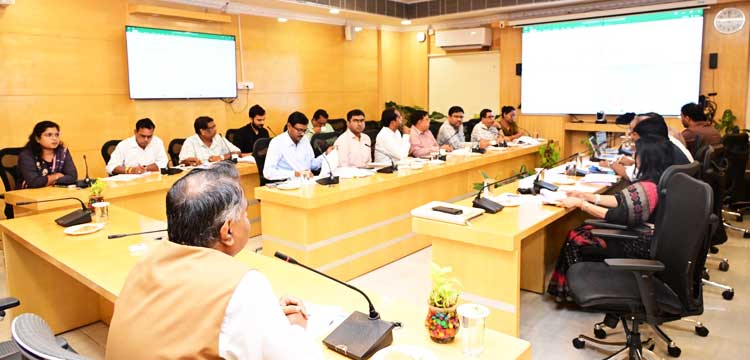
With summer approaching, emphasis was laid on ensuring uninterrupted water supply. The department has deployed 445 water tankers and established 6,042 water kiosks (Jala Chatra) across the state. Control rooms have been activated at the sub-divisional level to address public grievances promptly.
The Secretary also stressed the need for close coordination with departments such as Rural Development, Water Resources, Works, Forest, Energy, and the National Highways Authority of India to resolve bottlenecks affecting project execution. Engineers were directed to maintain regular monitoring and expedite completion through inter-departmental collaboration.