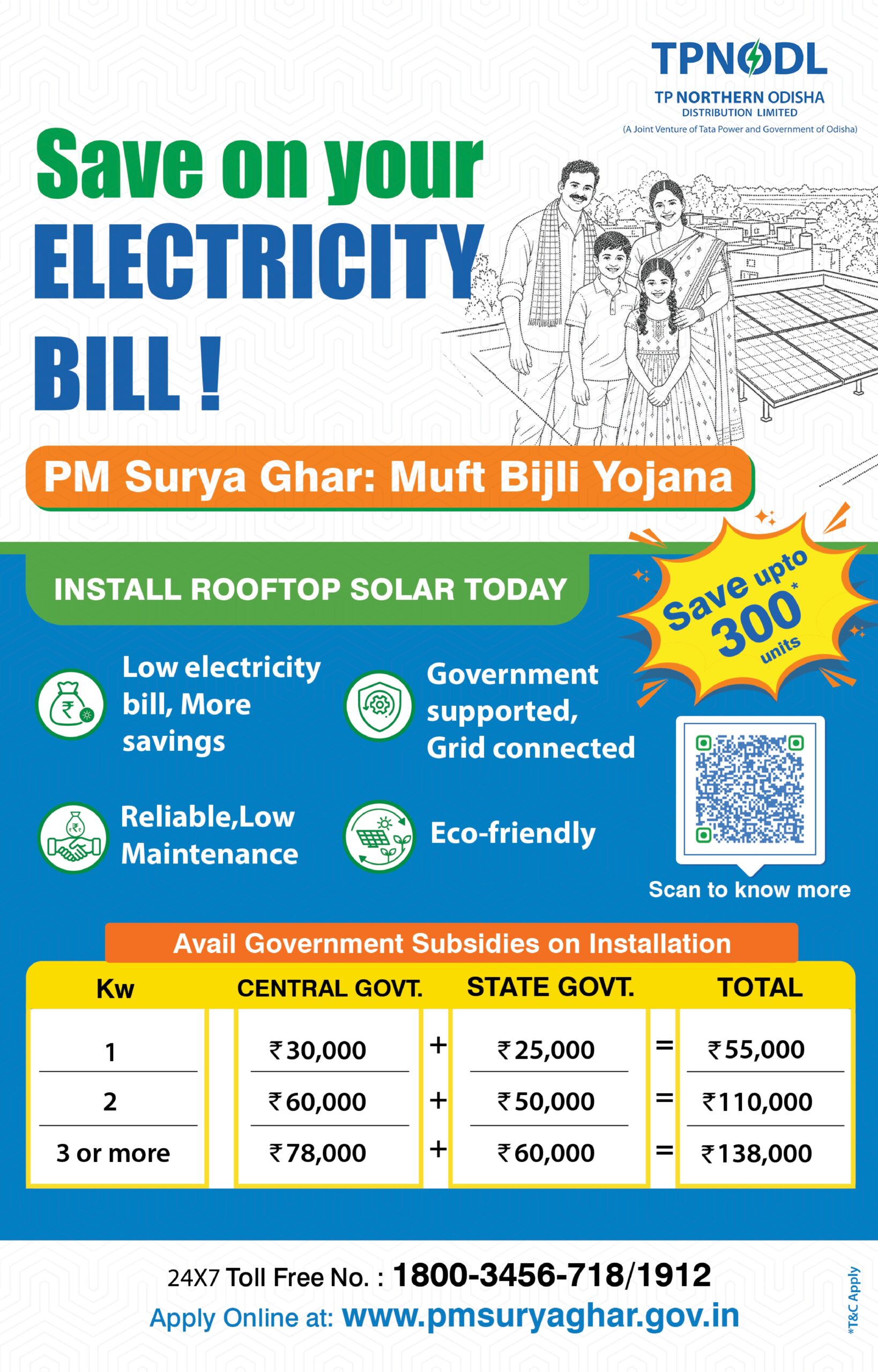






Bhubaneswar: Odisha is accelerating its transition to clean energy, with rooftop solar adoption gaining strong momentum under the Centre’s flagship PM Surya Ghar: Muft Bijli Yojana and the Utility-Led Aggregation (ULA) model, officials said.
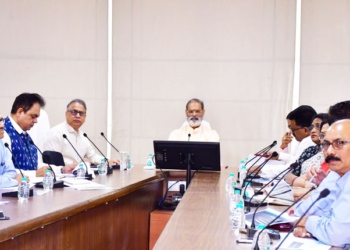
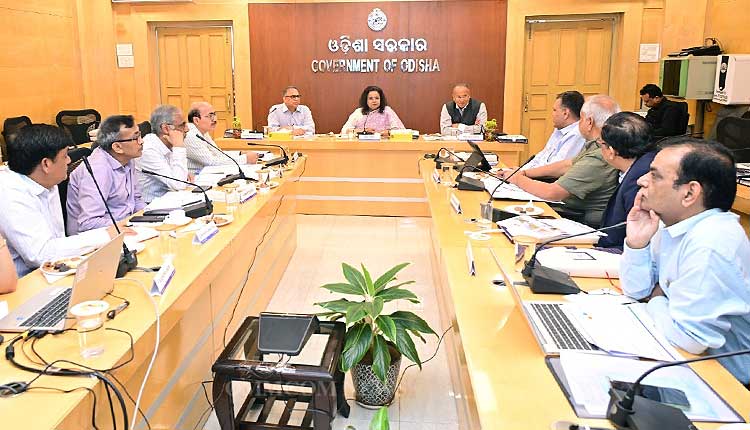
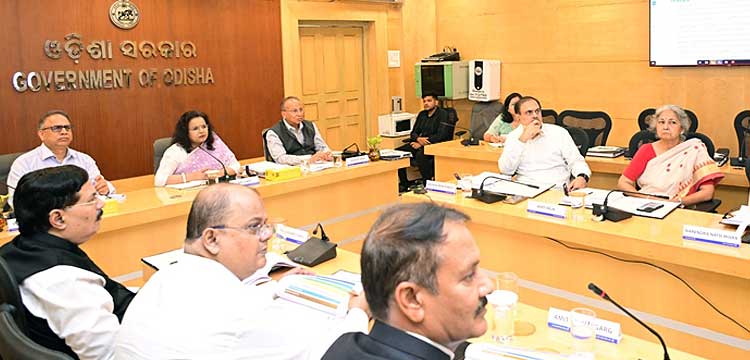
At the 29th board meetings of state power distribution companies—TPNODL, TPSODL, TPCODL and TPWODL—chaired by Chief Secretary Anu Garg at Lok Seva Bhavan on Wednesday, the government reviewed performance, efficiency, and key initiatives aimed at ensuring reliable and sustainable power supply.
Officials highlighted that Odisha has emerged as the top-performing state under the ULA scheme, with around 29,000 installations, contributing to a total of nearly 84,888 rooftop solar systems installed across the state, including 55,888 under PM Surya Ghar. The state has set a target of covering 3 lakh households and plans to scale up installations to 25,000 per month in the coming phases.
The ULA scheme, introduced by the Ministry of New and Renewable Energy in November 2025, enables households with 1 kW load to install rooftop solar systems at a nominal cost of ₹1,875, significantly boosting adoption among domestic consumers.
In a notable example, district administrations in Cuttack and Ganjam supported full solar coverage in three villages—Matiakhal, Olaba, and Debabhuin—benefiting 280 households with zero monthly electricity bills since February 2026.
The meetings also reviewed operational metrics of DISCOMs, noting a sharp decline in Aggregate Technical and Commercial (AT&C) losses from 29.5% in FY20 to 14.6% in FY26. TPNODL and TPCODL secured 2nd and 4th ranks, respectively, in national distribution utility rankings for non-urban areas. Retail power tariffs have remained unchanged for the past five years.
On the social front, Odisha DISCOMs spent ₹17 crore under CSR in FY26, with plans to increase this to ₹20 crore next year. Initiatives include deployment of 16 mobile health dispensaries in remote areas—set to rise to 20—and expansion of vocational training centres from 20 to 24 to boost employment opportunities.
During the review, Garg stressed timely grievance redressal, improved service quality, and safety in power distribution, while underlining the importance of scaling clean energy initiatives and strengthening CSR outreach.