





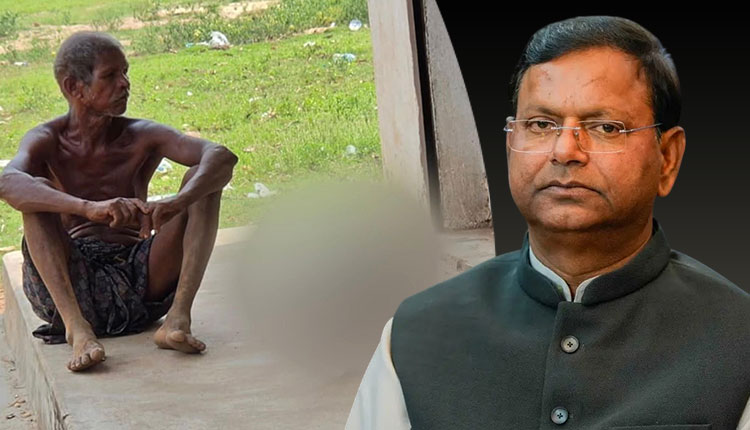
Keonjhar: The Centre has issued a directive to strengthen customer-centric and empathetic banking practices in rural and semi-urban branches following the controversy dubbed the “Keonjhar Skeleton Case,” which has highlighted concerns over delays in settlement of deceased customers’ accounts and procedural sensitivity in public banking services.
The Ministry of Finance has acknowledged a service lapse in the settlement of a deceased customer’s account at the Malliposi branch of Odisha Grameen Bank (OGB) in Keonjhar district. The issue came to light after a communication addressed to the Finance Minister by Leader of Opposition in the Odisha Legislative Assembly, Naveen Patnaik.
In an official response dated June 12, 2026, Minister of State for Finance Pankaj Chaudhary stated that the matter was examined in consultation with Odisha Grameen Bank. The bank informed that the deceased depositor’s account had no registered nominee, which necessitated submission of legal documents, including a death certificate and legal heir certificate, before settlement.
According to the Ministry, delays in submission of required documentation led to hardship for the claimants. However, following intervention by local administration, the required formalities were completed and the claim amount of Rs 19,402 was subsequently released to the legal heirs of the deceased account holder.
While affirming that procedural compliance is essential in banking operations, the Ministry observed that the handling of the case lacked adequate sensitivity. The Department of Financial Services (DFS) stated that customer service, particularly in rural and tribal areas, must be delivered with greater empathy, clarity, and responsiveness.
Following the incident, the Centre has issued a directive to all Regional Rural Banks, including Odisha Grameen Bank, instructing them to strengthen citizen-centric banking practices and ensure humane handling of cases involving vulnerable customers to avoid similar grievances in the future.
Odisha Grameen Bank has reportedly suspended the branch manager of the Malliposi branch where the incident occurred and issued an internal advisory to its field staff emphasizing transparent and customer-friendly service delivery.
The directive comes against the backdrop of a reported incident on April 27, 2026, in Dianali village under Keonjhar district, where an elderly man, identified as Jitu Munda, allegedly carried the skeletal remains of his deceased sister to a bank branch to demand release of her savings.
According to reports, the account holder, Kalara Munda, had died two months earlier. Her brother had approached the bank to withdraw Rs 19,402 but was asked to submit legal heir documentation. Despite informing bank officials about her death, he was allegedly instructed to produce formal proof of legal heirship.
Distressed over repeated delays, he reportedly exhumed his sister’s remains from a cremation ground and carried them nearly three kilometres to the Malliposi branch of Odisha Grameen Bank, where he placed the skeletal remains at the premises and demanded immediate settlement of the account. Eyewitnesses said the incident left onlookers shocked and disturbed.
The episode has triggered widespread concern over banking procedures in rural areas, prompting administrative action, internal review, and the issuance of the latest directive aimed at improving sensitivity and efficiency in grievance handling across rural banking institutions.