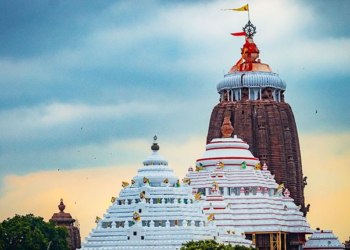






Bhubaneswar: Imagine the once-vibrant Jagannath Temple falling into a serene hush as Lord Jagannath, accompanied by his brother Balabhadra and sister Subhadra retreats from public view. This sacred time, called Anasara, follows immediately after the majestic Snana Purnima and lasts for a fortnight, during which the deities are believed to rest, heal, and rejuvenate in complete privacy, away from public darshan.
While the main temple observes this solemn seclusion, the spiritual energy has not vanished — it has simply shifted. Just a short drive away in Brahmagiri, the picturesque Alarnath Temple has transformed into a vibrant centre of devotion. Thousands of devotees, yearning for a glimpse of the divine, are pouring in, convinced that worshipping Lord Alarnath during Anasara brings the same blessings as beholding Lord Jagannath himself.
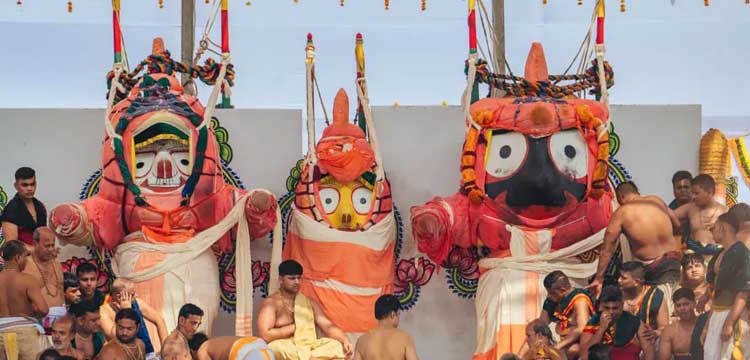
Following the grand Snana Purnima ceremony, Lord Jagannath, Balabhadra, and Subhadra are believed to have fallen ill. They were then lovingly moved to the Anasara Gruha, where they are now being cared for and worshipped in a special form known as ‘Pati deities’ through intimate and secret rituals.
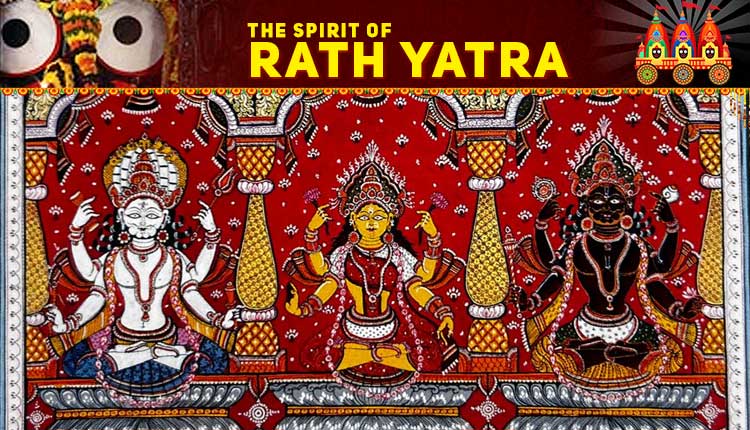
It may be mentioned here that patta paintings known as ‘Anasara patti’ or ‘Anavasara patti’ of Lord Jagannath, Balabhadra and Devi Subhadra are worshipped in the 12th-century shrine during the anasara period. Besides, the darshan of Patitapabana—the representative image of Lord Jagannath on the right side of the main entrance of the temple from Simha Dwara—is also closed.
During their seclusion, the deities are treated with ‘Phuluri Tela,’ a special herbal oil prepared from medicinal plants and herbs. This ancient Ayurvedic treatment symbolizes the traditional care and devotion bestowed upon the deities. The application of this oil is believed to restore their health and vigor, preparing them for the grand events ahead.
Hundreds of devotees started flocking to the historic Alarnath Temple near Brahmagiri in Puri district today, as the deities of Lord Jagannath and his siblings are in seclusion following their grand bathing ritual on Deba Snana Purnima yesterday. During this 15-day Anasara period, the deities will be unavailable for public viewing, and devotees believe that worshipping Lord Alarnath, a four-armed standing, is equivalent to seeking blessings from Lord Jagannath himself. The temple has become a major pilgrimage site during this time, with devotees gathering to catch a glimpse of the presiding deities and savour the temple’s signature khiri, a special rice porridge.
Historians trace the origins of the temple to the rulers of Alwar in Rajasthan, which explains its name — Alwarnath, popularly known today as Alarnath Temple. Although the exact date of construction remains unclear, the temple gained prominence after Sri Chaitanya Dev’s visit in 1510 AD. During his stay, Sri Chaitanya wrote extensively about the place and the temple, claiming to have experienced a manifestation of Lord Jagannath at Alarnath. He spent considerable time worshipping the deity, further solidifying the temple’s significance.
Located just 23 kilometres from Puri, the Alarnath Temple traces its origins to the 9th century, with its construction credited to King Vanudev IV. The temple, however, rose to prominence in the early 12th century following extensive renovations and generous patronage by the revered saint Sri Ramanujacharya.