





Bhubaneswar: Every morning, thousands of coconuts arrive across Bhubaneswar. Carried by devotees to temples and roadside shrines, they are offered to deities as symbols of purity, gratitude and devotion. By afternoon, tender coconuts sold at roadside kiosks quench the thirst of office-goers, commuters and visitors seeking relief from the city’s heat.
But once the prayers are offered and the sweet water consumed, another story begins.
Bhubaneswar generates a substantial quantity of coconut waste every day from temples, households, juice stalls and public vending areas. Due to their high fibrous content, tender coconut shells and husks take a long time to decompose and cannot be composted in Micro Composting Centre (MCC) tubs. For years, heaps of discarded coconut waste accumulated across the city, clogging drains, littering public spaces and occupying valuable landfill space.
Yet, in a city where coconuts hold deep spiritual significance and are integral to temple rituals, pujas and daily offerings, the Bhubaneswar Municipal Corporation (BMC) sought to ensure that these sacred remnants did not end up as mere waste.
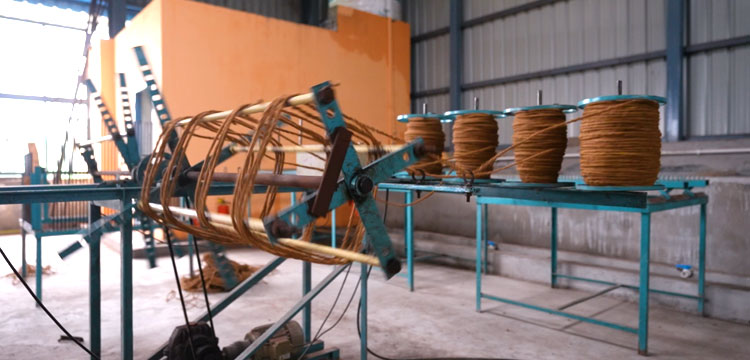
To address the challenge, BMC established a dedicated Coconut Processing Plant at Palasuni on the outskirts of the city. Developed at a cost of Rs 56 lakh, the project comprises infrastructure development, machinery installation and an operational framework designed to process coconut waste in an environmentally sustainable and cost-effective manner.
The initiative represents a holistic model that respects religious sentiments, protects the environment, generates revenue and creates livelihood opportunities for marginalised communities. By collecting and processing post-offering coconuts, BMC has effectively aligned faith with sustainability, ensuring that the cycle of reverence, or aastha, continues through resource recovery.
The Palasuni unit currently collects around 5,000 to 6,000 coconuts every day from nearly 189 tender coconut vendors across Bhubaneswar. Dedicated collection vehicles—three light commercial vehicles, one for each city zone—visit vendors daily and transport the discarded coconuts to the processing facility. Each vehicle is operated by a driver and a helper.
The plant has the capacity to process up to 10,000 coconuts a day, indicating considerable potential for expansion.
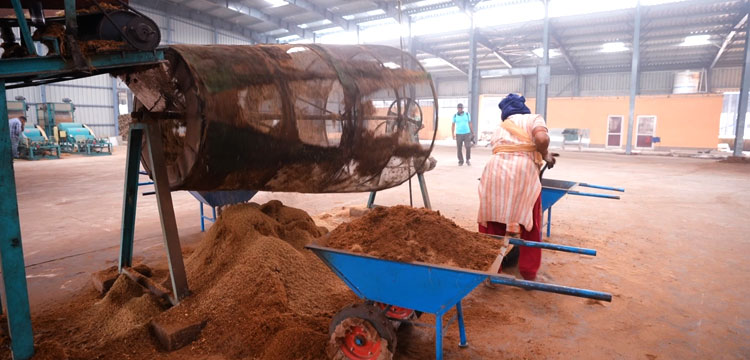
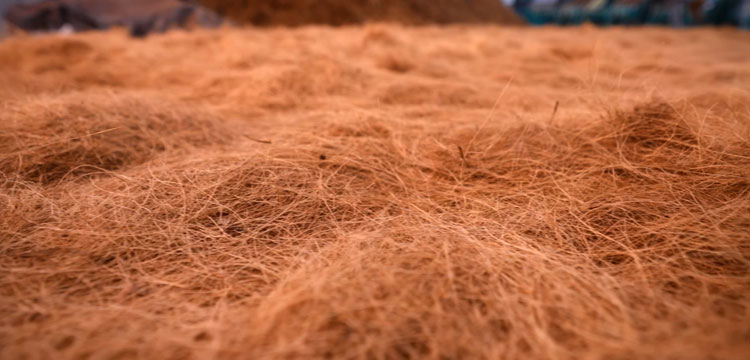
At the facility, coconut waste is fed into specialised machinery installed in partnership with Orissa Agro Machinery. The machines separate the coir fibre from the pith. The extracted fibre is then converted into coir ropes and doormats, while the pith is processed into cocopeat and cocopeat blocks, which are widely used in agriculture and gardening as organic growing media and soil conditioners.
According to Kalicharan Dakua, in-charge of the coconut processing plant, the initiative has fundamentally transformed the city’s approach to coconut waste.
“Tender coconuts that used to be discarded after consumption are now being processed by BMC through machines that extract coconut coir fibre. From this fibre, we are producing coir ropes and mats, while the coconut husk is being supplied for agricultural use,” he said.
The transformation has been remarkable. Processing around 5,000 coconuts every day yields nearly 9,000 kg of coir fibre a month, around 7,500 kg of ropes, nearly 15,000 square feet of doormats, about 24 metric tonnes of dry cocopeat and another 24 metric tonnes of cocopeat blocks every month.
These products enjoy significant market demand in agriculture, home décor and eco-friendly consumer markets. The finished products are marketed through BMC-supported Reduce-Reuse-Recycle (RRR) kiosks and external sales channels. With an estimated monthly turnover of Rs 7-9 lakh, the facility has emerged as an example of how environmental responsibility and economic viability can go hand in hand.
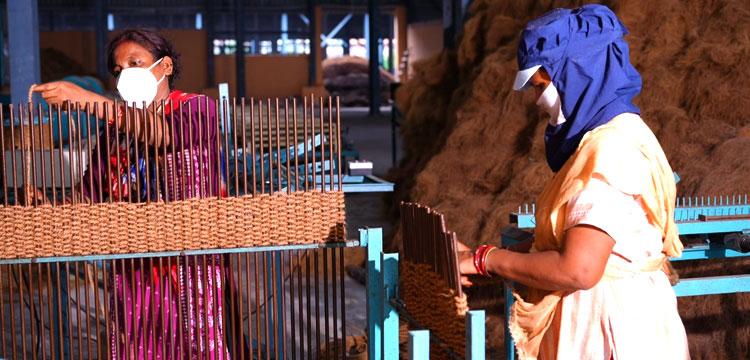
The environmental benefits are equally significant. The initiative prevents littering, drain blockages and the open dumping of coconut waste, substantially reduces the burden on landfills and advances the circular economy objectives of the Swachh Bharat Mission.
At the heart of this green enterprise are ten workers, including a technician, machine operators, collection helpers and plant staff. Many of them are women members of Self-Help Groups (SHGs) and Safaimitras. They have received technical training from Orissa Agro Machinery in coir processing, rope twisting, mat weaving and cocopeat packaging.
The project has not only provided them with steady incomes but has also strengthened their economic independence and brought greater dignity to their work.
BMC Deputy Commissioner of the City Sanitation and Sustainability Cell, N. Ganesh Babu, said the coconut processing facility forms part of the civic body’s broader strategy of adopting scientific and sustainable solutions for various waste streams generated in the city.
“The waste profile of a city comprises different types of waste, such as wet waste, dry waste, sanitary waste, construction and demolition waste, flower waste, coconut waste and e-waste. The Bhubaneswar Municipal Corporation has established dedicated scientific processing facilities for these waste streams by adopting sustainable waste-management practices. The coconut waste processing facility illustrates BMC’s commitment to creating livelihood opportunities for SHG members while simultaneously emphasising circularity and revenue generation,” Deputy Commissioner Babu told Ommcom News.
For workers at the plant, the project has become much more than a waste-processing initiative.
“Earlier, these coconut shells were simply discarded and created heaps of waste. Today, we process them into useful products and earn our livelihood from them. It gives us satisfaction to know that our work is contributing to a cleaner city,” said a worker at the Palasuni unit.
In a city where coconuts symbolise faith and devotion, the Palasuni processing plant is ensuring that their journey does not end at a temple altar or a roadside stall. Instead, discarded shells and husks are finding a new purpose—as products that enrich the soil, support farmers, create livelihoods and contribute to a cleaner and greener Bhubaneswar.
From symbols of devotion to agents of sustainability, the humble coconut is quietly scripting a remarkable story in Bhubaneswar—one in which faith meets innovation and waste is transformed into wealth.