





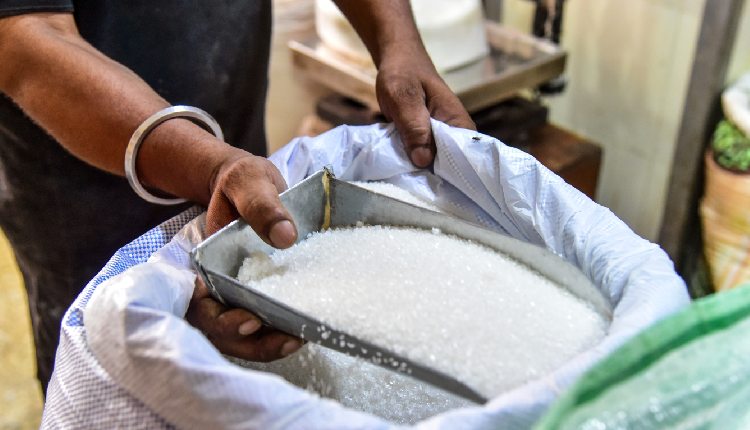
New Delhi: The government has extended the deadline for duty-free imports of 1 million tonnes of raw sugar under the Tariff Rate Quota (TRQ) by two months to December 31 to ensure adequate supplies are available during the festive season at reasonable prices.
The Finance Ministry had, on August 20, allowed duty-free imports of 1 million tonnes of raw sugar until October 31. It has now issued a fresh notification to extend the last date for duty-free imports to December 31, 2026.
Around 2.6 lakh tonnes of raw sugar have been imported until now. Imports have remained low as sugar prices in the domestic market have also come down following the government’s announcement to allow more imports. The extension is aimed at securing supplies whenever domestic prices go up so that imports help to cool down prices. Any permission to allow imports tames inflationary expectations, which drive up prices and tends to lower prices in the domestic market to clear stocks even before the foreign consignments actually arrive.
Besides allowing imports, the government has taken a series of measures like imposing stockholding limits on traders to ensure adequate domestic supplies and tame the price spiral.
Sugar production for the 2025-26 marketing year (October-September) is now estimated at 306 lakh tonnes, down from an earlier forecast of 343 lakh tonnes. Annual domestic demand is estimated at around 280-285 lakh tonnes.
Meanwhile, earlier this month, the government constituted a high-level committee to examine issues raised by sugarcane farmers and recommend appropriate measures for addressing their concerns.
The Committee will examine the demand for an increase in remunerative returns to sugarcane farmers, taking into account cultivation costs and other relevant factors. It will also examine the demand for revision of the ex-mill Minimum Selling Price (MSP) of sugar in the context of sugar production costs, market realisations, and the financial viability of sugar mills.
Other key areas that the committee will examine include existing mechanisms for testing and reporting sugar recovery, measures to ensure transparent verification of recovery, and prevailing sugarcane weighing practices at sugar mills, including the adequacy of calibration, inspection and verification mechanisms.
–IANS–