





New Delhi: India’s top agricultural experts on Tuesday came out in favour of launching a mission to replace at least 25 per cent of the country’s current mineral fertiliser use with organic manures over the next three years, to cut dependence on imports and improve soil health.
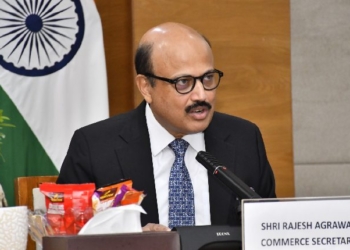
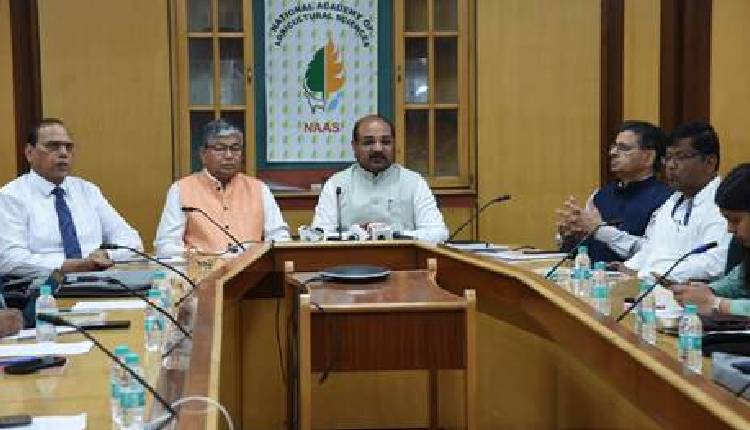
Addressing a meeting organised by The National Academy of Agricultural Sciences (NAAS), Secretary, Department of Agriculture Research and Education, M.L. Jat said that while fertilisers were instrumental in boosting production during the Green Revolution, the current challenge lies in declining fertiliser use efficiency and their indiscriminate application.
He emphasised the need to launch a Mission Mode Programme to promote Integrated Nutrient Supply and Management (INSAM) and reduce the use of chemical fertilisers, which are harming the health of the country’s soil.
Jat pointed out that with India consuming nearly 33 million tonnes of fertilisers annually, a significant share of which is imported, reducing import dependency has become imperative.
Addressing this issue requires a comprehensive approach that spans short-, medium-, and long-term strategies.
Strengthening initiatives such as Soil Health, promoting balanced, need-based fertiliser application, and enhancing awareness among farmers are important steps in this direction, he added.
He said modern technologies such as precision nutrient management, artificial intelligence, and sensor-based systems must be leveraged to optimise fertiliser use. Crop diversification towards pulses and oilseeds, recycling organic waste through the waste-to-wealth initiative, and increasing the use of biological sources will further help reduce dependence on chemical fertilisers.
Participants in the brainstorming session favoured adopting a multi-pronged strategy with short-, medium-, and long-term research and development goals, along with enabling policies to achieve them.
The roadmap should emphasise strengthening fertiliser research for the development of smart alternative fertilisers, utilisation of unexploited indigenous minerals (glauconite, phosphate rocks, mica, polyhalite) and industrial by-products, increased use of biologicals, exploiting the potential of soil microbiome, improved composting techniques, crop breeding for enhanced nutrient use efficiency, good agricultural practices involving precision nutrient management integrating fertilisers and organics, soil health restoration, crop diversification, and residue recycling.
An aggressive, year-round technology transfer using digital tools such as the artificial intelligence platform Bharat VISTAAR would help facilitate large-scale adoption of proven technologies. Weak extension lays greater emphasis on increasing fertiliser use and not on its efficient use.
The representatives reached a consensus that a paradigm shift is needed in current fertiliser policies, especially bringing urea into the ambit of nutrient-based subsidy, repurposing fertiliser subsidy as an incentive for adoption of good agricultural practices, linking subsidies with soil health cards, and exploring the possibility of disbursing subsidy to farmers as direct cash transfer.
The availability of cheap urea is a principal disincentive to make its efficient use or to stop its overuse. Proportionally underuse of more expensive fertilisers, phosphorus, and potassium than recommended leads to deficiencies in soil and crops.
(IANS)