





New Delhi: Supreme Court’s former Justice R. Subhash Reddy will head the five-member High-Powered Enquiry Committee (HPEC) constituted by the apex court to investigate allegations of police excesses during the students’ march from Jantar Mantar towards Parliament on July 20.
The other members of the panel are: the Punjab & Haryana High Court’s former Chief Justice Ravi Shankar Jha, Delhi High Court’s former judge, Justice Shalinder Kaur, the Central Bureau of Investigation’s former Director Rishi Kumar Shukla, and Meghalaya’s former DGP, Dr L.R. Bishnoi.
The Supreme Court said in its order that the constitution of the HPEC “shall in no way deter or debar the Police authorities or other security forces from taking administrative or disciplinary action against such of their officers as may be found to be in contravention of the rules governing their conduct”.
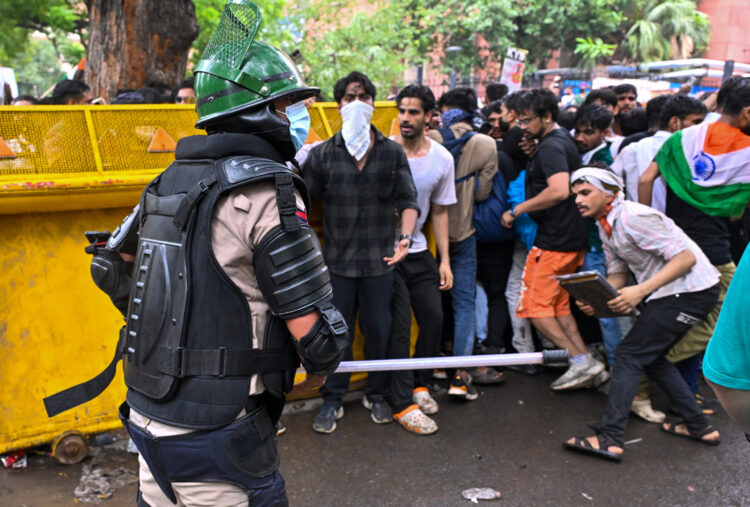
The issues identified for investigation by the Committee include allegations of excessive force, including pellet guns, electric batons, lathi charges and tear gas, as well as the question whether police responses were proportionate to the constitutional right to peaceful protest.
It will also examine whether police/security personnel were properly identifiable through uniforms and nameplates.
In its order delivered on Tuesday, a bench headed by Chief Justice Surya Kant directed the HPEC to look into “the use of excessive force and violence against protestors by police authorities and other agencies, including the deployment of pellet guns, electric batons, lathi charges, and tear gas without adequate warning or proportionality, resulting in severe bodily harm and injuries, some of which are alleged to be of a grievous and lasting nature”.
The Committee will also look into the necessity of ensuring that police and security personnel wear proper uniforms and visible nameplates at the time of effecting arrests or using force during crowd control operations, so as to secure accountability and enable the identification of individual officers.
The CJI clarified that the larger constitutional questions related to facial recognition technology, surveillance and privacy will be decided by the apex court itself and not by the committee.
The Supreme Court also directed the presentation of CCTV footage to the Committee for investigation.
“The Police Authorities, Para-Military Forces, and other Investigating Agencies, who were directed vide order dated July 28, 2026, to preserve all CCTV footage, drone footage, body-worn camera recordings, videography, wireless communication records, and PCR call logs pertaining to the student protests, and furnish the entire record to the HPEC and extend their full cooperation,” it said.
The court asked the Committee to complete its inquiry and deliberations and submit its ‘First Interim Report’ at the earliest.
Alleged violence, harassment, and molestation of women protesters; provision for medical assistance and compensation for injured protesters; use of prohibitory orders under Section 163 BNSS and whether Section 152 BNSS was used in a manner that could suppress peaceful political dissent will also be examined by the panel.
(IANS)